Implement 3D Secure Without Killing Your Conversion Rate
Strong Customer Authentication and 3D Secure add a step at the worst possible moment: when the shopper is ready to pay. Blanket challenges, slow redirects, and missing exemption logic turn payment authentication into checkout friction you can measure in abandoned carts.
We engineer 3DS2 so most payments stay frictionless, and only real risk gets a challenge.
Sound Familiar?
These are the exact issues our clients faced before a conversion-safe 3DS2 build:
- Every card payment forces a bank OTP or redirect, and shoppers drop off at the authentication step
- Checkout conversion fell after enabling 3D Secure, so finance and marketing blame each other
- Fraud chargebacks still land because authentication values are missing or exemptions were applied blindly
- Mobile shoppers hit broken challenge screens, tiny OTP fields, or dead return URLs after the bank step
- Nobody owns exemption strategy, so low-value and low-risk orders get challenged as hard as high-risk ones
PSD2-style Strong Customer Authentication is the global default for card-not-present risk, and SA issuers and schemes increasingly expect EMV 3DS on ecommerce. Turning 3DS on without frictionless routing and exemption logic is how conversion rates quietly collapse at the last step.
What Conversion-Safe Payment Authentication Actually Does
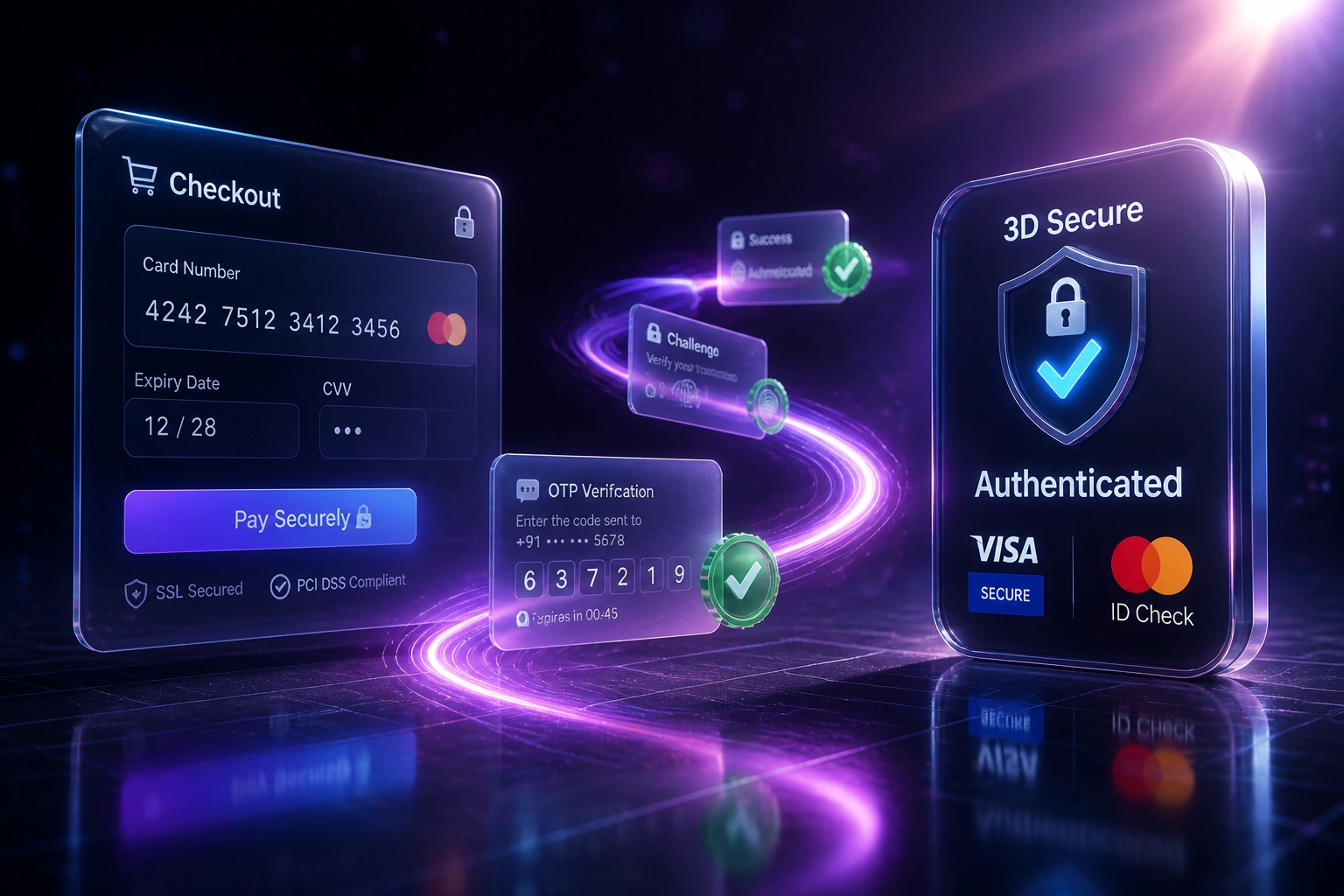
Card entered → risk scored with 3DS2 data → frictionless or challenge → liability shift captured.
Shopper Pays
Card details hit Peach, PayFast, Stripe, or Yoco at checkout
Risk Assessed
150+ data elements and exemption flags go to the issuer risk engine
Auth Path Chosen
Trusted orders stay silent; higher risk gets a fast OTP or app challenge
Protected Clearance
Authenticated payments clear with liability shift; fraud chargebacks fall
Everything You Need for 3DS2 That Protects Conversion
Risk-Based 3DS2 Flows
Rich transaction data goes to the issuer so trusted shoppers authenticate frictionlessly, while higher-risk payments get a challenge only when needed.
SCA Exemption Handling
Low-value, TRA, and trusted-beneficiary exemptions are requested where allowed, lifting frictionless rates without guessing at the gateway UI.
Conversion-Safe Challenge UX
When a challenge is required, shoppers stay in a clean, mobile-first experience with OTP, biometric, or banking-app prompts that actually complete.
Liability Shift Capture
Authenticated payments carry the right ECI and CAVV values through authorisation so fraud chargebacks shift to the issuer, not your P&L.
Gateway-Native Integration
Wired into Peach Payments, PayFast, Stripe, and Yoco with consistent 3DS behaviour across web and app checkouts.
Issuer & Funnel Monitoring
Challenge rate, completion rate, and auth abandonment are tracked by BIN and device so you tune policy before conversion quietly erodes.
Gateways & Platforms We've Hardened for 3DS2
From 18% Auth Abandonment to Under 4%
How a mid-market fashion ecommerce brand kept Strong Customer Authentication on Peach and Stripe without sacrificing checkout conversion.
The Blunt 3DS Switch
- Gateway 3DS toggled on for every card payment, no risk routing
- Mobile shoppers hit full-page bank redirects and abandoned at OTP
- Roughly 18% of payment attempts died at authentication
- Finance still absorbed fraud chargebacks when auth values failed to pass
- Marketing blamed "the bank step" for a soft quarter of conversion
The Engineered 3DS2 Stack
- Risk-based 3DS2 with rich device and order data on every attempt
- Low-value and TRA exemptions where fraud rates allowed
- Frictionless rate climbed above 90%; challenges stayed in-checkout
- Liability shift captured correctly; fraud chargebacks fell sharply
- Auth abandonment under 4%, with challenge completion monitored by issuer
Before vs After Conversion-Safe 3DS2
How It Works
From first conversation to live 3DS2 in 2–4 weeks.
Audit Your Auth Funnel
Challenge rate, abandonment at OTP, gateway mix, average order value, and where liability shift is failing today.
Free Scoping Call
30-minute call to design frictionless thresholds, exemption rules, and how challenges should behave on mobile.
Build & Parallel Test
We implement 3DS2 on your gateway, run shadow traffic, and compare frictionless vs challenge outcomes before cutover.
Go Live & Optimise
Trusted payments stay silent. Risky ones challenge cleanly. We monitor issuer behaviour and tune exemptions over the first weeks.
Frequently Asked Questions
Will 3D Secure kill our checkout conversion?
Only if it is implemented like 3DS1: challenge everyone, redirect to a slow bank page, and ignore exemptions. Proper 3DS2 is risk-based. Industry benchmarks put well-run frictionless rates at 85–95%, with challenge impact typically 3–4% on the challenged slice when UX is clean. Poor setups lose 8–12% or more. The goal is silent auth for most buyers, not a bank quiz for everyone.
What is the difference between frictionless and challenge flows?
Frictionless authentication happens in the background using device, order, and shopper data. The customer never sees an OTP. A challenge asks for a second factor (SMS OTP, banking app, biometrics) when the issuer wants more proof. We maximise frictionless volume with rich data and exemptions, then make the remaining challenges fast and mobile-friendly.
Do SCA exemptions remove liability shift?
Usually yes when the merchant requests the exemption. That is the trade-off: less friction, you keep fraud risk on that payment. We design exemption policy deliberately (low-value, TRA where fraud rates qualify, trusted beneficiaries) and keep full authentication on higher-risk or higher-value baskets so liability shift still protects the volume that matters.
Which gateways and platforms do you support?
We have implemented 3DS2 and SCA-oriented flows on Peach Payments, PayFast, Stripe, and Yoco, including Shopify, WooCommerce, and custom checkouts. If your gateway exposes EMV 3DS and exemption flags, we can wire conversion-safe authentication into it.
How does this help with chargebacks?
Successfully authenticated 3DS payments shift fraud liability to the issuer. Mastercard-linked research cites fraud chargeback drops of up to 70% with strong customer authentication, and Visa reports about 45% lower fraud on authenticated transactions. You still need clear descriptors and fulfilment for non-fraud disputes, but true CNP fraud exposure shrinks sharply.
How much does a 3D Secure implementation cost?
Scoped builds typically range from R25,000 to R70,000 depending on gateway count, exemption logic, and whether checkout UX needs rebuilding on mobile. Against average all-in chargeback costs near R2,770 and the revenue lost to 15–30% auth abandonment on poorly configured flows, most mid-market stores see payback within one to two quarters.
Stop Choosing Between Security and Checkout
If 3D Secure is already live and conversion is soft, or you are delaying SCA because you fear the OTP step, the problem is the implementation, not the protocol.
Tell us which gateway you run, what your challenge and abandonment rates look like, and where chargebacks still hit. We will show you how frictionless 3DS2 and smart exemptions would work on your stack.