AI Three-Way Matching: Automate Invoice, PO, and Delivery Verification
Without automated three-way matching, your AP team pays supplier invoices that do not match what procurement ordered or what the warehouse received. Manual PO matching burns about 4.2 minutes per invoice, exceptions hit roughly 18% of the queue, and overbilling and quantity variances walk straight into the payment run.
We build AI that verifies invoice, purchase order, and delivery note together, and escalates only true mismatches.
Sound Familiar?
These are the exact issues our clients faced before automated invoice verification:
- AP pays supplier invoices that do not match the purchase order quantity, price, or VAT lines
- Goods received notes sit in email or a warehouse folder while finance matches by hand
- Roughly one in five invoices becomes an exception that stalls payment for days
- Quantity variances and overbilling slip through when two-way PO checks skip the delivery note
- Procurement and finance argue over mismatches instead of reviewing a clear exception pack
Recovery after the payment run is a losing game. AP audits typically recover only 60–80% of identified overpayments, and older duplicates are harder to claw back. Automated three-way matching stops the mismatch before the EFT leaves the account, including SA VAT line checks against the PO and GRN.
What AI Three-Way Matching Actually Does
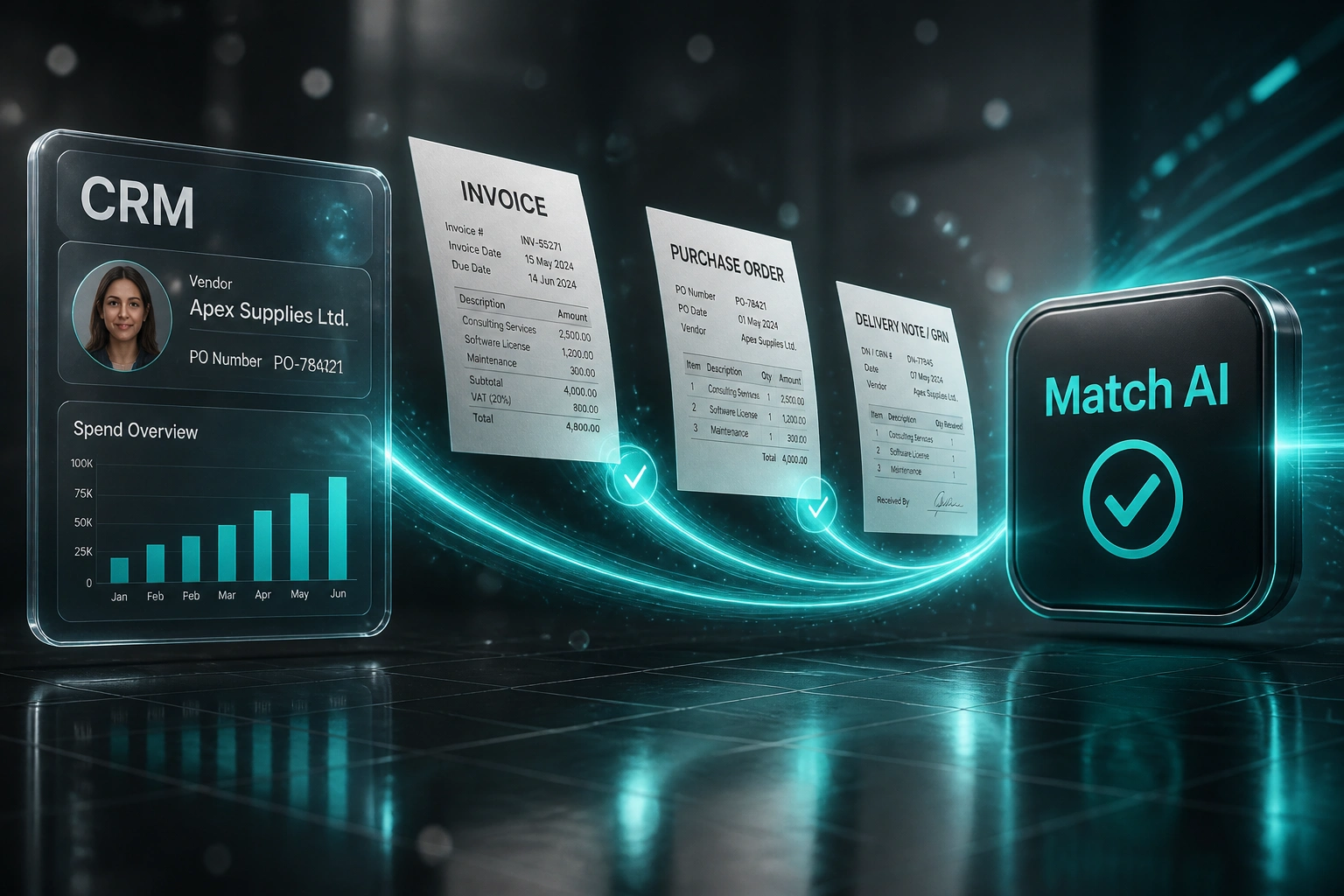
Invoice arrives → PO and delivery note pull → AI verifies all three → only mismatches escalate.
Invoice Lands in AP
Supplier PDF or email invoice enters the shared inbox or capture pipeline
PO & GRN Retrieved
Open purchase order and goods received note pulled from ERP, WMS, or email archive
AI Verifies All Three
Quantity, unit price, VAT, and totals compared within your tolerance rules
Exceptions Only
Clean matches become ledger drafts; mismatches sit in a short review queue
Everything You Need for Reliable Invoice Verification
True Three-Way Matching
Every supplier invoice is checked against the purchase order and the goods received note before anyone approves payment. Quantity, price, and VAT must align within your tolerances.
Mismatch Detection
Overbilling, short deliveries, duplicate lines, and VAT discrepancies flag automatically with the invoice, PO, and delivery note side by side for investigation.
Exception Queues Only
Clean matches post as draft bills in Xero, Sage, QuickBooks, or your ERP. Controllers review true exceptions, not every supplier invoice.
Overbilling Prevention
Invoices for goods never received, inflated unit prices, and quantity creep stop before the payment run. Prevention beats chasing suppliers for refunds later.
Supplier Fraud Controls
Duplicate invoices, phantom deliveries, and bank-detail surprises surface as high-risk exceptions with an audit trail ready for finance and procurement.
Audit-Ready Match Trail
Every match decision, tolerance override, and exception outcome is logged with timestamps and users for month-end, SARS queries, and external audit.
Ledgers and ERPs We've Connected
From 14 Hours/Week to 2 Hours/Week
How a Gauteng manufacturer stopped paying for goods that never arrived, blocked overbilling, and left AP with exceptions only.
The Manual Process
- Two AP clerks matched ~650 supplier invoices a month against POs and GRNs by hand
- About 5 minutes per invoice hunting warehouse receipts and checking line quantities
- Nearly one in five invoices sat in exception limbo for days
- Quantity variances and inflated unit prices often cleared because GRNs were incomplete
- Procurement only discovered overbilling after the month-end payment run
The Automated Process
- AI pulls invoice, PO, and delivery note the moment the bill lands
- Quantity, price, and VAT must align within tolerance before a draft bill posts
- Exception rate dropped below 9% with clear reason packs for procurement
- About 90% of invoices clear without a human touching the match
- Overbilling and phantom deliveries stop before the Absa/FNB payment file
Before vs After Three-Way Matching
How It Works
From first conversation to live three-way matching in 2–4 weeks.
Tell Us Your Setup
Where invoices, POs, and GRNs live today, which ledger you use, and where mismatches hurt most.
Free Scoping Call
30-minute call to map invoice → PO → delivery note → exception queue → draft bill, and set match tolerances.
Build & Test
We wire three-way matching to your live suppliers, run parallel against manual AP, and tune exception rules until accuracy meets your bar.
Go Live & Monitor
Finance and procurement handle exceptions only. Monitoring tracks match rate, overbilling blocked, and hours recovered.
Frequently Asked Questions
How is AI three-way matching different from two-way PO matching?
Two-way matching checks the invoice against the purchase order only. Three-way matching also requires a goods received note or delivery note, so you never pay for stock that never arrived. That third document is what stops quantity fraud, short deliveries, and billing ahead of receipt.
What percentage of invoices usually fail a three-way match?
Industry research puts the average AP invoice exception rate around 18.4%, and mismatches between invoice, PO, and receipt are a major driver. Best-in-class teams bring exceptions closer to 9%. We route only true variances to humans and keep clean matches moving.
How long does an AI three-way matching project take?
A focused build into one ledger typically takes 2–4 weeks from scoping to go-live. Simple PO and GRN matching into Xero or Sage can be live in about two weeks. Multi-entity tolerances, warehouse GRN feeds, and ERP posting usually sit closer to 4–6 weeks.
What happens when invoice, PO, and delivery note do not match?
Quantity, price, VAT, and missing-GRN mismatches pause in an exception queue with all three documents, the variance amount, and a suggested owner in procurement or finance. Clean invoices never wait behind those exceptions.
Will this disrupt our AP team or warehouse receiving?
No. Warehouse keeps posting receipts the same way. AP keeps approving in the same ledger. Automation removes the 4-plus minutes of hand matching per invoice so people spend time on real variances, supplier queries, and payment timing. We run parallel testing before switching off the manual path.
How much does AI three-way matching cost?
Focused three-way matching into a single ledger typically starts from around R30,000. Builds with multi-entity tolerances, ERP posting, and fraud controls usually sit in the R40,000–R70,000 range. Teams processing a few hundred supplier invoices a month often recover the build cost within 2–3 months from staff time and blocked overbilling alone.
Stop Paying Invoices That Do Not Match
If your finance controllers and procurement leads are still matching invoices, POs, and delivery notes by hand, you are funding both the labour and the overbilling that slips through.
Tell us where supplier invoices arrive, how GRNs are captured, and which ledger you use. We will show you exactly how AI three-way matching would cut exception cost and block mismatches for your business.