AI Anomaly Detection: Real-Time Alerts for Unusual Financial Transactions
CFOs and finance controllers still find fraud and AP mistakes weeks later in audits. AI anomaly detection and continuous transaction monitoring flag duplicate payments, unusual spending patterns, and weekend EFTs in hours, while cash recovery is still realistic.
We build the monitoring layer that catches problems before month-end.
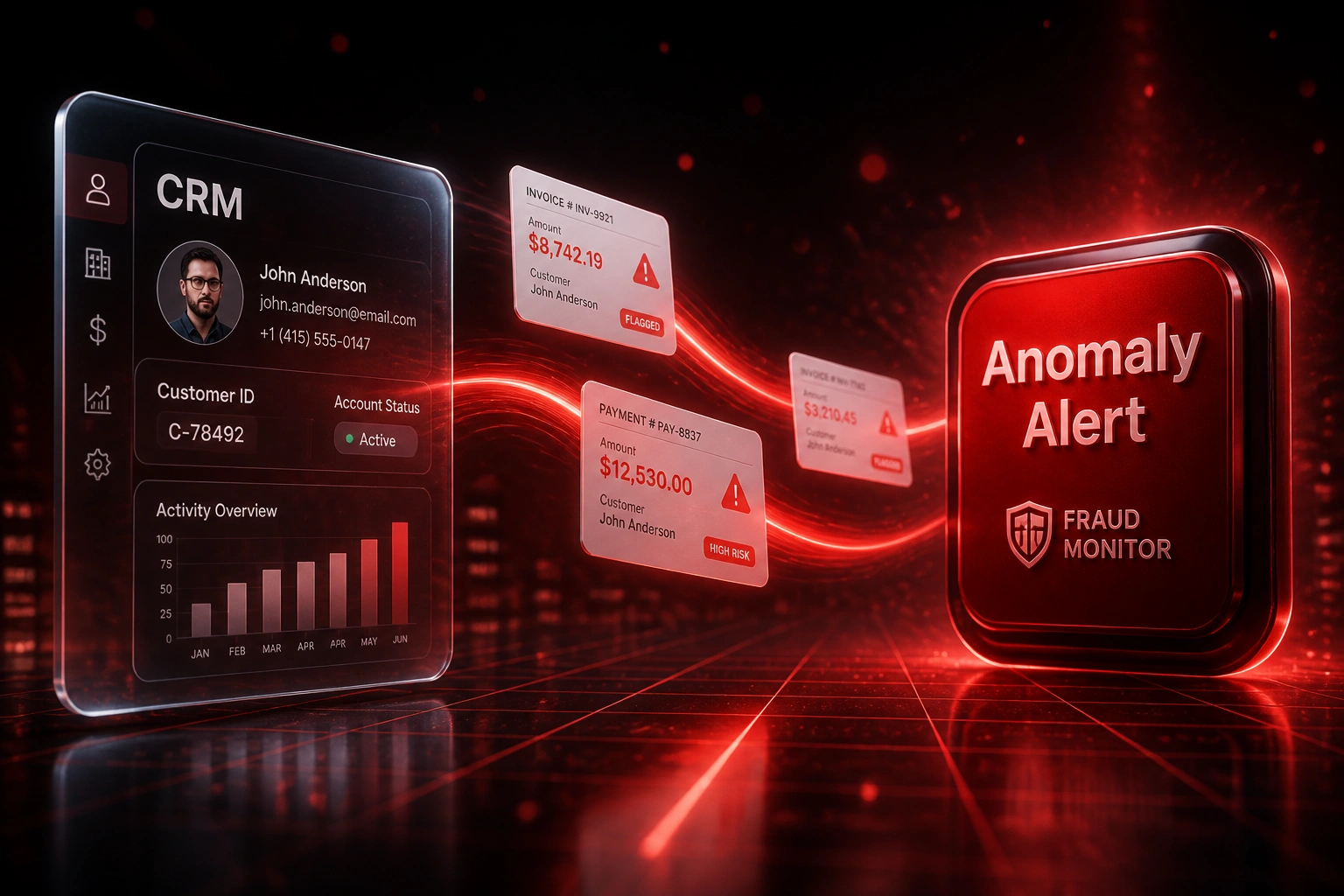
Sound Familiar?
These are the exact issues our clients faced before continuous monitoring:
- Duplicate supplier payments only surface at month-end reconciliation, when recovery is already hard
- Weekend EFTs and out-of-hours transfers clear without anyone reviewing them until the following week
- Unusual spend against a cost centre or vendor baseline is buried in bank-feed noise
- Rule thresholds either miss novel patterns or flood finance with alerts nobody trusts
- Fraud and honest AP mistakes are discovered weeks later in audits, after cash has already left
SABRIC reports digital banking fraud incidents up 86% in 2024, with losses above R1.4 billion and remote finance teams approving payments without the old office-floor visibility. Static month-end checks are no longer enough.
What Continuous Transaction Monitoring Actually Does
Disbursement lands → model scores it → finance is alerted → hold or investigate. No waiting for the audit pack.
Payment Hits the Feed
Bank feed, AP batch, or ledger posting arrives from Xero, Sage, or your ERP
Model Scores Risk
Vendor baseline, amount, timing, and duplicate signals produce a real-time risk score
Finance Gets the Alert
High-risk flags land in Slack, Teams, or the AP queue with reason codes and links
Stop or Recover Fast
Hold the payment, recall the EFT, or open recovery while funds are still reachable
Everything You Need for Reliable Fraud Alerts
Continuous Transaction Monitoring
Bank feeds, AP batches, and ledger postings are scored as they land, so unusual activity is flagged in hours rather than waiting for month-end close.
Duplicate Payment Detection
Models compare invoice numbers, amounts, vendor masters, and payment timing to catch duplicate supplier payments before the second disbursement settles.
Out-of-Pattern Spend Alerts
Each vendor, cost centre, and employee spend profile builds a baseline. Spikes, odd currencies, and weekend EFTs trigger real-time anomaly alerts for finance.
Bank Feed & AP Integration
We wire Xero, Sage, QuickBooks, Pastel, and major SA bank feeds so monitoring sits inside your existing finance stack, not a separate spreadsheet queue.
Lower False-Positive Load
Behavioural ML cuts the 90–95% false-positive noise typical of static rules, so controllers review genuine risk instead of clearing alert queues all day.
Finance Ops Write-Back
Flags land in Slack, Teams, email, or your AP case queue with severity, reason codes, and source transaction links so action starts from one screen.
Systems We've Wired for Anomaly Monitoring
From Month-End Discovery to a Four-Hour Catch
How a mid-size manufacturer's finance controller stopped a R380K duplicate supplier payment before it cleared settlement.
The Month-End Process
- AP posted invoices and EFTs against bank feeds with light rule checks
- Duplicate vendor invoices only surfaced during reconciliation packs
- Weekend transfers sat unnoticed until Monday cash reviews
- Alert fatigue meant threshold rules were gradually widened or ignored
- Recovery calls started weeks after cash left the account
The Monitored Process
- Every bank-feed and AP posting scored against vendor and cost-centre baselines
- Duplicate invoice and amount match flagged within four hours of the second payment attempt
- Weekend EFT alerts routed to the controller's phone queue
- False positives dropped enough that the team actually acted on every high-severity alert
- Treasury recalled the EFT while the funds were still recoverable
Before vs After AI Anomaly Alerts
How It Works
From first conversation to live monitoring in 4–8 weeks.
Tell Us Your Exposure
Where duplicate payments, unusual spend, and weekend EFTs hit you hardest, and which bank feeds and AP systems hold the trails.
Free Scoping Call
30-minute call with your CFO or finance controller to define alert appetite, review capacity, and data sources.
Build & Shadow
We train on your history, wire continuous monitoring, and shadow live disbursements so you compare AI flags to current review outcomes.
Go Live & Tune
Switch on real-time alerts into your finance queue. We tune thresholds until noise drops and genuine anomalies stay visible.
Frequently Asked Questions
How is AI anomaly detection different from rule-based transaction monitoring?
Static rules catch thresholds you already know: amount caps, vendor blocks, time-of-day limits. AI anomaly detection learns normal behaviour per vendor, cost centre, and payment channel, then flags unusual financial transactions, duplicate payments, and out-of-pattern spend that rules miss, while cutting the false positives that bury controllers in noise.
Will this flood our finance team with false alerts?
That is the failure mode of aggressive rules. Industry research puts rule-based transaction monitoring false-positive rates at 90–95%, while machine learning deployments commonly cut false positives by 50–70% or more. We tune for early catch without drowning the AP queue.
What types of unusual activity can the models catch?
We typically cover duplicate supplier payments, out-of-pattern vendor spend, weekend and after-hours EFTs, amount spikes against baseline, new-vendor first payments above threshold, and split invoices designed to dodge approval limits. The same layer can feed both hold-before-pay and post-payment investigation queues.
Which accounting and bank systems can you connect?
We commonly wire Xero, Sage, QuickBooks, Pastel, NetSuite, major South African bank feeds, and custom AP or ERP ledgers, plus Slack, Teams, or case tools for alert ownership. If the disbursement already lands somewhere governed, we can score it.
How long does an AI transaction anomaly project take?
Most builds take 4–8 weeks from scoping to go-live: data mapping, model training, alert workflows, and a parallel shadow period. A focused duplicate-payment monitor on a single ledger and bank feed can be live closer to three weeks when historical labels are clean.
How much does AI anomaly detection for finance cost?
Focused real-time monitoring on bank feeds and AP typically starts from around R55,000. Broader builds covering vendor baselines, weekend EFT rules, case write-back, and multi-entity ledgers usually fall between R75,000 and R140,000. Teams recovering even one mid-six-figure duplicate payment usually cover the build within a quarter.
Stop Finding Fraud Weeks Later in Audits
If unusual financial transactions and duplicate payments only surface at month-end, you are discovering problems after the money has already moved.
Tell us which ledgers and bank feeds you run, where AP volume is highest, and what slipped through last quarter. We will show you exactly how real-time anomaly alerts would work for your finance team.