Reconnecting Integrations After CRM Migration: Treat API Reconnection as Its Own Project
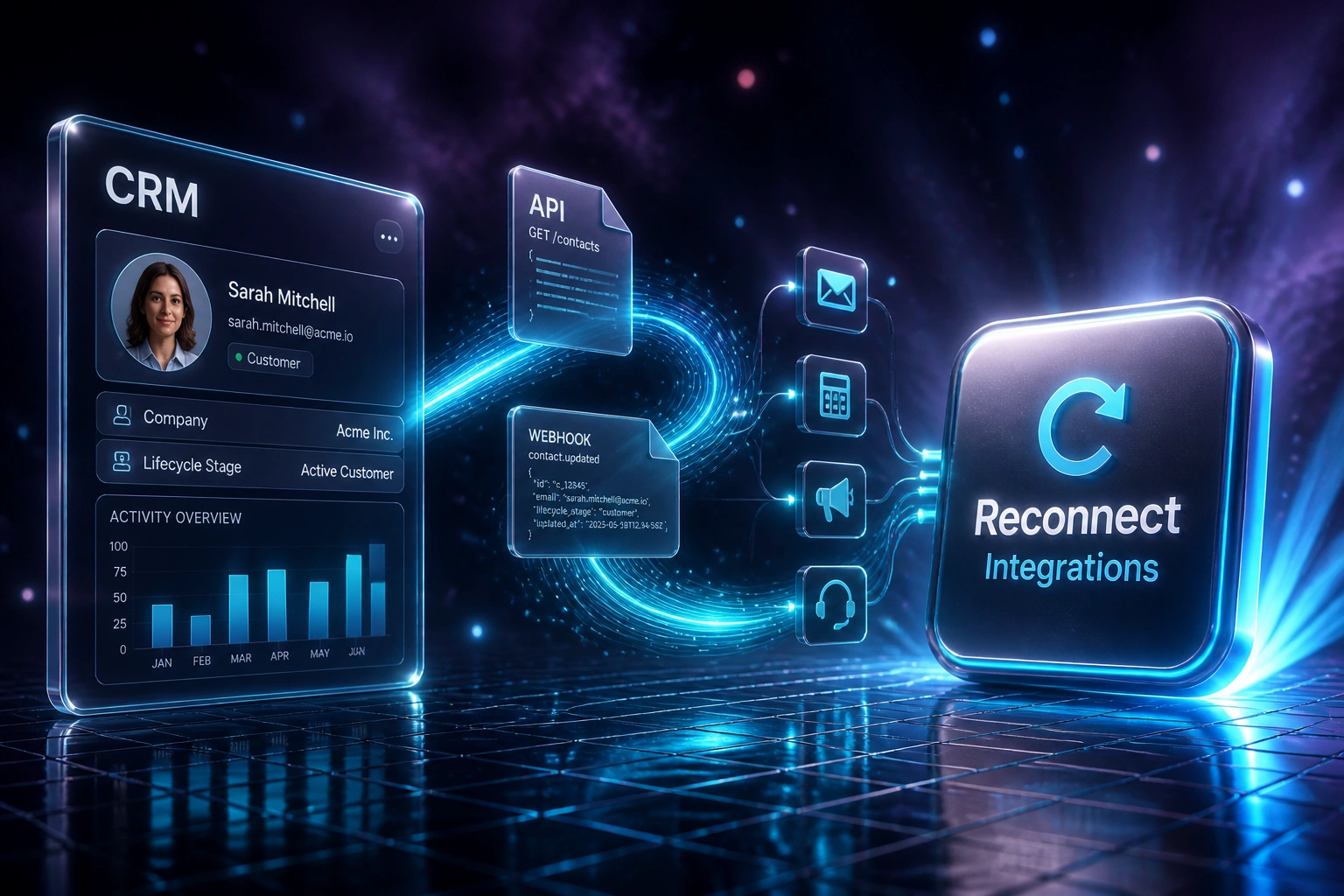
Your old CRM talked to email, accounting, marketing, support, and a tangle of Zapier and Make flows. On cutover day those CRM integrations do not migrate with the contacts. Each one needs a deliberate rebuild against the new system's API and webhooks.
We run the reconnection programme so revenue-critical paths are live before you switch off the old CRM.
Sound Familiar?
These are the exact issues CTOs and ops leads face when integration migration is left to the weekend of cutover:
- Cutover is booked, dual licences end soon, and nobody owns the list of 30+ apps still pointed at the old CRM
- Zapier and Make flows still fire against retired webhook URLs, so deals close while invoices and nurture emails stall
- OAuth tokens for email, accounting, and support die on go-live because nobody re-authorised against the new CRM
- Finance discovers a broken Xero sync on Monday morning: won deals sit unpaid while cash forecasts go blind
- Revenue-critical reconnects (invoicing, payments, email) compete with nice-to-have marketing widgets for the same weekend
Your cutover date is fixed and the dual-licence window is ending. Discovering a broken accounting sync on Monday morning costs far more than a planned reconnection programme. Budget R37,000 to R148,000 to rebuild each missed integration after the fact, or treat webhook migration and OAuth re-auth as a workstream now.
What the Reconnection Programme Actually Does
Inventory → prioritise revenue paths → rebuild APIs and automations → smoke-test before go-live.
Inventory Every Connection
Native apps, Zapier, Make, webhooks, and custom jobs mapped with owners and volume
Prioritise Cash Paths
Invoicing, payments, and email first; marketing and reporting once cash is safe
Rebuild and Re-Auth
New CRM APIs, webhook URLs, OAuth grants, and Zapier or Make triggers restored
Smoke-Test Then Cut Over
Deal, invoice, email, and ticket paths proven live before old CRM seats cancel
Everything You Need for a Clean Webhook Migration
Full Integration Inventory
Every native connector, Zapier Zap, Make scenario, webhook, and custom API job is listed with owner, volume, and blast radius before cutover.
Revenue-First Prioritisation
Invoicing, payments, and email land first. Marketing and reporting follow once cash and inbox flows are proven live.
API and Webhook Rebuild
Endpoints, payloads, and webhook URLs are remapped to the new CRM so events still fire when records change.
Zapier and Make Migration
Existing Zaps and scenarios are rebuilt against the new CRM triggers, with credentials reconnected and paths retested.
OAuth Re-Authentication
Every connected app is walked through fresh consent so tokens do not expire into silent 401 failures after go-live.
Pre-Cutover Smoke Tests
Deal-won, invoice, email, and ticket flows are exercised in staging and parallel run before the old CRM is switched off.
Platforms We Commonly Reconnect
From 34 Broken Paths to Zero Silent Failures
How a 45-person services firm mid-CRM-migration stopped discovering sync breaks on Monday morning and landed revenue-critical reconnects before cutover.
Cutover Without a Reconnect Plan
- 34 apps and automations still pointed at the retiring CRM three weeks before go-live
- Zapier Zaps and Make scenarios still used old webhook URLs and field names
- Xero and mailbox OAuth still authorised against the old connected app
- No ranking of which paths protected cash versus which were nice-to-have
- Dual-licence end date fixed; finance expected invoices to keep flowing on day one
A Dedicated Reconnection Programme
- Full inventory with owners, volume, and blast radius for every connector and Zap
- 12 revenue-critical paths (invoicing, payments, email) rebuilt and smoke-tested first
- Webhook URLs, OAuth grants, and Zapier triggers remapped to the new CRM API
- Parallel run caught two payload mismatches before any customer-facing failure
- Remaining marketing and reporting reconnects sequenced after dual licences cancelled
Before vs After Integration Migration
How It Works
From first conversation to monitored cutover in 3–6 weeks for a typical mid-market stack.
Inventory Your Stack
Old CRM, connected apps, Zapier/Make flows, webhooks, and who owns each revenue-critical path.
Free Scoping Call
30-minute call to rank integrations by cash impact, estimate rebuild effort, and set a cutover-safe sequence.
Rebuild and Smoke-Test
We reconnect APIs, webhooks, and automations, then run parallel tests against real deal and invoice scenarios.
Cut Over with Monitoring
Go live with alerts on failed deliveries. Dual licences only cancel once revenue-critical paths pass sign-off.
Frequently Asked Questions
Why does CRM migration break so many integrations?
Native connectors, webhooks, and Zapier or Make flows are bound to the old CRM's object IDs, field names, and OAuth apps. When records move to a new system, those bindings stop resolving. Practitioner reviews of 200+ migrations find that 72% break at least one critical integration (email, calendar, or accounting), usually discovered only after go-live.
How many integrations should we expect to reconnect?
Industry summaries put the average at about 7.2 integrations per CRM, while a 2024 B2B SaaS integrations survey found businesses averaging 29 integrations overall, with over half of enterprises running 51 or more. Mid-market stacks we audit commonly sit between 15 and 40 connected apps once Zapier, Make, webhooks, and reporting extracts are included.
What does it cost if we discover a broken sync after cutover?
Unplanned mid-market downtime from a botched CRM cutover averages about $47,000 (roughly R870,000 at R18.5 to the dollar). Rebuilding a single integration after the fact typically runs $2,000 to $8,000 (about R37,000 to R148,000), and remapping work across a six-system stack often lands near $12,000 per system (about R222,000). Silent Xero or email failures compound that with missed invoices and stalled nurture.
How long does Zapier or Make migration take?
Automations do not import cleanly when the CRM changes. Simple two-step Zaps usually take 15 to 30 minutes to rebuild. Complex paths with conditionals and error handling take 1 to 3 hours each. A stack of about 20 Zaps commonly needs 20 to 60 hours of rebuild and validation work, which is why we schedule it as its own workstream before cutover.
Why do webhooks and OAuth fail after we switch CRMs?
Webhook URLs and signing secrets are hardcoded to the old CRM. Production webhook deliveries already fail 2% to 5% of the time under normal load; after a URL change without retries and alerting, permanent 401 and 404 failures look like "nothing happened." OAuth grants also die when the old connected app is retired, so every accounting, email, and support connector needs a deliberate re-auth pass.
How much does a full CRM integration reconnection programme cost?
Focused reconnection for a mid-market stack typically lands between R60,000 and R180,000 depending on how many native connectors, Zapier or Make flows, and custom webhooks must be rebuilt. Against dual-licence burn, emergency remapping at R37,000 to R148,000 per system, and an R870,000-class unplanned outage, most clients recover the investment inside one dual-licence month avoided.
Do Not Discover Broken Syncs on Monday Morning
If your CRM migration date is fixed and the connected stack is still an unknown list, reconnection is already late. Treat it as a project, not a Friday evening chore.
Tell us which CRM you are leaving, which you are joining, and roughly how many apps, Zaps, and webhooks sit in between. We will show you a revenue-first reconnection sequence that fits your dual-licence window.