Generating Pro Forma Invoices from CRM: Before the Deal Closes
Imports, equipment, and project work often need a pro forma invoice for a deposit, letter of credit, or procurement approval while the deal is still open. Finance retypes the CRM quote into a crm proforma, then retypes it again as a tax invoice, while deposit cash waits.
We build CRM-driven pro forma generation that carries through to the final invoice without retyping.
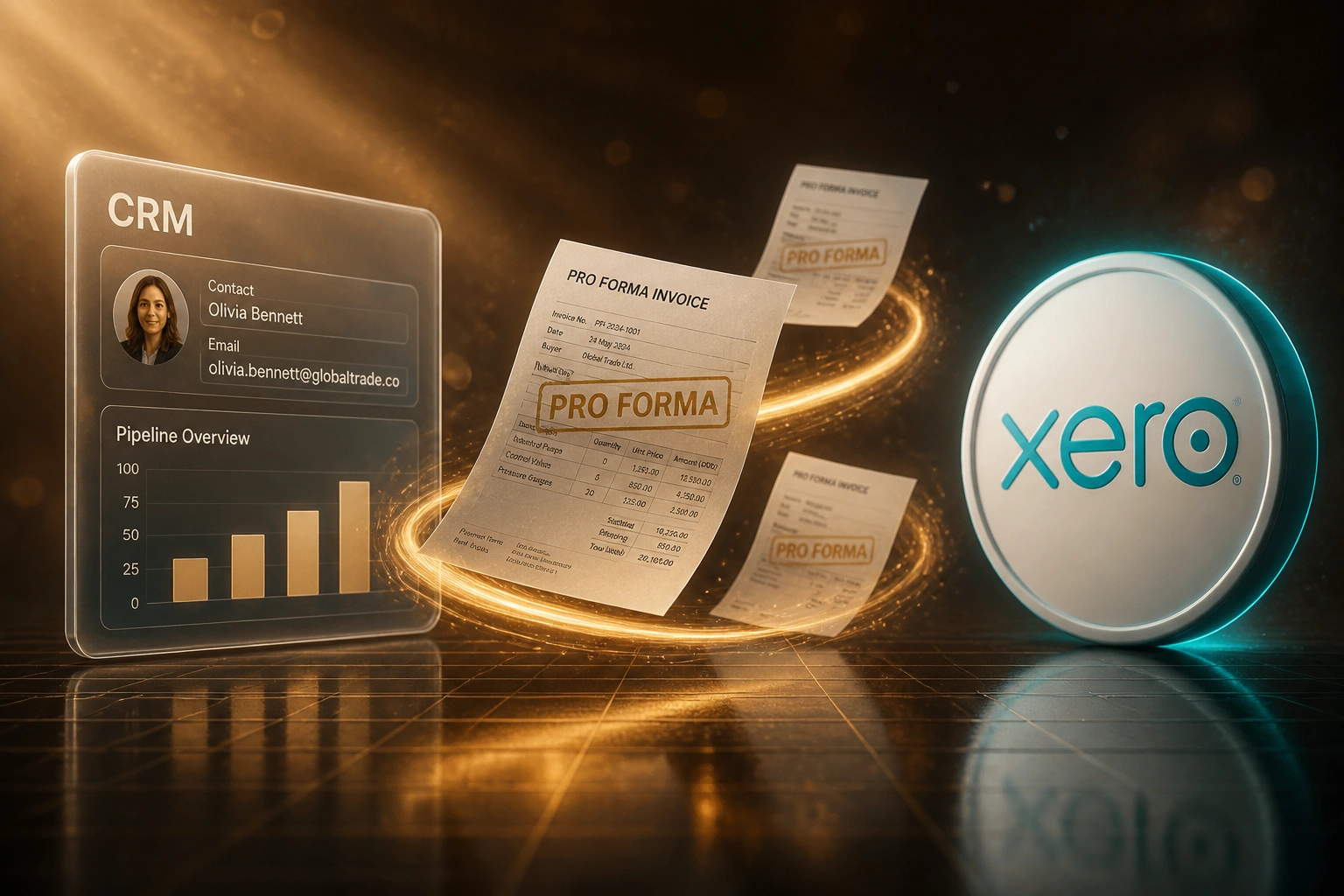
Sound Familiar?
These are the exact issues our clients faced before CRM proforma automation:
- Sales waits days for finance to retype a CRM quote as a pro forma invoice before the deposit, LC, or procurement sign-off can move
- The same line items are keyed again later as a tax invoice, so amounts, VAT treatment, and addresses drift between documents
- Pro formas go out looking like tax invoices, then buyers try to claim input VAT that SARS will not allow
- Deposit cash sits idle while finance rebuilds documents that already exist in the CRM deal
- Sales and finance argue over which version of the pre-billing document is current
Under SARS rules, a pro forma is not a tax invoice. Buyers cannot claim input VAT on it, and Section 20 tax-invoice fields only apply once the supply is made. Mislabelled pre-billing documents create compliance risk and payment disputes that slow deposits further.
Quote to Proforma, Then to Tax Invoice
Pre-billing document issued before close → deposit collected → same data becomes the final tax invoice. No human copying between systems.
Deal Hits Pre-Billing
Sales moves the CRM deal to a deposit, LC, or procurement stage
Pro Forma Raised
Labelled draft appears in Xero or Sage from the CRM quote, linked to the deal
Deposit or Approval
Buyer pays the deposit or signs off procurement; CRM status updates
Convert to Tax Invoice
Same line items become a SARS-ready tax invoice when the deal closes or supply is made
Everything You Need for Reliable Pre-Billing
CRM-Driven Pro Forma Generation
When a deal hits the pre-billing stage, a labelled pro forma invoice is raised from the CRM quote: deposit amount, line items, and terms intact, without finance retyping.
Deal-Linked Pre-Billing
Every pro forma stays linked to the CRM deal and the future tax invoice. Sales sees status; finance sees one trail from quote to deposit to final bill.
Pro Forma to Tax Invoice Conversion
When the deal wins or the deposit clears, the same data becomes a SARS-ready tax invoice in Xero or Sage. No second round of data entry.
SARS Labelling Guardrails
Documents are clearly marked Pro Forma Invoice and This is not a tax invoice. VAT display and numbering stay compliant so buyers do not claim input tax prematurely.
Deposit and LC Fields
Deposit percentages, letters of credit references, Incoterms, and validity dates map from the CRM deal into the pro forma your buyer needs for approval.
Quote to Proforma Fidelity
Accepted quote lines, discounts, and currencies carry through. The pre-billing document matches what sales sold, every time.
Platforms We've Connected for Pro Forma Pre-Billing
From 3-Day Pro Formas to Same-Day Pre-Billing
How a 35-person industrial equipment importer stopped double-retyping quotes and got deposit cash moving four days sooner.
The Manual Process
- Sales emailed finance a CRM quote PDF for every deposit or LC request
- Finance rebuilt a pro forma in Word or Xero: 30 to 45 minutes per deal
- When the deal won, the same lines were keyed again as a tax invoice
- Average three business days from stage change to pro forma sent
- One in three documents needed correction after buyers spotted amount or VAT mismatches
The Automated Process
- Deal hits Pre-Billing → labelled pro forma draft appears in Xero, linked to the deal
- Finance reviews deposit %, LC reference, and SARS labelling, then sends
- On closed-won or deposit clear, the same data converts to a tax invoice
- Same-day pro formas; deposits request starts when sales needs them
- Sales sees pro forma and tax-invoice status without chasing finance
Before vs After Pro Forma Automation
How We Deliver
From first conversation to live pro forma generation in 2 to 4 weeks.
Map Pre-Billing
Which CRM and ledger you use, when you need pro formas (deposits, LCs, procurement), and how they become tax invoices today.
Free Scoping Call
30-minute call to design stage triggers, deposit fields, SARS labelling, and the conversion path to the final invoice.
Build & Parallel Test
We build the flow, test against real deals, and run parallel so every pro forma and converted tax invoice matches before go-live.
Go Live & Monitor
Switch off double retyping. Monitoring alerts only when a deposit field or VAT rule needs a human.
Frequently Asked Questions
How is a pro forma invoice different from a tax invoice in South Africa?
A pro forma is a preliminary billing document used for deposits, letters of credit, customs estimates, or internal approval before the supply is complete. SARS does not treat it as a tax invoice: buyers cannot claim input VAT on it, and it should be clearly labelled as a pro forma (ideally with "This is not a tax invoice"). The tax invoice is issued later under VAT Act Section 20 once the supply is made.
How does this differ from generating invoices when a deal closes?
Closed-won tax invoice automation starts after the deal is won. This integration starts earlier: it raises a CRM-linked pro forma for pre-billing (deposits, LCs, procurement) while the deal is still open, then converts that same data into the final tax invoice so finance never retypes the quote twice.
Will finance still control what goes to the client?
Yes. We default to draft pro formas with an approval gate. Finance reviews deposit amounts, terms, and labelling, then sends. Automation removes retyping, not oversight. Conversion to a tax invoice can also require a one-click approve.
Which CRMs and accounting systems do you connect?
We have built pro forma and invoice flows for HubSpot, Pipedrive, Salesforce, Zoho CRM, Monday.com, and Freshsales, paired with Xero, Sage (Pastel and Cloud), and QuickBooks. If both systems have an API, we can connect them.
How long does CRM proforma automation take to set up?
A standard quote-to-proforma flow with tax-invoice conversion takes 2 to 4 weeks from scoping to go-live. Multi-entity, multi-currency, or LC-heavy setups take 4 to 6 weeks. We run parallel testing so sales and finance trust the documents before the manual process stops.
How much does this cost, and how fast is ROI?
Simple one-way pro forma generation with draft approval starts from around R15,000. Bidirectional setups with deposit fields, SARS labelling, and automatic conversion to tax invoices typically range from R25,000 to R60,000. Teams issuing 10+ pro formas a week usually recover the investment within 2 to 3 months through staff time and faster deposit collection.
Stop Waiting on Manual Pro Formas
If deposits and procurement approvals are stuck while finance rebuilds CRM quotes by hand, you are paying twice for a problem that is already solved.
Tell us which CRM and ledger you use, when you need pro formas, and how they become tax invoices today. We will show you exactly how automated pre-billing would work for your sales and finance teams.