Data Breach Response Plan: Rehearsed Before the Clock Starts
Most organisations keep a PDF incident policy nobody has drilled. When a data breach hits, critical hours disappear in confusion over who was exposed, who to notify, and what the Information Regulator will ask next.
We wire a rehearsed breach response plan into your CRM so detect, contain, assess, and notify run under a live clock.
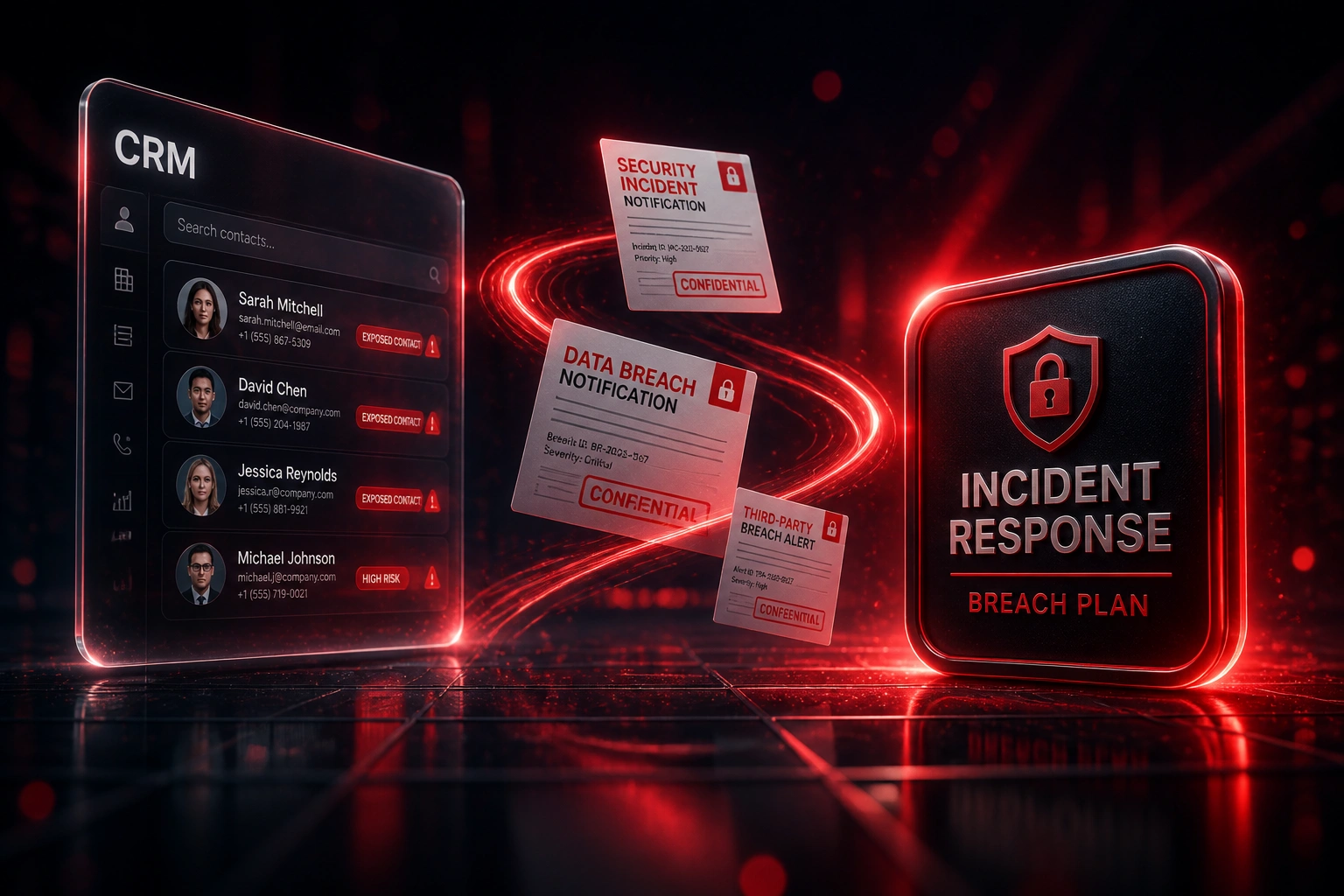
Sound Familiar?
These are the exact issues Information Officers and CEOs face when a near-miss or real incident hits:
- The incident policy is a PDF on SharePoint that nobody has drilled in 18 months
- Nobody can say which CRM contacts and PII fields were exposed without a week of exports
- Breach notification drafts stall while legal, IT, and marketing argue over the contact list
- The Information Officer has no evidence pack when the Regulator or insurer asks what happened
- The GDPR 72-hour clock starts while teams are still debating who owns the next step
Cyber insurers and financial-sector standards now expect a tested incident response plan, not a shelf policy. Underwriters ask for tabletop evidence at renewal, and Joint Standard 2 of 2024 requires financial institutions to establish and test cyber incident response plans. A near-miss that leaves you guessing exposed CRM contacts is the warning shot.
What the Breach Response Plan Actually Does
Detect → contain → assess exposed contacts → notify under a live clock. No Friday-night scramble across exports.
Incident Detected
Alert, vendor notice, or staff report opens a tracked incident with severity and owners
Contain and Assess
Checklist freezes the bleed; CRM query names which contacts and PII fields were in scope
Notify on the Clock
Regulator, GDPR authority, and data-subject drafts track against the 72-hour window
Evidence Packed
Who acted, who was told, and what was contained, ready for boards and the Regulator
Everything You Need for a Rehearsed Incident Response
Detection Triggers
Security alerts, vendor notices, and staff reports open a tracked incident with severity, owner, and a live clock against POPIA and GDPR notification duties.
Containment Checklist
Pre-agreed steps to isolate systems, revoke credentials, and freeze risky CRM exports so the first hour is rehearsed, not improvised.
Exposed Contact Assessment
Query the CRM for which contacts and PII fields sit in the compromised scope. Stop guessing from CSV dumps under time pressure.
Notification Workflows
Drafts for the Information Regulator, GDPR supervisory authorities, and affected data subjects, with status tracking against the 72-hour clock.
Evidence Pack
Immutable logs of who acted, when contacts were notified, and what was contained, ready for insurers, boards, and Regulator enquiries.
Tabletop Drill Mode
Run a dry-run incident against real CRM contact data so the playbook is tested before a live breach, not after.
CRMs We've Wired for Breach Response
From 11 Days of Chaos to 36 Hours
How a mid-market logistics firm turned an untested PDF policy into a CRM-wired breach notification playbook after a near-miss.
The Untested Policy
- Incident policy sat in SharePoint; last tabletop was never scheduled
- A vendor near-miss forced manual HubSpot and spreadsheet exports for 11 days
- Legal, IT, and marketing argued over which of 2,400 contacts were in scope
- No live clock against POPIA or the GDPR 72-hour duty for EU shippers
- Insurer renewal questionnaire asked for evidence of IR testing; answers were thin
The Rehearsed Playbook
- Severity triage opens an incident with owners and notification clocks
- CRM scope query names exposed contacts and PII fields in minutes
- Regulator and data-subject drafts track to completion with status
- Tabletop drill completed before the next renewal questionnaire
- Evidence pack ready for board, insurer, and Information Regulator
Before vs After a Wired Breach Response Plan
How It Works
From first conversation to a drilled, live playbook in 3–5 weeks.
Map Your Exposure
Where personal information lives in the CRM, which connected systems can leak it, and how notifications would work today.
Free Scoping Call
30-minute call with your CEO or Information Officer to design detect, contain, assess, notify, and evidence flows.
Build and Drill
We wire the playbook into your CRM and connected tools, then run a tabletop with real contact scopes before go-live.
Go Live and Prove It
Staff keep the same tools. The IO gets clocks, contact lists, notification status, and an evidence pack. The PDF policy becomes operational.
Frequently Asked Questions
How is a breach response plan different from a POPIA compliance programme?
A POPIA programme covers lawful basis, retention, DSARs, and day-to-day safeguards. A data breach response plan is the operational playbook for when personal information may already be compromised: detect, contain, assess which CRM contacts were exposed, notify the Information Regulator and affected people, and evidence every step. Most organisations need both. This page is the incident playbook wired into your CRM.
What are the notification clocks under POPIA and GDPR?
GDPR Article 33 requires notifying the supervisory authority without undue delay and, where feasible, within 72 hours of becoming aware of a personal data breach. POPIA section 22 requires notifying the Information Regulator and affected data subjects as soon as reasonably possible; the Regulator's guidance treats that as urgent, and failure to notify features in enforcement notices. Administrative fines under POPIA section 109 climb to R10 million.
Why does the CRM matter in a breach?
Your CRM holds the contact identities, emails, phone numbers, and often the sensitive context attackers want. Without a rehearsed query against that data, notification becomes days of manual exports, wrong lists, and missed clocks. We wire assessment and notification status into the CRM so the Information Officer knows who was exposed and who has been told.
Do cyber insurers really care about a tested plan?
Yes. South African underwriters increasingly treat a documented incident response plan and evidence of recent tabletop testing as a renewal requirement, alongside monitoring and escalation procedures. An untested PDF can raise premiums, reduce cover, or slow a claim when you need it most.
Will this disrupt our current tools?
No. We design the playbook around HubSpot, Pipedrive, Salesforce, Zoho, Monday.com, or a custom CRM, plus the systems already connected to it. Your team keeps familiar tools. The automation runs the clocks, contact assessment, and evidence trail behind the scenes.
How much does a CRM-wired breach response plan cost?
Focused detect-contain-assess-notify wiring on an existing CRM typically starts around R45,000. Full playbooks with multi-system cascades, Regulator and GDPR notification packs, evidence logging, and tabletop drills usually land between R65,000 and R120,000. Against an average South African breach cost of R44.1 million (IBM 2025) and R10 million POPIA fine exposure, most mid-market teams see payback in the first avoided scramble or insurer renewal.
Stop Gambling on an Untested Breach Policy
If your incident response still lives in a PDF nobody has drilled, you are betting the next near-miss will somehow produce the right contact list on time.
Tell us which CRM holds your customer PII, how connected systems talk to it, and what your last tabletop looked like. We will show you how a wired data breach response plan would run under a live notification clock.