Data Encryption at Rest and in Transit: Close the Cloud Gap
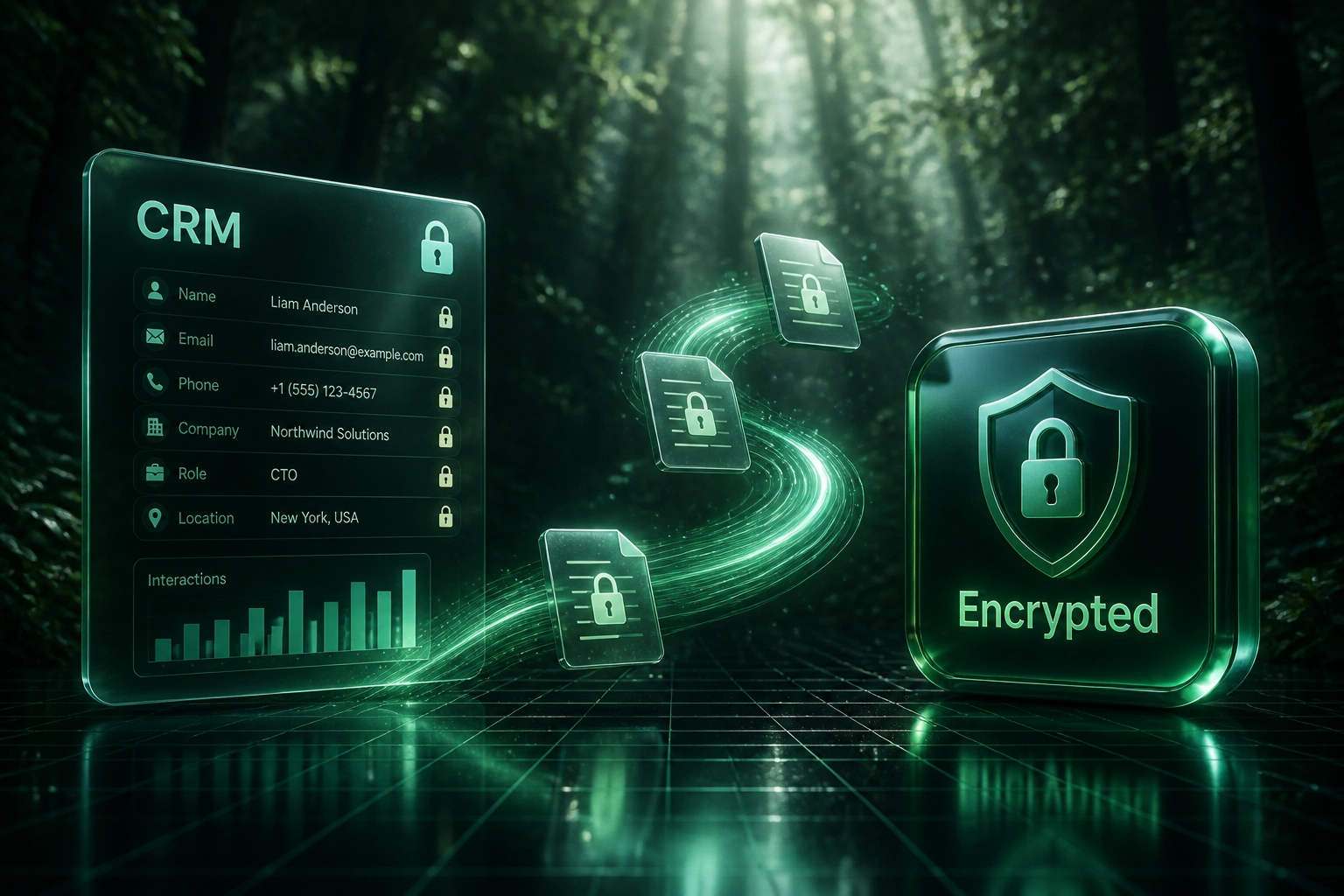
Your CRM lives in the cloud, so leadership assumes customer data is encrypted. Sync pipes, nightly exports, and backup copies often are not. Unencrypted data is a breach waiting to happen, and modern compliance expects protection both where data is stored and as it moves.
We close encryption gaps across your CRM and connected systems so POPIA section 19 and GDPR security of processing are demonstrable.
Sound Familiar?
These are the exact gaps our clients discovered when encryption was assumed, not verified:
- Leadership assumes the CRM is encrypted because it is hosted in the cloud
- Sync pipes between CRM, accounting, and file storage still move customer data in the clear
- Nightly exports and backup copies sit on shared drives without encryption at rest
- Vendor and cyber-insurer questionnaires fail on TLS coverage and key custody answers
- The Information Officer cannot prove POPIA section 19 safeguards across the integration estate
A failed cyber-insurer questionnaire, a blocked enterprise vendor security form, or a competitor breach in your sector is usually what forces the question: where is customer data still plaintext between the CRM and everything connected to it?
What Encryption Hardening Actually Does
Find cleartext paths → seal storage and TLS hops → document keys → prove it to insurers and buyers.
Map Cleartext Paths
CRM syncs, export jobs, staging folders, and backups that still hold or move data in the clear
Enforce TLS Encryption
Every integration hop between CRM, accounting, and storage runs over modern TLS
Encrypt Stored Copies
Staging, exports, and backups get encryption at rest with documented key custody
Evidence Pack Ready
Information Officer answers insurer and vendor questions with facts, not assumptions
Everything You Need for Demonstrable Encryption
TLS on Every Integration Hop
CRM-to-accounting, CRM-to-storage, and middleware connections run over modern TLS encryption so customer data is protected while it moves.
Encryption at Rest for Staging and Backups
Sync staging folders, export archives, and backup copies of CRM extracts are stored encrypted, not as plaintext CSVs on a shared drive.
Cloud Does Not Equal Covered
We map where your SaaS vendor encrypts by default and where your own pipes, exports, and operator tools leave gaps the cloud console never shows.
Key Custody Basics for Decision Makers
Who holds the keys, where they live, and how recovery works, documented for the Information Officer without a cryptography seminar.
Questionnaire-Ready Evidence
Encryption at rest, TLS in transit, and key management answers packaged so vendor security and cyber-insurer forms stop becoming a two-week scramble.
POPIA and GDPR Demonstrable Safeguards
Section 19 and GDPR security-of-processing expectations become visible controls across CRM and connected systems, not a policy paragraph.
Systems We Seal Across the Integration Estate
From Failed Insurer Form to a R4.2M Closed Deal
How a 45-person Johannesburg professional services firm discovered plaintext CRM exports, sealed the estate, and passed the next enterprise security questionnaire in two days.
Assumed Encrypted
- Leadership treated HubSpot cloud hosting as proof of end-to-end encryption
- Middleware logged sync payloads in plaintext between CRM and Xero
- Nightly CSV exports landed on an unencrypted NAS share
- Cyber insurer renewal stalled on encryption-at-rest and TLS answers
- Vendor security questionnaires took 18 days of IO and IT back-and-forth
Demonstrably Encrypted
- TLS enforced on every CRM, accounting, and storage integration hop
- Staging folders, exports, and backups encrypted at rest
- Key custody documented for the Information Officer
- Insurer renewal completed with evidence, not marketing pages
- Enterprise buyer questionnaire answered in two working days
Before vs After Encryption Hardening
How It Works
From first conversation to demonstrable encryption across your integration estate in 3–6 weeks.
Map the Cleartext Paths
Where CRM data sits, moves, exports, and backs up without encryption at rest or TLS in transit.
Free Scoping Call
30-minute call with your CEO or Information Officer to prioritise pipes, backups, and questionnaire blockers.
Seal the Estate
We enforce TLS on integrations, encrypt staging and backups, document key custody, and run a sample questionnaire pack.
Prove It Continuously
Monitoring and evidence packs stay ready for insurers, enterprise buyers, and POPIA reviews.
Frequently Asked Questions
Is our CRM already encrypted because it is in the cloud?
Your vendor usually encrypts data inside their product. That does not cover sync middleware, nightly CSV exports, shared-drive backups, or file hand-offs between CRM, accounting, and storage. Those hops are where most mid-market breaches of personal information still happen in plaintext.
What does data encryption at rest and in transit mean for our systems?
Encryption at rest protects stored copies: databases, staging folders, exports, and backups. Encryption in transit (typically TLS) protects data while it moves between CRM, accounting, email, and storage. POPIA section 19 and GDPR Article 32 expect both where the risk to people justifies it. Regulators treat their absence after an incident as hard to defend.
Will this disrupt sales or finance workflows?
No. Staff keep using HubSpot, Salesforce, Xero, and the same folders. We harden how data is stored and moved underneath. Parallel checks confirm syncs still work before we retire plaintext paths.
How does this help with cyber insurance and vendor questionnaires?
Those forms ask whether sensitive data is encrypted at rest and in transit, and how keys are managed. We leave you with accurate answers and evidence instead of hoping the SaaS marketing page counts for every system you operate.
Which systems do you cover?
We routinely seal HubSpot, Salesforce, Pipedrive, Xero, Sage, Google Drive, Microsoft 365, and custom integration middleware. If customer or financial personal information moves through it, it belongs in the encryption map.
How much does encryption hardening across CRM integrations cost?
Focused TLS and encrypted-storage work on a handful of syncs typically starts around R45,000. Broader estates with backups, export paths, key custody documentation, and questionnaire packs usually land between R65,000 and R120,000. Against a global average breach cost near R83 million and POPIA fines up to R10 million, payback is measured in avoided exposure and deals that require proof.
Stop Assuming the Cloud Means Encrypted
If your CRM sync pipes, exports, or backups still move customer data in the clear, you are one questionnaire or competitor breach away from a very expensive conversation.
Tell us which CRM and connected systems you run, where exports land, and which insurer or vendor form is stuck. We will show you exactly where encryption at rest and TLS encryption need to land.