Design a Dunning Email Sequence That Recovers Revenue Politely
The difference between recovering a failed payment and losing a customer is the tone and timing of your payment recovery emails. A clumsy dunning email sequence burns goodwill; a well-timed soft-to-firm cadence brings the payment back.
We design the sequence, then wire it into your CRM, ledger, and payment gateway.
Sound Familiar?
These are the exact issues SaaS founders and membership operators bring us before we redesign the sequence:
- One blunt "payment failed" email goes out, then silence until the subscription is cancelled
- Tone jumps from friendly to threatening with no planned soft-to-firm progression, so goodwill burns before the card is updated
- Timing is wrong: reminders land weeks late, or pile up on the same day as a gateway retry the customer never knew about
- Email is the only channel, even though SMS and WhatsApp recover customers who never open billing mail
- CRM, accounting, and Stripe or PayFast each fire their own messages, so the customer gets three conflicting notes or none at all
Card failure rates keep rising, and Stripe, PayFast, and PayGate already emit failed-payment webhooks the moment a renewal declines. If your sequence is still one generic email from a no-reply address, you are leaving recoverable revenue on the floor while involuntary churn quietly compounds.
From Failed Charge to the Right Message on the Right Day
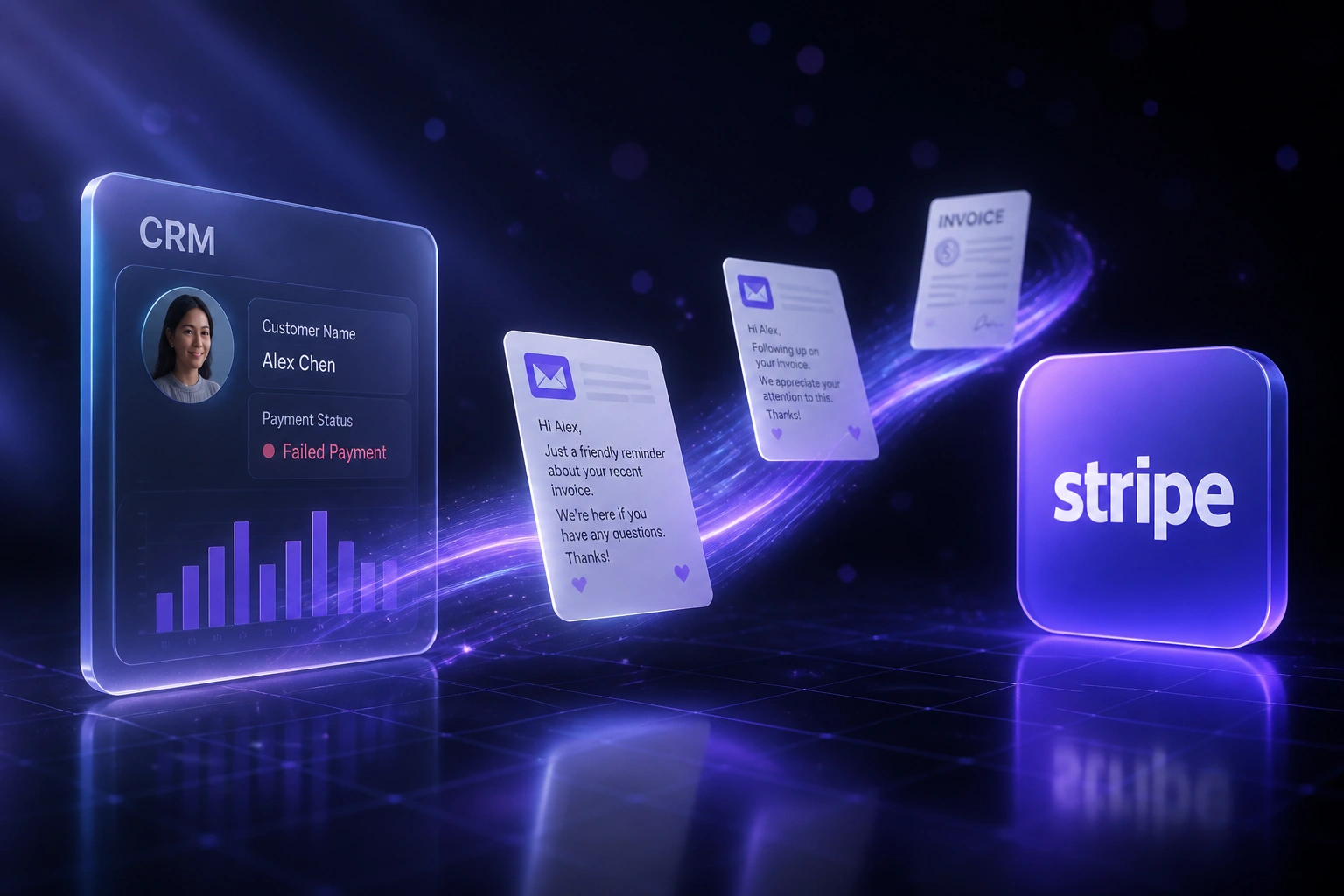
Payment fails or invoice goes overdue → soft-to-firm sequence starts → customer updates card or pays → CRM and ledger stop chasing.
Failure Triggers
Stripe, PayFast, or PayGate webhook, or overdue status in Xero or Sage, starts the designed cadence
Day 0 / 3 / 7 / 14
Polite email first, firmer follow-ups on schedule, SMS or WhatsApp later when email alone is not enough
CRM Syncs Status
HubSpot or Pipedrive shows Recovering; success or card update cancels remaining steps
Revenue Recovered
Payment clears, access stays on, and finance sees recovered vs written-off without a spreadsheet chase
Everything You Need for a Designed Payment Recovery Sequence
Soft-to-Firm Cadence Design
Day 0 is polite and factual. Day 3 clarifies what is at risk. Day 7 adds urgency. Day 14 is a final notice. Tone escalates on purpose, not by whoever happens to write the chase.
Email First, Then SMS/WhatsApp
Email carries the early recovery path with a one-tap update link. SMS or WhatsApp joins later in the window when open rates drop, without spamming day zero.
Gateway + Ledger Triggers
Failed charges from Stripe, PayFast, or PayGate, and overdue invoices from Xero or Sage, both start the same designed sequence so nothing falls through the crack between systems.
CRM Status and Stop Rules
HubSpot or Pipedrive shows Recovering, Updated, or Cancelled. Payment success or a card update cancels the rest of the sequence within minutes.
Segment and VIP Paths
Annual plans, high LTV accounts, and first-time failures get softer copy or a longer window. Chronic non-payers escalate sooner so you protect the relationships that still matter.
Recovery by Step Reporting
See which day recovers the most revenue, which channel converts, and how much of your failed-payment pool is still recoverable before you write it off.
Platforms We Wire Into a Designed Sequence
From 38% Recovery to 74% Without Sounding Like Collections
How a South African membership platform redesigned its dunning emails and wired the cadence into Stripe, HubSpot, and WhatsApp.
One Generic Failure Email
- Stripe sent a default payment-failed notice; HubSpot sometimes sent a second conflicting note
- No planned day-3 or day-7 follow-up, so soft declines died quietly after the first retry
- Tone was either apologetic forever or suddenly harsh when finance chased manually
- WhatsApp only used when a founder personally messaged a VIP who had already churned
- About R18,000 a month in failed renewals on R380,000 MRR, with under 40% coming back
Designed Soft-to-Firm Sequence
- Day 0 polite email with one-tap card update; day 3 reminder; day 7 firm notice plus WhatsApp
- Day 14 final notice before access cut, with VIP accounts on a softer, longer path
- Payment success or card update stops every pending step in HubSpot within minutes
- Finance sees recovery by day and channel instead of guessing from the gateway dashboard
- Same failed-renewal pool, but most recoverable revenue returns inside the first two weeks
Before vs After a Designed Dunning Sequence
How It Works
From first conversation to a live soft-to-firm sequence in 2–4 weeks.
Audit Your Current Messages
What you send today, on which day, from which system, and where tone or timing is costing recoveries.
Free Scoping Call
30-minute call to design the day-0/3/7/14 cadence, channel mix, VIP exceptions, and which gateway or ledger events should fire each step.
Write, Wire & Test
We draft the soft-to-firm templates, connect Stripe or PayFast and your CRM, then dry-run against real failed charges before customers see anything.
Go Live & Tune
The sequence goes live. We watch recovery by day and channel, then tighten copy and timing in the first billing cycle.
Frequently Asked Questions
How is sequence design different from just turning on gateway dunning?
Native Stripe or PayFast reminders are a start, but they rarely cover tone progression, VIP exceptions, accounting overdue invoices, or a later WhatsApp step. We design the full soft-to-firm cadence first, then wire it so failed charges and overdue invoices trigger the right message on the right day across your stack.
What cadence do you typically recommend?
For monthly subscriptions we usually front-load day 0, day 3, day 7, and day 14, with optional day 21 to 28 touches for higher-value plans. Industry analyses of large dunning datasets show the same-day email is the highest-leverage step, with meaningful recovery still available through the first two weeks. Annual plans often get a longer window before cancellation.
Will a polite sequence actually recover more than a hard collections tone?
Yes, for involuntary churn. These customers still intend to stay; the card failed. Helpful, clear update-card copy in the first 72 hours outperforms aggressive language that feels like debt collection. Firmness comes later, once the customer has had fair notice and a simple path to fix the payment method.
Which systems can drive the designed sequence?
We typically trigger from Stripe, PayFast, PayGate, or Peach Payments failed-charge webhooks, and from overdue status in Xero or Sage. Status and stop rules sync into HubSpot or Pipedrive. Messages go out by email first, then SMS or WhatsApp Business later in the window.
How is this different from your failed-payment recovery or overdue reminder pages?
Failed-payment recovery focuses on soft vs hard decline routing and retry timing. Overdue reminders focus on aged AR chase from the ledger. This page is the craft of the sequence itself: tone, day-by-day cadence, channel order, and integrating that designed programme so every trigger fires the right step without conflicting messages.
How much does a designed dunning sequence cost to build?
A designed email cadence with gateway triggers and CRM stop rules typically starts around R22,000. Multi-channel builds with WhatsApp or SMS, VIP paths, and dual triggers from billing plus accounting usually range from R30,000 to R60,000. Operators recovering tens of thousands of rand a month in failed renewals usually cover the build within one or two billing cycles.
Stop Losing Customers to Clumsy Dunning Emails
If failed payments still get one generic note (or three conflicting ones), you are choosing involuntary churn over a designed recovery path.
Tell us which gateway and CRM you use, what you send today, and where goodwill matters most. We will map a soft-to-firm cadence and show you how it wires into your stack.