Fixed Asset Lifecycle: Track Assets From Purchase Through to Disposal
Your books still show machines that were sold two years ago. Disposal is an email chain with no residual-value check. Without end-to-end asset lifecycle control, ghost assets inflate the register, depreciation is wrong, and audits fail at disposal.
We build one system from purchase order through deployment, maintenance, depreciation, and clean disposal.
Sound Familiar?
These are the exact issues our clients faced before lifecycle control:
- Machines sold two years ago still sit on the fixed asset register and keep depreciating
- Disposal is an email chain with no residual-value check, approval trail, or tax write-off review
- Year-end verification finds assets that cannot be located, while others exist with no register entry
- Insurance and maintenance budgets cover phantom equipment that no longer operates
- IFRS disposal entries and SARS capital-allowance recoupments are rebuilt from spreadsheets under audit pressure
Year-end fixed asset verification, IFRS disposal accounting, and SARS capital-allowance recoupments do not wait for a tidy email trail. If disposal never hit the register, you are still depreciating ghosts and risking clawbacks when proceeds finally surface.
What Asset Lifecycle Management Actually Does
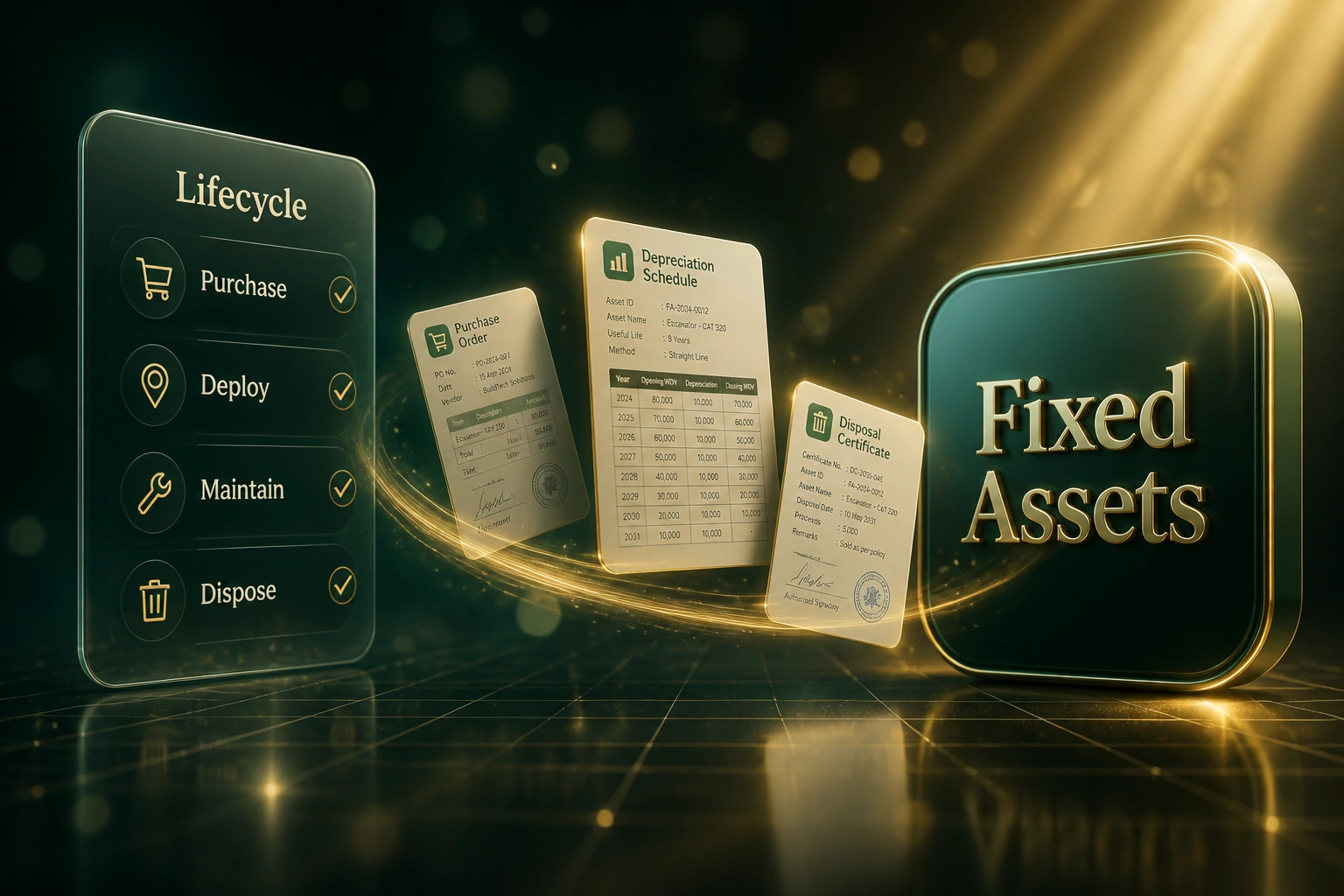
Purchase → deploy → maintain → depreciate → dispose. Every stage gated, logged, and synced to the books.
Procure & Capitalise
PO and receipt create the asset with cost, life, and cost centre before it leaves the dock
Deploy & Maintain
Location, custodian, and service history stay on the same record ops and finance both trust
Depreciate Accurately
Book depreciation follows live status so disposed or idle assets stop driving false expense
Dispose Cleanly
Approvals, residual value, proceeds, and IFRS/SARS packs close the lifecycle with evidence
Everything You Need for End-to-End Asset Control
Purchase-to-Register Capture
Approved purchase orders and GRNs create fixed asset records with cost, useful life, location, and custodian before the asset leaves receiving.
Deployment & Location Tracking
When an asset is deployed, site, cost centre, and responsible owner update in one place so the register reflects where capital actually sits.
Maintenance Linked to Assets
Service history, work orders, and downtime attach to the asset record so finance and ops share one lifecycle view, not parallel spreadsheets.
Depreciation That Matches Reality
Book depreciation runs from live asset status. Disposed, idle, or impaired assets stop driving false expense the month the event is approved.
Disposal Approvals & Residual Value
Sell, scrap, or transfer only after residual value, proceeds, and approver sign-off are captured. No more silent write-offs by email.
IFRS & SARS Disposal Packs
Derecognition journals, gain or loss on disposal, and capital-allowance recoupment or scrapping-allowance inputs export ready for year-end and SARS review.
Ledgers & Registers We've Connected
From 22% Ghost Assets to Under 2%
How a Gauteng manufacturing finance team stopped depreciating sold plant and closed disposal audits without a weekend spreadsheet rebuild.
The Manual Lifecycle
- Disposal requests lived in email; residual value was guessed or skipped
- Plant sold in prior years still carried net book value and monthly depreciation
- Year-end verification could not locate roughly one in five register lines
- Insurance and maintenance budgets still covered equipment that no longer existed
- SARS recoupment and IFRS derecognition packs were rebuilt under audit pressure
The Controlled Lifecycle
- Every disposal needs residual-value check, approver, proceeds, and ledger write-off
- Ghost assets cleared in the first verification cycle; depreciation stopped the same month
- Purchase, deployment, and maintenance feed one register finance can defend
- Insurance schedules and maintenance budgets sync to active assets only
- IFRS disposal journals and capital-allowance inputs export with an audit trail
Before vs After Lifecycle Control
How It Works
From first conversation to live lifecycle control in 4–8 weeks.
Tell Us Your Register
How many assets, which ledger, where disposals stall, and what auditors flagged last year.
Free Scoping Call
30-minute call to map procure → deploy → maintain → dispose, and design the approval gates finance needs.
Build & Reconcile
We build the lifecycle system, reconcile against your current register, and run parallel for a verification cycle.
Go Live & Monitor
Switch off email disposals. Alerts keep ghost assets and missed residual checks from creeping back.
Frequently Asked Questions
How long does a fixed asset lifecycle system take to implement?
A focused procure-to-dispose build typically takes 4–8 weeks from scoping to go-live. Register cleanup and first physical verification can run in parallel. Multi-site migrations with complex depreciation policies take closer to 8–12 weeks.
Will this replace our accounting system?
No. We connect lifecycle events into Xero, Sage, QuickBooks, SAP, Syspro, or your ERP so depreciation and disposal journals post correctly. Your ledger stays the system of record for the books.
How do you handle SARS capital allowances on disposal?
Disposal workflows capture proceeds, tax value, and write-off type so finance can calculate section 8(4)(a) recoupments or section 11(o) scrapping allowances with a complete audit trail. We do not replace your tax advisor; we stop the data gaps that cause clawback surprises.
What about IFRS / IAS 16 disposal accounting?
When an asset is disposed, the system supports derecognition of carrying amount, records proceeds, and surfaces the gain or loss for the period. Year-end verification packs show existence, completeness, and disposal evidence auditors expect.
Can we clean up ghost assets already on the register?
Yes. Most engagements start with a register reconciliation and physical verification. Industry data shows first audits commonly uncover an average ghost rate around 18%, with 15–30% typical where tracking has been manual for years.
How much does fixed asset lifecycle management cost?
Lifecycle systems with disposal approvals and ledger sync typically range from R35,000 to R90,000 depending on asset volume, sites, and ERP complexity. Against R597,000+ annual waste on an R18.5 million register with unmanaged ghosts, most clients see payback inside one financial year.
Stop Depreciating Assets You Already Sold
If disposal still happens by email and your register still carries ghosts, you are funding wrong depreciation, wasted insurance, and audit findings that are already solved elsewhere.
Tell us how large the register is, which ledger you run, and where disposal stalls. We will show you how procure-to-dispose control would work for your finance ops team.