Expose an Invoice API So Your Systems Can Bill Programmatically
Your product, ecommerce, or ops stack closes the sale. Finance still copies it into Xero, Sage, or QuickBooks by hand. That handoff delays cash, creates errors, and turns engineering into a ticket queue every time billing needs a new path.
We build the billing API layer that lets your systems invoice without the spreadsheet.
Sound Familiar?
These are the exact issues our clients faced before a dedicated billing API:
- Ecommerce, CRM, or ops can close a sale, but nobody can raise a ledger invoice without finance retyping it
- Engineering tickets pile up every time product needs a new billing path into Xero, Sage, or QuickBooks
- Spreadsheet handoffs create wrong amounts, VAT codes, and customer details that delay payment
- Idempotent billing does not exist: retries and double-clicks create duplicate invoices in the ledger
- Month-end reconciliation is a hunt for which system was the source of truth for each invoice
Intuit's App Partner Program began metering QuickBooks Online API reads from July 2025, with paid tiers from about R5,550 a month. Combined with Xero's hard ceiling of 60 calls per minute and 5,000 per day, naive direct connectors break under growth. A purpose-built invoice API with queueing and idempotency is now the safer path.
What a Billing API Actually Does
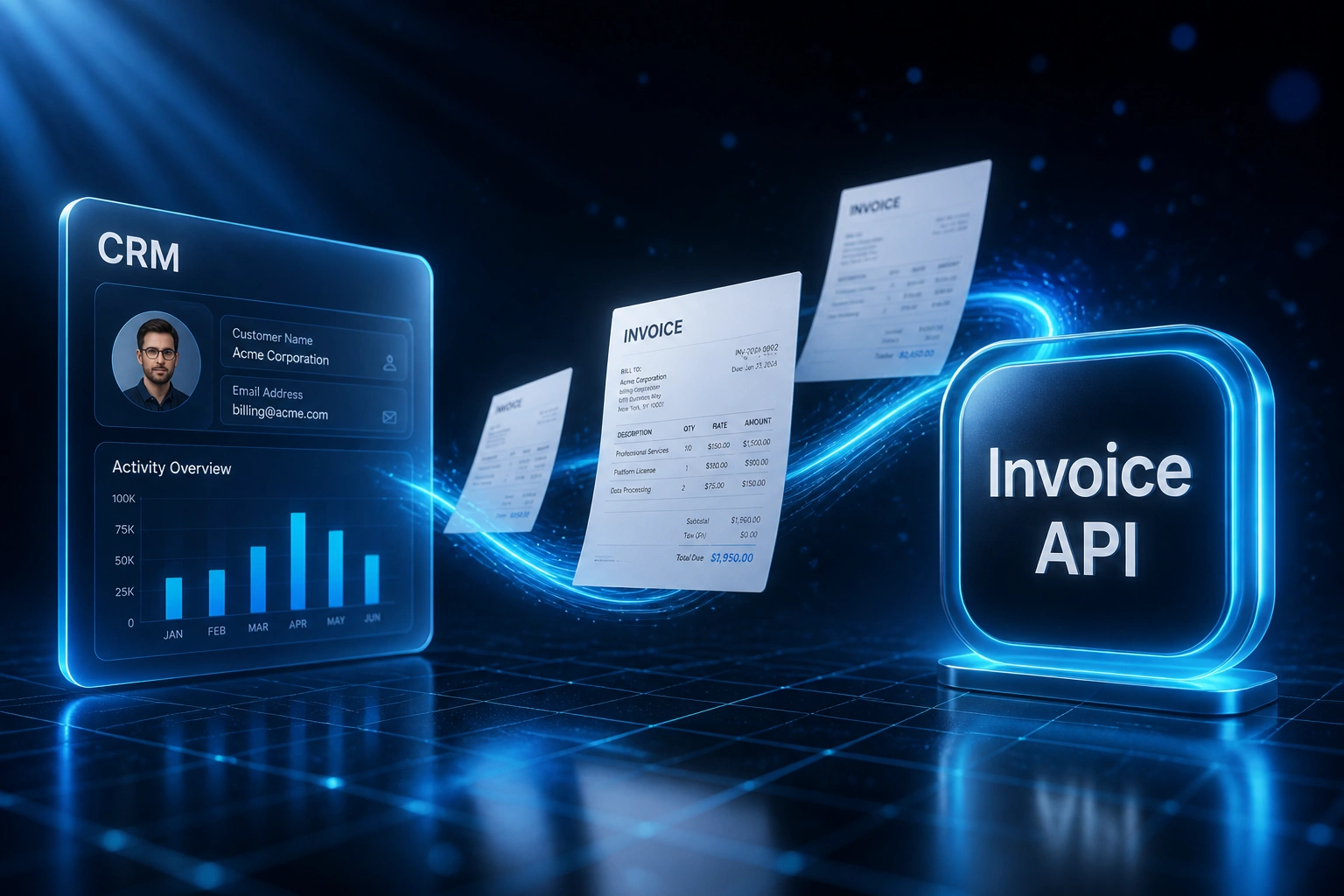
Revenue event → invoice created → ledger synced → status returned. No human copying between systems.
System Raises a Bill
CRM, ecommerce, or your product emits a revenue event the invoice API accepts
Invoice Created Safely
Auth, validation, and idempotency keys prevent duplicates before anything hits the ledger
Ledger Sync
Facade posts to Xero, Sage, or QuickBooks with correct VAT, contacts, and account codes
Status Flows Back
Paid and overdue states return to the originating system so ops never chases finance
Everything You Need for Programmatic Invoicing
Programmatic Invoice Creation
Your product, CRM, or ops stack creates, updates, and queries invoices through one billing API. Finance stops being the copy-paste layer between systems.
Ledger Sync Facade
A thin integration layer maps your internal invoice shape onto Xero, Sage, or QuickBooks with the right tax rates, account codes, and contact matching.
Auth and Access Control
Scoped credentials so ecommerce, CRM, and internal tools can bill safely without sharing full accounting admin logins across teams.
Idempotent Writes
Retries, webhooks, and queue backfills never double-post. Each business event maps to one invoice in the ledger, even when systems hiccup.
Status Query and Sync-Back
Paid, voided, and overdue states flow back to the system that originated the sale, so product and ops stop chasing finance for status.
Rate-Limit and Retry Handling
Xero and QuickBooks throttle hard. The facade queues, backs off, and batches so peak billing days do not fail silently at 60 calls a minute.
Systems We Have Wired Into a Billing API
From 35 Minutes per Invoice to 90 Seconds
How a 35-person SaaS company stopped waiting on engineering tickets to bill, and got paid eight days sooner.
The Spreadsheet Handoff
- Product and CRM closed deals; finance retyped every invoice into Xero
- 35 minutes per invoice: contacts, line items, VAT, and payment terms
- New billing paths waited in the engineering backlog for weeks
- Average four business days from sale to invoice sent
- Duplicate invoices after webhook retries and manual re-entry
The Invoice API Layer
- Revenue events hit a billing API; drafts appear in Xero within seconds
- Finance reviews and approves in about 90 seconds per invoice
- Product ships new billing paths without a ledger integration project
- Same-day invoicing on every closed sale
- Idempotency keys ended duplicate posts from retries
Before vs After an Invoice API
How It Works
From first conversation to a live billing API in 3-5 weeks.
Tell Us What Needs to Bill
Which systems create revenue events, which ledger holds the books, and where the spreadsheet handoff lives today.
Free Scoping Call
30-minute call to design the invoice API surface, auth model, idempotency rules, and ledger field mapping.
Build and Parallel-Run
We ship the facade, run it beside your manual process for a week, and prove every invoice lands correctly before cutover.
Go Live and Monitor
Systems bill programmatically. Alerts catch failed syncs, rate-limit pressure, and mapping exceptions before month-end.
Frequently Asked Questions
What is an invoice API in practical terms for our business?
It is a purpose-built billing layer your product, CRM, ecommerce, or ops systems call to create, update, and query invoices, while a thin facade syncs those invoices into Xero, Sage, or QuickBooks with auth, idempotency, and correct tax mapping. Finance reviews and exceptions stay human; the retyping disappears.
Why not just call the Xero or QuickBooks API directly from each system?
You can, until the third system needs to bill, a rate limit blocks a peak day, or a platform changes auth and metering rules. A single invoice API keeps field mapping, retries, and ledger quirks in one place so engineering is not a bottleneck every time product launches a new billing path.
Will this disrupt how finance works in Xero or Sage today?
No. Finance keeps the ledger as the system of record. Draft or posted invoices appear there with the same account codes and VAT treatments you already use. We run parallel for a week so your team can compare API-created invoices against the manual ones before switching off the spreadsheet.
How do you stop duplicate invoices when a webhook fires twice?
Every create call carries an idempotency key tied to the originating order, deal, or subscription event. Retries return the same invoice instead of posting a second one. That pattern is what keeps programmatic invoicing safe at volume.
Which ledgers and source systems can you connect?
We commonly facade Xero, Sage Business Cloud, Sage Pastel, and QuickBooks, and accept events from HubSpot, Pipedrive, Shopify, WooCommerce, Stripe Billing, and custom product stacks. If the source can emit a clean revenue event, we can bill from it.
How much does an invoice API layer cost?
A focused one-ledger facade with create, query, and payment sync-back typically starts around R28,000. Multi-source billing APIs with custom auth, idempotency queues, and multi-entity ledger mapping usually range from R45,000 to R90,000. Most teams processing 40+ invoices a month see payback inside two to three months against manual labour and delayed cash alone.
Stop Making Engineering the Billing Bottleneck
If product, ops, or ecommerce still wait on finance to retype invoices into the ledger, you are paying for a problem a purpose-built invoice API already solves.
Tell us which systems create revenue, which ledger holds the books, and where the handoff breaks. We will show you exactly how programmatic invoicing would work for your stack.