Maintain Sequential Invoice Numbering Across Multiple Systems
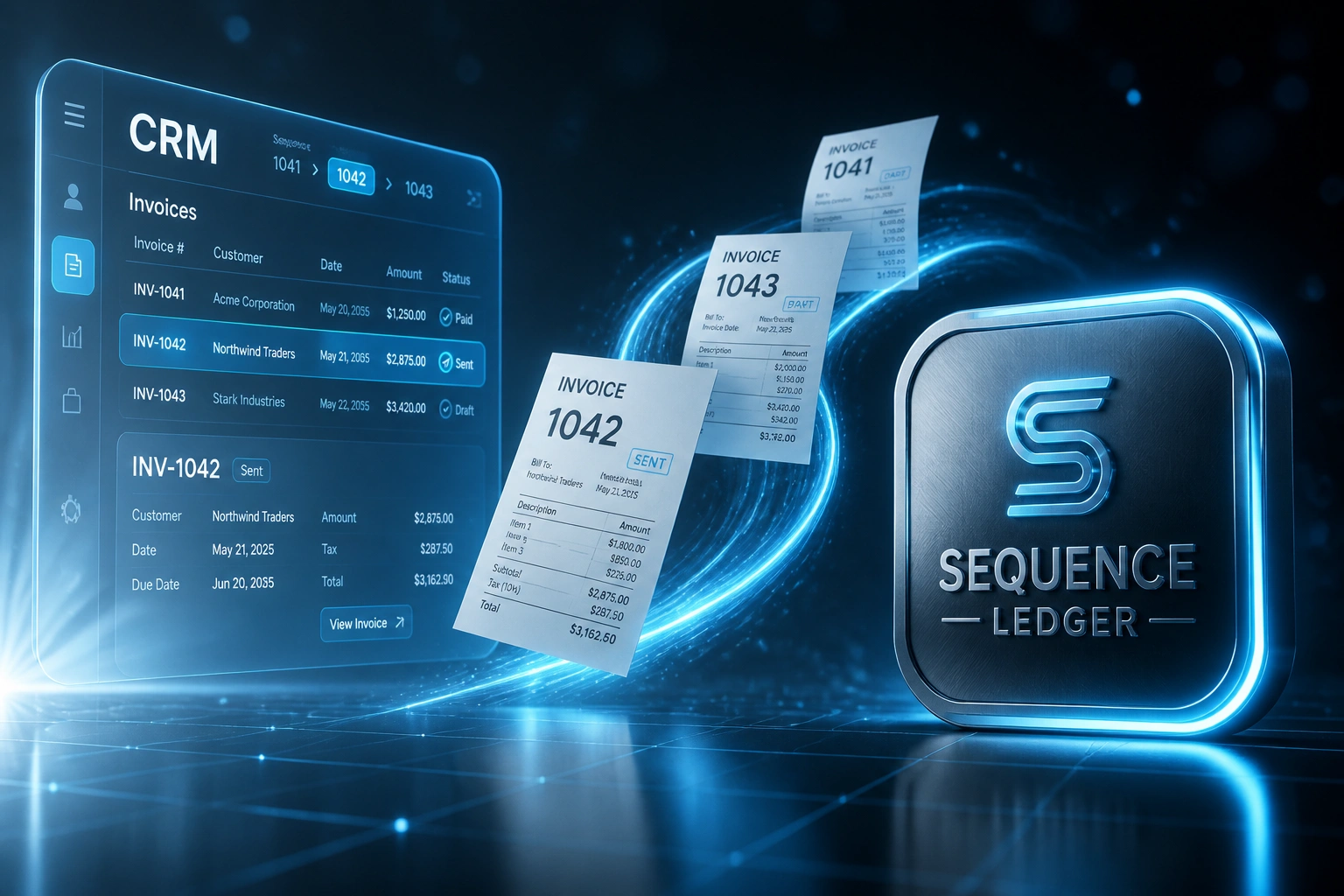
SARS and auditors expect an unbroken invoice sequence. When you raise tax invoices from a CRM, Xero, and an online store, each tool runs its own counter, and the gaps and duplicates only show up when someone asks hard questions.
We centralise number allocation so every channel shares one controlled sequence.
Sound Familiar?
These are the exact issues our clients faced before centralising their invoice sequence:
- CRM, Xero, and the online store each issue their own invoice numbers, so sequences collide and leave gaps
- Voided drafts are deleted instead of retained, so SARS sees missing numbers with no explanation on file
- Finance only discovers duplicates when a customer pays the wrong invoice or an auditor samples the ledger
- Month-end gap checks take a full day of exporting three systems into a spreadsheet
- A SARS verification request for the last 18 months of sequential invoices becomes a three-week scramble
Auditors treat unexplained gaps as possible unreported income. The burden of proof shifts to you. Multi-system invoicing is one of the most common ways legitimate businesses end up with an invoice sequence that cannot survive a SARS sample.
What Centralised Invoice Sequencing Actually Does
Any channel can raise an invoice. Only one service can issue the next number in the sequence.
Invoice Ready to Post
CRM deal, Xero draft, or store order is ready to become a tax invoice
Allocator Issues Number
Central service locks and returns the next serialised number in the series
Document Posts & Logs
Invoice goes out with that number; voided slots stay in the register with a reason
Gaps Flagged Instantly
Detection alerts finance before month-end, and the audit pack is always current
Everything You Need for an Unbroken Invoice Sequence
Central Sequence Allocator
One controlled counter issues the next serialised invoice number before any system can print or email a tax invoice. CRM, Xero, and e-commerce never invent their own sequences.
Cross-System Gap Detection
Nightly (or real-time) scans compare issued numbers across every channel. Missing numbers, out-of-order dates, and duplicates surface as exceptions before SARS does.
Void & Credit Retention
Cancelled invoices keep their number, marked void with a reason and timestamp. Credit notes use a separate sequential series that still cross-references the original.
Pre-Issue Number Lock
The number is reserved only when the invoice posts, not when a draft is opened. Abandoned drafts never burn a slot in the sequence.
Multi-Channel Coverage
HubSpot, Pipedrive, Xero, Sage, Shopify, WooCommerce, and custom billing can all request the next number from the same allocator, with a clear channel tag in the audit log.
Audit-Ready Sequence Pack
Export every number for a tax period with status (issued, voided, credited), source system, and document link. When SARS asks for an unbroken sequence, you send the pack the same day.
Systems We've Wired into One Invoice Sequence
From 47 Gaps to Zero in One Controlled Sequence
How a Johannesburg distributor closed invoice-number gaps across HubSpot, Xero, and Shopify before a SARS verification turned into a shortfall fight.
Three Counters, One Mess
- HubSpot, Xero, and Shopify each issued their own invoice numbers
- Finance found 47 gaps and 6 duplicates across 18 months of exports
- Voided Shopify drafts were deleted, so numbers vanished with no register
- SARS verification prep took three weeks of accountant time at R2,800/hour blended
- Month-end sequence check burned a full day every VAT period
One Allocator, One Trail
- Every channel requests the next number from a shared sequence service
- Voids keep their number with a reason code; credits use a linked series
- Gap alerts fire the same day a number is reserved but not posted
- SARS pack for any tax period exports in under an hour
- Month-end sequence review dropped from a day to a 15-minute exception check
Before vs After Centralised Sequential Invoices
How It Works
From first conversation to a live, controlled invoice sequence in 2–4 weeks.
Map Your Issuing Channels
Which systems raise invoices today, where gaps already appear, and how voids are handled.
Free Scoping Call
30-minute call to design the central allocator, starting number, void rules, and gap alerts.
Build & Test
We wire every channel to the sequence service, backfill a gap register for open periods, and run parallel for a week.
Go Live & Monitor
Only the allocator can issue numbers. Alerts fire on gaps or collisions; monitoring keeps the trail audit-ready.
Frequently Asked Questions
Does SARS require sequential invoice numbering in South Africa?
Yes. Section 20 of the VAT Act requires every tax invoice to carry an individual serialised number. SARS and auditors expect that series to stay unique and unbroken: no duplicates, and no gaps unless a voided or cancelled invoice is retained and explained. Format is flexible (INV-001, 2026-0001, and similar all work) as long as the logic is consistent and traceable.
What happens if SARS finds gaps or duplicates in our invoice sequence?
Gaps are treated as a red flag for possible unreported income, and the burden sits with you to prove each missing number is innocent. Remediating a messy trail often means weeks of accountant time, reconstructed void logs, and, if SARS assesses a shortfall, understatement penalties under section 223 of the Tax Administration Act: 10% for a substantial understatement in a standard case, 25% where reasonable care was not taken, rising as high as 150% for intentional evasion, plus late-payment penalties and interest.
We invoice from a CRM, Xero, and Shopify. Can one sequence cover all three?
That is exactly what central allocation is for. Each channel requests the next number from a shared service before the tax invoice is finalised. The document still posts into Xero (or Sage) for the books, but the serialised number never comes from three independent counters that drift apart.
Should we fill historical gaps by inventing invoices?
No. Never fabricate documents to close a hole. Document each historical gap with the real reason (voided draft, system migration, test number), keep any cancelled PDF on file, and start a clean controlled sequence going forward. We usually build a gap register for open tax periods so your accountant can answer SARS without rewriting the past.
How is this different from SARS field-compliance checks on tax invoices?
Field validation confirms Section 20 particulars (Tax Invoice wording, VAT numbers, amounts, recipient details). Sequential numbering is a different control: one unbroken series across every system that can raise an invoice. Most finance teams need both. This page is specifically about the sequence, gap detection, and multi-system allocation problem.
How much does centralised invoice numbering cost?
A single allocator with gap alerts across two systems typically starts from around R20,000. Multi-channel setups covering CRM, accounting, and e-commerce with a historical gap register usually fall between R30,000 and R65,000. Teams facing a SARS verification, or issuing 50+ invoices a month from more than one tool, usually see payback within 1–3 months against remediation risk and month-end checking time.
Stop Gambling on Invoice Number Gaps
If more than one system can raise a tax invoice, you do not have a sequence. You have a reconciliation project waiting for the wrong day.
Tell us which channels issue invoices, where gaps already sit, and whether a SARS or auditor request is already on the calendar. We will show you how centralised sequential invoice numbering would work for your stack.