Multi-Tenant Authentication Architecture: Keep Every Client Organisation Sealed Off
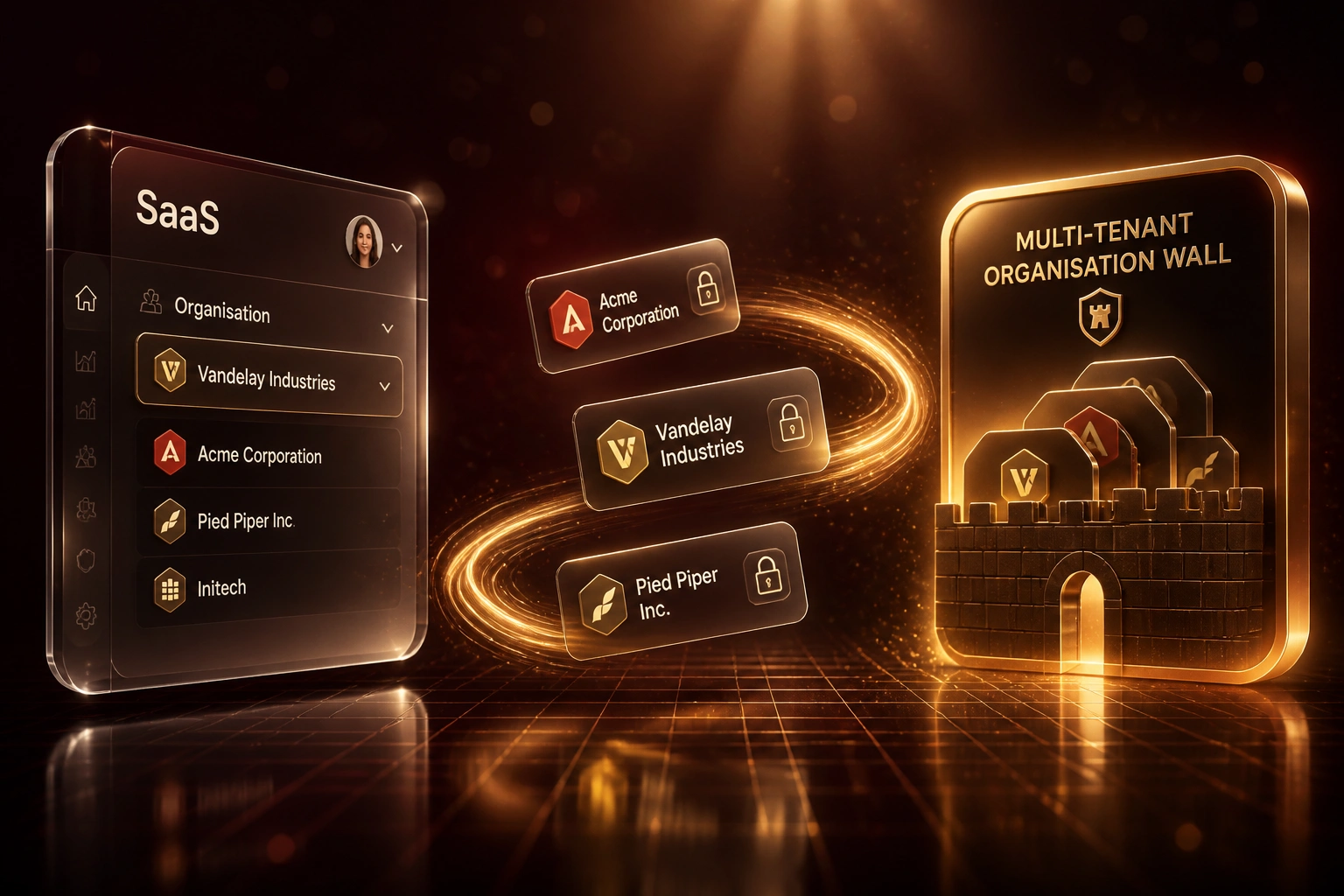
Your SaaS serves multiple client organisations from one product. Soft filters and shared sessions felt fine at ten customers. Now enterprise buyers ask how you enforce tenant isolation, and one missed WHERE clause can put Organisation B's data in Organisation A's hands.
We design multi-tenant auth that unlocks enterprise deals and survives security questionnaires.
Sound Familiar?
These are the exact issues SaaS founders faced before proper tenant isolation:
- Organisation A can see Organisation B's records because tenant filters live in application code, not in the auth boundary
- Enterprise buyers fail your security questionnaire when you cannot prove tenant isolation with architecture and tests
- Users who belong to multiple client orgs juggle confused logins with no safe org switcher
- Support staff open shared admin views that span every customer without scoped sessions or audit trails
- POPIA and GDPR liability sits with you the moment one tenant's personal information leaks into another
Industry analyses put the cost of fixing the wrong tenancy model at R1.7M+ and six months of roadmap, with live platforms of 100–200 customers often facing R2.5M–R6.6M retrofit bills. Soft filters that "usually work" fail the moment an enterprise security team asks for proof. Multi-tenant isolation failures are among the most reputationally damaging incidents a SaaS vendor can experience.
What Proper Multi-Tenant Auth Actually Does
Login → organisation context → scoped data → auditable boundary. No soft filters hoping every query remembers the tenant.
User Signs In
Authentication resolves identity and membership across the organisations they belong to
Org Context Set
Session and tokens bind to one organisation. Switching orgs ends the previous tenant cleanly
Data Stays Scoped
Queries, files, search, and exports enforce the tenant ID at the boundary, not as an afterthought
Deals Unblocked
Security questionnaires get architecture, tests, and an isolation statement buyers can trust
Everything You Need for Reliable Tenant Isolation
Tenant-Scoped Sessions
Every login resolves to a user plus an organisation context. Tokens, cookies, and API calls carry that boundary so Org A never reaches Org B's data.
Organisation Switcher
Users who work across client companies switch organisations deliberately. The previous tenant session ends cleanly before the next one opens.
Row-Level Tenancy
Shared databases stay commercially efficient, but every query is forced through a tenant ID. Soft "remember to filter" habits are replaced with enforced isolation.
Isolation Test Pack
Automated cross-tenant access tests fail the build if a leak path appears. That evidence is what SOC 2 and enterprise buyers actually ask to see.
Support Access Guardrails
Internal admin tools require a tenant context, time-bound elevation, and a logged reason. No more browsing every customer from one unchecked console.
Questionnaire-Ready Pack
Isolation statement, architecture diagram, and role matrix you can attach to the next vendor security review instead of scrambling for two weeks.
Auth Stacks We've Hardened for Multi-Tenant SaaS
From Soft Filters to a Cleared R2.5M Enterprise Deal
How a 12-person SaaS product team stopped failing security questionnaires and closed their first six-figure client organisation contract.
The Soft-Filter Product
- Every query depended on developers remembering to filter by organisation ID
- Users in multiple client orgs saw a confusing single workspace with mixed records
- Support console could open any customer's data without a logged reason
- Two enterprise deals stalled for weeks on "how do you isolate tenant data?"
- Founders estimated a later retrofit would consume half a product year
The Tenant-Scoped Product
- Sessions and API tokens always carry an organisation context
- Org switcher lets power users change tenants without leaking the previous one
- Row-level enforcement plus automated cross-tenant tests in every release
- Isolation statement and diagrams attached to the next vendor review in hours
- First enterprise organisation contract signed within six weeks of go-live
Before vs After Tenant Isolation
How It Works
From first conversation to questionnaire-ready isolation in 4–8 weeks.
Map Your Tenancy Risk
How orgs are modelled today, where soft filters live, and which enterprise deals are blocked by isolation questions.
Free Scoping Call
30-minute call to choose the right isolation model, size the retrofit vs greenfield path, and prioritise deal-blocking gaps.
Design & Harden
We design tenant-scoped auth, org switching, row-level enforcement, and isolation tests against your real product flows.
Prove & Package
Cross-tenant tests pass, support access is logged, and you leave with questionnaire-ready evidence for the next enterprise buyer.
Frequently Asked Questions
How is this different from single sign-on for our staff?
Staff SSO lets your team log into internal tools once. Multi-tenant authentication is for the product you sell: each client organisation gets an isolated auth context so Organisation A's users never see Organisation B's data. Many SaaS founders need both, but they solve different problems.
How long does a multi-tenant auth architecture engagement take?
A focused design and hardening programme typically takes 4–8 weeks. Greenfield products move faster. Live platforms with soft filters and mixed customer data need a staged migration so you do not expose one tenant while fixing another.
Do we need a separate database per customer?
Usually not. Most B2B SaaS products are commercially healthier on a shared database with enforced tenant IDs and row-level security. Separate databases make sense for regulated silos or large enterprise contracts that demand them. We help you choose based on deal requirements, not fear.
Will this help us pass enterprise security questionnaires?
Yes. Buyers routinely ask how customer data is isolated, whether you have had a tenant leakage incident, and how you test the boundary. We leave you with an isolation statement, diagrams, and automated test evidence that answers those questions without a two-week scramble.
How does this relate to POPIA?
POPIA expects appropriate technical measures against unlawful access to personal information, with administrative fines of up to R10 million and civil claims from data subjects. Cross-tenant exposure is exactly the failure mode enterprise buyers and the Information Regulator care about. Proper tenant-scoped auth is a practical safeguard, not just a sales talking point.
How much does multi-tenant authentication architecture cost?
Scoped design and hardening engagements typically run from about R60,000 for a lean architecture and test pack to R120,000–R180,000 when a live product needs migration, org switcher UX, and support-access guardrails. Against one stalled enterprise deal at R2.5M+ ARR, or a retrofit bill of R1.7M–R6.6M later, most founders see payback on the first deal unlocked.
Stop Betting Enterprise Pipeline on Soft Filters
If your SaaS still relies on developers remembering to filter by organisation, you are one missed query and one failed questionnaire away from losing deals you already won verbally.
Tell us how you model organisations today, which enterprise deals are stuck on isolation questions, and whether you need a greenfield design or a live-product retrofit. We will show you the shortest path to tenant-scoped auth that buyers can trust.