Handle PCI Compliance Without Building a Fortress
Storing or processing card data triggers full PCI-DSS requirements: longer SAQs, quarterly scans, and a Cardholder Data Environment you must defend forever. DIY card capture is the expensive path.
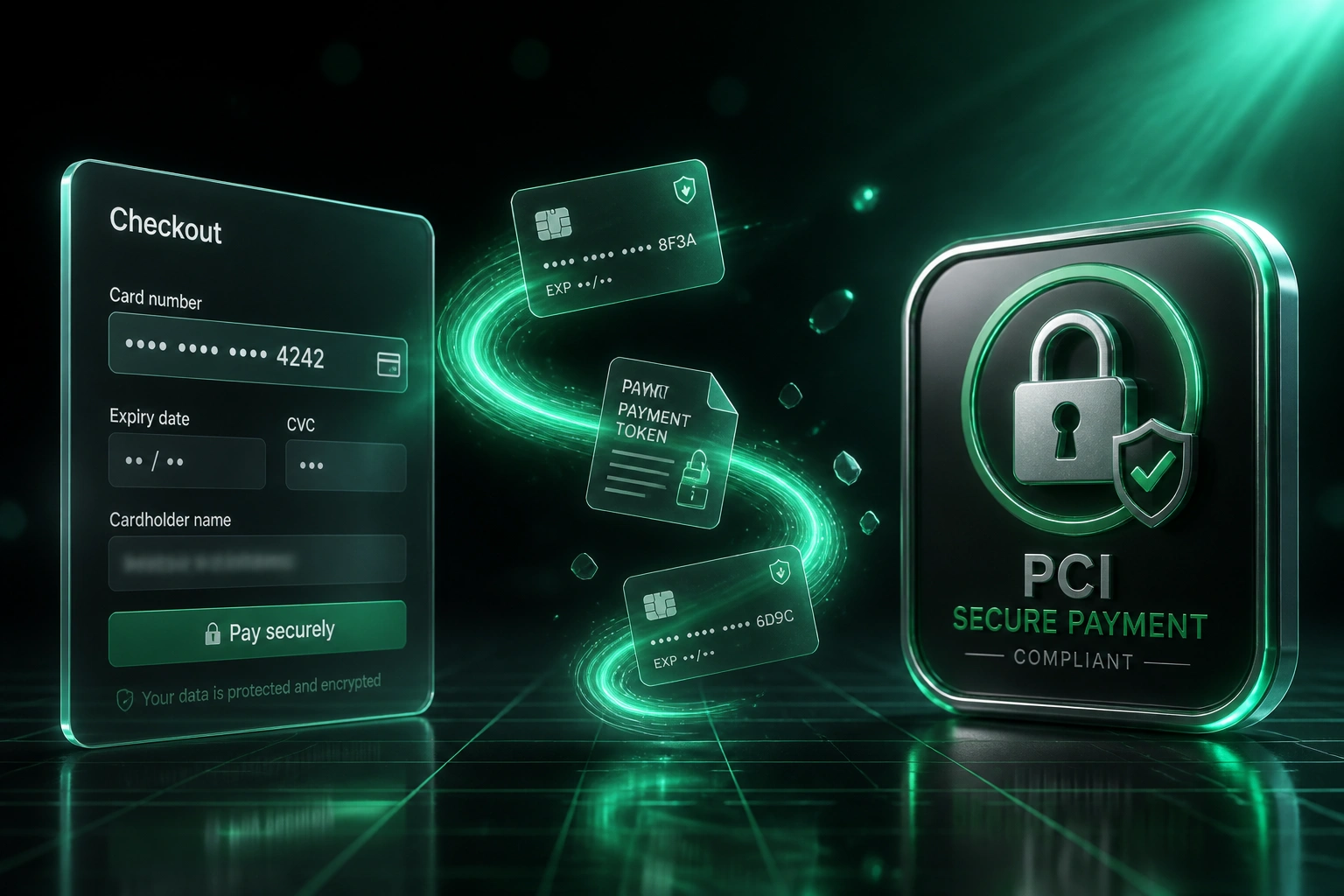
We build hosted checkout and tokenisation so you accept cards without owning the card data.
Sound Familiar?
These are the exact issues CEOs and finance leads bring us before a PCI-reducing rebuild:
- Your acquirer is pushing a longer SAQ every year, and finance cannot explain why the questionnaire grew again
- Developers built a custom card form years ago, so raw card numbers still hit your servers on every checkout
- Recurring billing stores PANs in your database because nobody planned tokenisation when subscriptions launched
- QSA quotes and penetration-test bills keep rising while PCI DSS v4.x adds more payment-page controls
- Leadership fears a card breach would cost more than the entire payments roadmap, yet the fortress keeps expanding
PCI DSS v3.2.1 retired on 31 March 2025. You are now assessed against v4.x, with harder payment-page controls and no transition runway left. Merchants still capturing cards on their own stack face a larger SAQ and a more expensive audit every year.
What PCI-Compliant Card Acceptance Looks Like
Customer pays → gateway vaults the card → your systems only ever see a token. No PAN in your database, logs, or backups.
Customer Enters Card
Card fields load from the gateway on a hosted page or secure iframe
Gateway Tokenises
PAN stays in the processor vault; your app receives a non-sensitive token
You Charge the Token
Refunds, renewals, and retries call the token, never the raw card number
Scope Collapses
Fewer systems in the CDE, a shorter SAQ, and a fortress you no longer need to fund
Payment Security Integration That Shrinks PCI Scope
Hosted Payment Pages
Customers enter card details on a PCI-certified hosted page or iframe. Raw card data never touches your web servers or logs.
Card Tokenisation
Each successful capture returns a token, not a PAN. Recurring charges, refunds, and card-on-file flows use tokens only.
SAQ Scope Reduction
Architecture designed for SAQ A or A-EP eligibility where your acquirer allows it, instead of full SAQ D sprawl.
Gateway Fit for SA
Wired into Stripe, PayFast, Peach Payments, Yoco, and similar gateways with hosted fields or redirect checkout already certified.
Card-on-File Without PANs
Save payment methods for subscriptions and one-click reorder using processor tokens, so loyalty features do not expand your CDE.
Audit-Ready Evidence
Clear data-flow diagrams, processor attestations, and change records your compliance lead can hand to the acquirer without a scramble.
Gateways and Checkout Stacks We Wire for PCI Scope Reduction
From SAQ D Fortress to SAQ A Clarity
How a subscription ecommerce brand stopped storing card numbers, cut annual PCI spend by R358,000, and kept recurring billing intact.
The DIY Card Capture Path
- Custom checkout posted PANs to their own API for subscriptions
- Encrypted card table still counted as cardholder data in scope
- SAQ D: 300-plus questions, six weeks of evidence every year
- Quarterly ASV scans, annual pen test, and consultant retainers
- Leadership budgeted a growing "security fortress" instead of product work
The Hosted + Tokenised Path
- Hosted fields capture cards; app only receives processor tokens
- Saved cards migrated to the gateway vault for renewals
- SAQ A: around 22 questions, completed in a single afternoon
- No PAN in databases, backups, or application logs
- Finance attest with processor AoC evidence instead of a fortress budget
Before vs After PCI Scope Reduction
How It Works
From first conversation to compliant live checkout in 3–6 weeks.
Map Your Card Data
Where PANs enter, store, or log today, which SAQ you file, and what recurring or card-on-file features you need to keep.
Free Scoping Call
30-minute call to choose hosted redirect, hosted fields, or tokenisation, and estimate the compliance cost you can reclaim.
Build & Parallel Test
We rebuild checkout against the gateway vault, migrate saved cards to tokens where possible, and prove no PAN hits your stack.
Go Live & Attest
Switch production traffic, retire in-scope card storage, and hand finance a cleaner SAQ path with processor evidence packs.
Frequently Asked Questions About PCI Compliance
Do we still need PCI compliance if we use a hosted payment page?
Yes. You remain a merchant accepting cards, so PCI DSS still applies. The difference is scope: when card data never enters your environment, many businesses qualify for SAQ A (around 22 questions) instead of SAQ D (300-plus). That is compliance without building a fortress.
What is the difference between encryption and tokenisation for PCI?
Encrypted PANs are still cardholder data and usually stay in scope, because encryption is reversible with a key. Tokenisation replaces the PAN with a non-sensitive surrogate held in the processor vault. Done correctly, systems that only see tokens can exit the Cardholder Data Environment.
Will hosted fields hurt our checkout conversion?
Most modern gateways let you keep your brand layout while card fields are served from their certified domain. Customers still check out on your site. You gain PCI scope reduction without sending buyers to a bare third-party page, unless you prefer a full redirect for maximum simplicity.
Can we keep subscriptions and saved cards?
Yes. We migrate card-on-file to processor tokens so renewals and one-click payments continue. Your CRM and billing system store tokens and customer references, never the 16-digit number. That is how you keep recurring revenue without owning the card data.
How does PCI DSS v4.x change the urgency?
PCI DSS v3.2.1 retired on 31 March 2025. Assessments now run against v4.x with stronger payment-page security requirements. Merchants who still capture cards on their own pages face a larger control set. Shrinking scope with hosted capture and tokenisation is the fastest way to stay current without a multi-year security programme.
How much does a PCI-reducing payment integration cost?
Scoped builds typically range from R35,000 to R85,000 depending on gateway mix, subscription migration, and how many channels (web, phone, admin) still touch cards. Against SAQ D programmes that often run R100,000 to R490,000 a year for mid-market merchants, most clients see payback inside the first assessment cycle.
Stop Funding a Fortress You Do Not Need
If your team still captures or stores card numbers to accept payments, you are paying for PCI complexity that the right integration removes.
Tell us which gateway you use, whether you need subscriptions or card-on-file, and which SAQ you file today. We will show you how hosted capture and tokenisation would cut your scope, and what a compliant rebuild looks like in Rand and weeks.