Recurring Maintenance Schedule Automation: Never Miss a Planned Service Window
If your facilities or field-service contracts still depend on a spreadsheet of quarterly HVAC visits, annual fire certs, and monthly generator services, you already know the risk. One missed window becomes an SLA credit, a hostile renewal, or an emergency call-out that costs four to five times a planned visit.
We build the maintenance automation that creates jobs before due, reminds your team, and tracks every completion.
Sound Familiar?
These are the exact issues our clients faced before preventive maintenance scheduling automation:
- Quarterly HVAC, annual fire certs, and monthly generator services live in a spreadsheet nobody trusts after Friday
- Jobs get created the week of the visit, so parts are late and the service window is already half gone
- Reminder emails go out only when someone remembers, and missed windows become SLA credits on the next invoice
- Technicians discover overdue assets on site, then burn overtime fixing what planned maintenance should have prevented
- Clients renew on compliance proof: when PM completion slips below 85%, retainer conversations turn hostile
Industry average PM compliance sits around 60–65%, while contracts target 90%+. Rates below 85% usually signal scheduling gaps. Every rand deferred on routine maintenance can cost four rands later in capital renewal, and reactive work still makes up about 45% of work orders at the median facility.
What Recurring Maintenance Automation Actually Does
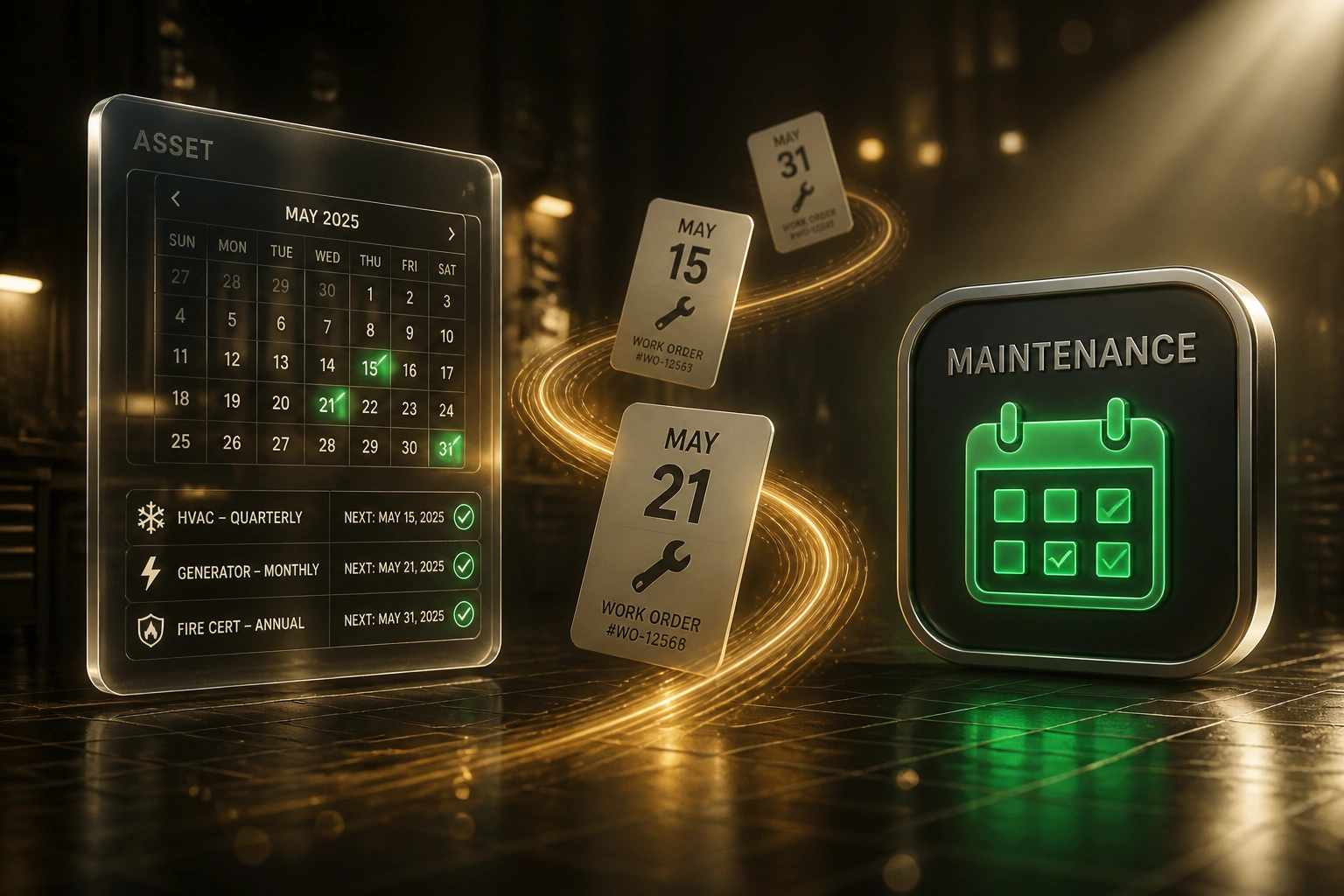
Schedule due → job opens early → reminders fire → completion tracked. No human chasing the calendar.
Asset Schedule Hits Lead Time
Quarterly HVAC, monthly generator, or annual fire cert reaches its N-day-before trigger
Work Order Auto-Created
Job opens in your CMMS or FSM with site, checklist, and parts list already attached
Reminders and Assignment
Ops and technicians get notified; planners confirm access and crew before the window
Completion Logged
Visit closes against the schedule; compliance and retainer reports stay audit-ready
Everything You Need for Reliable Preventive Maintenance Scheduling
Recurring Schedule Engine
Calendar rules for each asset: quarterly HVAC, monthly generator service, annual fire certification. Intervals, lead times, and site access windows live in one place.
Auto Job Creation Before Due
Work orders open N days before the service window so planners can stage parts, book access, and assign technicians while the calendar still has room.
Reminder and Escalation Notifications
Ops, technicians, and site contacts get timed reminders as the window approaches. Overdue PMs escalate before a retainer credit is owed.
Completion and Compliance Tracking
Every visit closes against the schedule with timestamps and evidence. PM compliance is a live number, not a month-end scramble through emails.
CMMS and FSM Write-Back
Schedules sync into MaintainX, UpKeep, Jobber, Simpro, Fergus, or your custom field system so the calendar, the board, and the invoice stay aligned.
Retainer and SLA Dashboards
Ops managers see at-risk windows, overdue assets, and contract exposure before the client does. Protect planned-maintenance revenue instead of explaining misses.
Platforms We've Connected for Maintenance Scheduling
From 64% PM Compliance to 96%
How a Cape Town facilities contractor stopped missing planned windows and protected R1.8M in annual retainers.
The Manual Calendar
- Ops coordinator maintained a shared spreadsheet of HVAC, generator, and fire-cert cadences across 40 sites
- Jobs opened the week of the visit, so parts and access often arrived late
- Reminders depended on whoever checked the sheet on Monday morning
- PM compliance sat at 64%, below the 85% risk threshold clients watch
- Two retainers threatened non-renewal after repeated missed windows
The Automated Schedule
- Each asset carries a recurring rule with a 14-day lead time into Jobber
- Work orders open automatically; planners only confirm crew and access
- Reminder escalations hit ops three days before any overdue risk
- Completion timestamps feed a live compliance dashboard for clients
- Both at-risk retainers renewed; emergency call-outs dropped sharply
Before vs After Maintenance Automation
How It Works
From first conversation to live recurring schedules in 3–5 weeks.
Tell Us Your Setup
Which assets need recurring visits, how lead times work today, and where Excel still owns the maintenance calendar.
Free Scoping Call
30-minute call to map asset → schedule → auto job → reminder → completion → client compliance report for your contracts.
Build & Test
We encode intervals and lead times, connect your CMMS or FSM, and run parallel against your spreadsheet calendar for two weeks.
Go Live & Monitor
Switch off manual schedule chasing. Monitoring flags overdue windows and compliance dips before retainers are at risk.
Frequently Asked Questions
How long does recurring maintenance schedule automation take to set up?
A standard recurring schedule build takes 3–5 weeks from scoping to go-live. Crews already on MaintainX, UpKeep, or Jobber can be live in about two weeks. Multi-site portfolios with mixed HVAC, fire, and generator cadences plus custom FSM write-back typically take 4–6 weeks.
Which maintenance and field tools can you connect?
We have connected MaintainX, UpKeep, Jobber, Simpro, Fergus, ServiceTitan, and custom CMMS builds. If your preventive maintenance calendar still lives in Excel or Google Sheets, we can start there and migrate schedules into a proper system as part of the build.
How is this different from job dispatch automation or a full FSM platform?
Job dispatch matches reactive or same-day work to the right technician by skills and location. A full FSM platform covers the whole field operation. This page specialises in the recurring schedule engine: calendar-driven preventive visits that auto-create jobs before the window, remind the right people, and track completion so planned maintenance windows are not missed.
Will planners still control which jobs go out when?
Yes. Automation opens the work order early, assigns a default crew or queue, and sends reminders. Planners still adjust for site access, parts delays, and VIP clients. The point is to stop discovering overdue assets the week they were meant to be serviced.
What happens when a PM window is at risk of being missed?
Escalation rules notify ops and the account owner before the window closes. You see overdue and at-risk assets on a dashboard instead of learning about a miss when the client withholds a retainer payment or claims an SLA credit.
How much does recurring maintenance schedule automation cost?
Schedule engines on a single CMMS or FSM start from around R30,000. Multi-site builds with reminder escalations, compliance dashboards, and custom write-back typically range from R45,000 to R85,000. Most contractors protecting six-figure retainers and recovering planner hours see ROI within two to three months.
Stop Losing Contracts Over Missed Maintenance Windows
If planned visits still depend on a spreadsheet and someone's memory, you are paying emergency rates for problems preventive maintenance scheduling already solves.
Tell us which assets need recurring service, which CMMS or FSM you use, and where windows get missed. We will show you exactly how automated schedules, early job creation, and reminder escalations would work for your retainers.