B-BBEE Data Validation: Cleaning Up Scorecard and Compliance Records
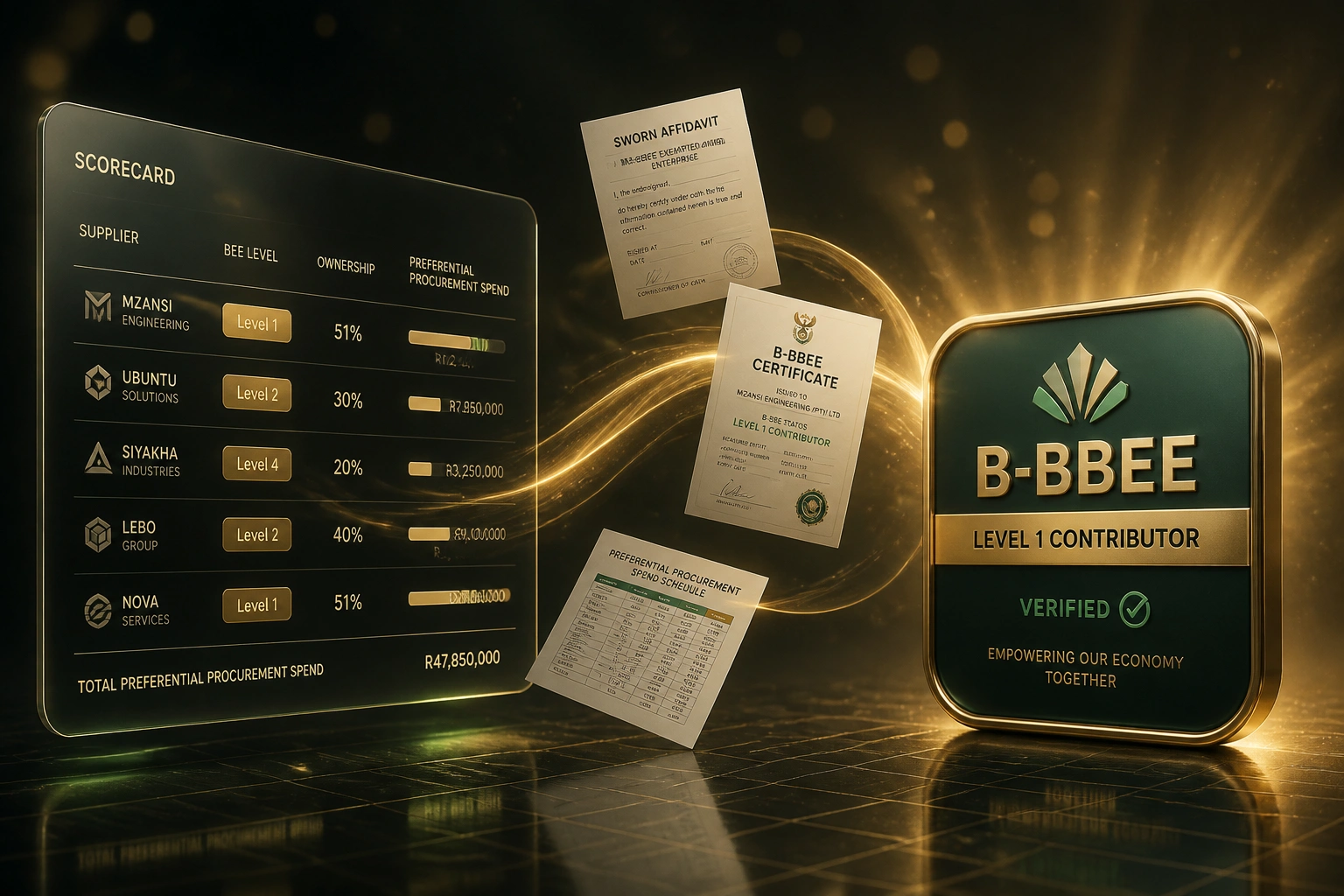
Your certificate or tender pack is at risk because supplier classifications, ownership percentages, management control, and preferential procurement data in CRM, ERP, and spreadsheets do not match sworn affidavits and certificates. Verification and bids fail on data errors you could have fixed upstream.
We clean the source data once so verification and tenders stop failing on avoidable mismatches.
Sound Familiar?
These are the exact issues transformation managers, CFOs, and CEOs bring us before scorecard data cleanup:
- Supplier BEE levels in CRM or ERP do not match sworn affidavits and SANAS certificates on file
- Ownership percentages and management-control fields drift from CIPC and share registers before verification
- Preferential procurement spend is coded to the wrong supplier classification, so recognition collapses to zero
- Transformation and finance rebuild evidence packs in a last-30-day scramble across fragmented spreadsheets
- Tender packs fail on mismatched company names, registration numbers, or expired B-BBEE documents before price is scored
Under the Public Procurement Act 2024, a bidder that fails prequalification criteria is an unacceptable bid and must be disqualified. Incorrect or outdated B-BBEE documentation, and mismatched company details across CIPC, CSD, and certificates, remain among the most common tender failure modes. Clean BEE compliance data before the next verification or closing date, not during the agency visit.
What B-BBEE Scorecard Validation and Data Cleanup Actually Does
Extract scorecard inputs → match to affidavits and certificates → repair safe mismatches → write clean masters back.
Extract Scorecard Inputs
We pull supplier classifications, ownership %, management control, and spend categories from CRM, ERP, or spreadsheet packs
Match Affidavits & Certificates
Each supplier row is checked against the sworn affidavit or SANAS certificate on file for level, ownership, and identity fields
Repair & Quarantine
Safe classification and field corrections apply automatically; ownership and identity conflicts queue for review
Clean Masters in Production
Corrected BEE compliance data writes back so verification and tender packs stop failing on source mismatches
Everything You Need for Reliable B-BBEE Data Cleanup
Supplier Classification Cleanup
We reconcile BEE level, recognition %, EME/QSE/Generic flags, and empowering-supplier status in your master against the affidavit or certificate on file.
Ownership & Control Validation
Black ownership and management-control fields are checked against share registers, CIPC extracts, and sworn statements so scorecard inputs stop inventing percentages.
Preferential Procurement Spend Map
AP and ERP spend is tied to the corrected supplier classification so recognised procurement is calculated on verified credentials, not stale spreadsheet codes.
Document-to-Master Matching
Trading name, registration number, and VAT number on invoices are matched to certificates and affidavits. Mismatches quarantine before the agency samples them.
Exception Quarantine
Unresolvable rows stay visible with a clear reason: expired certificate, ownership conflict, spend category error, or missing affidavit. Your team only reviews what rules cannot fix.
Verification & Tender Pack Export
Clean supplier ledger, classification fields, and ownership evidence export in the shape SANAS agencies and tender returnables expect, cutting avoidable data queries.
Systems We've Cleaned B-BBEE Scorecard Data In
From 320 Hours of Scorecard Scramble to Under 40
How a Gauteng manufacturer stopped preferential procurement recognition collapsing at verification after cleaning supplier classifications and ownership records.
The Manual Process
- Transformation rebuilt supplier BEE levels from email attachments into three conflicting spreadsheets
- Ownership % in the ERP disagreed with affidavits for nearly one in five measured suppliers
- Preferential procurement spend was coded to stale Level claims that failed when certificates were sampled
- Agency queries stretched the cycle past eight weeks while finance chased missing identity matches
- One tender pack was ruled non-responsive after B-BBEE details did not match CIPC and CSD records
The Validated Process
- Supplier master validated against affidavits and SANAS certificates before the agency engagement
- Safe classification repairs wrote back; ownership and identity conflicts queued with reason codes
- Preferential procurement recognition held on measured spend because levels matched the documents
- Evidence pack export cut agency queries; certificate issued inside a normal 4–8 week window
- Tender returnables pulled from the same clean master as the scorecard, not a parallel spreadsheet
Before vs After B-BBEE Scorecard Data Cleanup
How It Works
From first conversation to clean scorecard masters in 3–5 weeks.
Tell Us Your Setup
Where scorecard inputs live, how many suppliers you measure, and whether verification or tender packs are failing first.
Free Scoping Call
30-minute call to sample supplier classifications, ownership fields, and spend categories against a handful of affidavits and certificates.
Validate & Repair
We run forensic matching, repair safe mismatches, and quarantine ownership, classification, and spend conflicts for transformation review.
Go Live & Monitor
Clean masters write back. Optional ongoing gates stop new bad classifications from undoing the cleanup before the next cycle.
Frequently Asked Questions
How is B-BBEE data cleanup different from AI certificate verification or live scorecard tracking?
AI verification extracts fields from certificates when they arrive. Live tracking watches expiry and spend targets through the year. This engagement is forensic cleanup of the source data already sitting in CRM, ERP, and spreadsheets: supplier classifications, ownership percentages, management control, and preferential procurement spend categories that do not match affidavits and certificates. Clean the inputs once so verification and tenders stop failing on avoidable data errors.
What happens when supplier BEE data does not match the certificate?
Verification agencies require a supplier ledger with B-BBEE credentials aligned to invoices. Missing certificates, expired affidavits, or mismatches on trading name, registration number, or VAT number typically attract zero preferential procurement recognition for that spend, or the supplier is flagged and excluded from scoring. We surface those conflicts before the agency samples them.
Will this replace our SANAS-accredited verification agency?
No. Your agency still verifies. We clean scorecard source data so the evidence pack matches reality: fewer mid-cycle queries, shorter timelines, and less risk of a level drop driven by bad classifications rather than real transformation performance.
Which systems can you clean B-BBEE fields in?
We commonly repair supplier and ownership fields in Sage/Pastel, SAP, Syspro, Microsoft Dynamics, Xero, Excel or SharePoint packs, and custom procurement systems. If the system holds BEE level, ownership %, or supplier classification fields and exposes an API or import path, we can validate and write back.
How long does a B-BBEE scorecard data validation project take?
A focused supplier-master and ownership cleanup typically takes 3–5 weeks from scoping to write-back. Narrow extracts with clear certificate files can finish in about two weeks. Multi-entity groups with fragmented spend ledgers and ownership registers take closer to 5–7 weeks.
How much does B-BBEE data validation and cleanup cost?
Focused supplier classification and ownership cleanup typically starts from around R35,000. Multi-source projects covering CRM, ERP spend ledgers, ownership registers, quarantine workflows, and tender-ready exports usually sit between R55,000 and R120,000. Firms burning 200–400 internal hours per verification cycle often recover the build within one cycle against staff time and the cost of a failed or delayed certificate.
Stop Losing Levels and Tenders to Bad B-BBEE Data
If transformation and finance are still reconciling supplier classifications and ownership percentages by hand every verification season, you are paying Rand for avoidable data errors.
Tell us where the scorecard inputs live, how many suppliers you measure, and whether verification or tender packs are failing first. We will show you the mismatch rate in your own data and what cleanup would look like.