SA VAT Number Repair: Validating and Correcting Tax Registration Data
Your CRM and ERP hold invalid, mistyped, or deregistered South African VAT numbers. Bad VAT data blocks invoicing, stalls eFiling, and puts input tax claims at risk. Spreadsheet triage never keeps the vendor master clean.
We run SARS-format validation and repair so finance stops paying for the same tax registration mistakes.
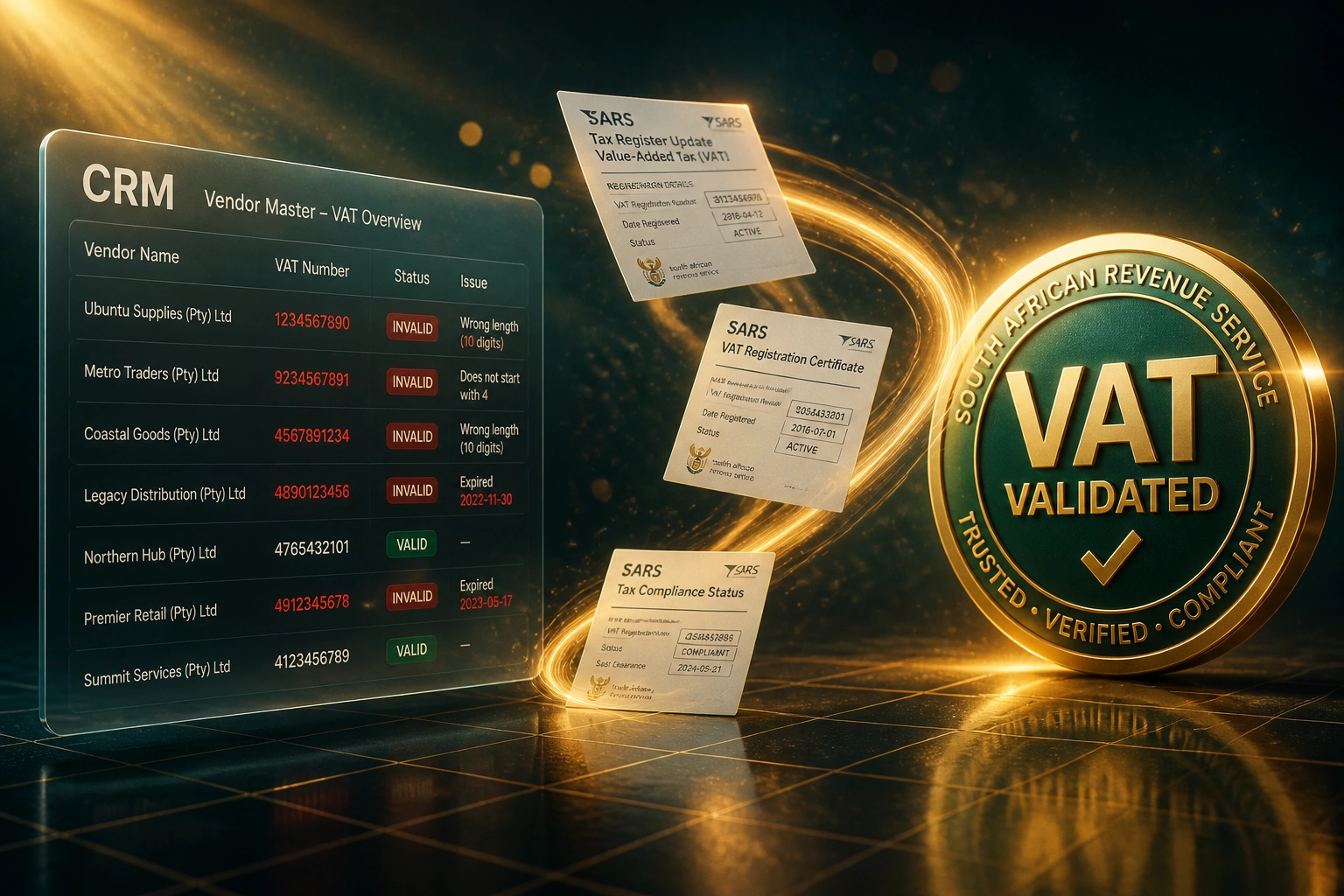
Sound Familiar?
These are the exact issues CFOs and finance leads bring us before SARS-backed VAT repair:
- Invoices stall because vendor VAT numbers are mistyped, truncated, or do not start with 4
- Income tax numbers get pasted into VAT fields, so SARS eFiling and tax invoices reject the record
- Deregistered or expired vendors still show as active in CRM and ERP, poisoning input VAT claims
- Finance spends hours every week chasing corrected tax invoices and re-keying vendor master data
- New supplier onboarding waits on manual SARS VAT Vendor Search lookups that never get written back
Input VAT claimed on an invalid or deregistered number gets reversed on audit. You repay the VAT, plus interest, and understatement penalties can run from 10% to 200%. From April 2026 the compulsory registration threshold rises to R2.3 million in taxable supplies, so more counterparties will hold (or lose) VAT status. Clean the vendor master before the next VAT201 cycle.
What SA VAT Validation and Tax Registration Cleanup Actually Does
Extract VAT fields → validate format and status → repair safe matches → write clean numbers back.
Extract Vendor VAT Fields
We pull VAT numbers, trading names, and tax IDs from CRM, ERP, or AP vendor exports
Validate Against SARS Rules
Format checked (10 digits starting with 4); status checked where Vendor Search allows
Repair & Quarantine
Safe corrections applied automatically; ambiguous or deregistered rows flagged for review
Clean Numbers in Production
Corrected VAT data writes back so invoicing, eFiling, and vendor onboarding stop failing
Everything You Need for Reliable SA VAT Validation
SARS Format Validation
Every VAT number is checked against the official South African rule: exactly 10 digits, always starting with 4. Wrong length, letters, and tax-number mix-ups are flagged before write-back.
Active Status Checks
Where available, we verify registration status against SARS VAT Vendor Search so deregistered and inactive numbers stop driving input VAT claims.
Vendor Master Repair
Safe corrections write back to CRM and ERP vendor fields. Ambiguous or unmatched rows quarantine with a clear reason code for finance review.
Tax Number Disambiguation
Income tax numbers, company registration numbers, and VAT numbers often land in the wrong field. We separate them so tax invoices carry the identifier SARS expects.
Exception Quarantine
Unresolvable rows stay visible with the format or status failure. Your team only reviews what the rules cannot fix safely.
Onboarding Validation Gate
Optional point-of-entry checks stop new bad VAT numbers from entering CRM, ERP, or AP onboarding before the next invoice cycle.
Systems We've Cleaned VAT Numbers In
From 18% Invalid VAT Numbers to Under 2%
How a Gauteng wholesale distributor stopped blocked tax invoices and recovered finance hours lost to SARS tax number cleanup.
The Manual Process
- AP lead patched vendor CSVs in Excel after every eFiling rejection cycle
- Income tax numbers and 9-digit stubs mixed into VAT fields on the same master
- 18% of active vendor VAT numbers failed SARS format or status checks
- Tax invoices above R5,000 bounced when the recipient VAT field was wrong
- Month-end paused while someone "fixed the VAT file" before VAT201 submission
The Validated Process
- Full vendor extract validated against SARS format rules and Vendor Search status
- Safe repairs wrote back automatically; exceptions queued with reason codes
- Invalid rate dropped below 2% on the next invoicing week
- Tax invoice and eFiling runs stopped waiting on Friday night spreadsheet triage
- Optional onboarding gate blocks new bad VAT numbers at capture
Before vs After SARS VAT Data Repair
How It Works
From first conversation to clean VAT numbers in 2–4 weeks.
Tell Us Your Setup
Where VAT numbers live today, which systems raise eFiling or invoice errors, and how vendor onboarding works.
Free Scoping Call
30-minute call to sample your vendor master, estimate invalid rates, and design the SARS-backed repair pass.
Validate & Repair
We run format and status checks, repair safe matches, and quarantine the rest for finance review.
Go Live & Monitor
Clean VAT numbers write back to your systems. Optional ongoing gates keep new records from drifting again.
Frequently Asked Questions
What is a valid South African VAT number format?
A SARS VAT registration number is exactly 10 digits and always starts with the digit 4. Numbers with the wrong length, letters, spaces, or a different leading digit fail format validation immediately. Format checks catch capture errors; active status still needs a SARS VAT Vendor Search match on number and trading name where you claim input VAT.
How is this different from checking one vendor on eFiling?
Manual eFiling lookups work for a single supplier. This engagement runs a bulk repair across your CRM and ERP vendor master: format validation, status checks where available, safe write-back, and quarantine for exceptions. Finance stops patching spreadsheets one row at a time.
Will this disrupt invoicing or vendor payments?
No. We run a dry-run validation first, then write back only confirmed repairs. Quarantined exceptions stay visible for finance review. Invoicing and AP continue while we clean; we do not freeze your books.
Which systems can you write corrected VAT numbers into?
We have repaired VAT fields in HubSpot, Salesforce, Xero, Sage/Pastel, QuickBooks, custom ERPs, and vendor CSV export pipelines. If the system holds a VAT or tax registration field and exposes an API or import path, we can update it.
How long does a VAT number repair project take?
A standard CRM or ERP extract takes 2–4 weeks from scoping to write-back. Smaller vendor lists with a clear VAT field can be live within a week. Large multi-system cleanups with ongoing onboarding gates take closer to 4–6 weeks.
How much does SA VAT number validation and repair cost?
Batch validation and repair projects typically start from around R15,000. Multi-system repair with exception workflows and ongoing entry gates usually sit between R25,000 and R60,000. Most finance teams processing hundreds of vendor invoices a month see payback within one to two VAT cycles from recovered staff time and fewer SARS input claim disputes.
Stop Paying for Invalid SA VAT Numbers
If your finance or ops team is still patching tax registration data in spreadsheets, you are spending Rand on a problem that systematic SARS VAT validation already solves.
Tell us where the VAT numbers live, which systems raise eFiling or invoice errors, and how vendor onboarding works. We will show you the invalid rate in your own data and what repair would look like.