Saga Pattern for Distributed Transactions: Complete Fully or Cleanly Undo
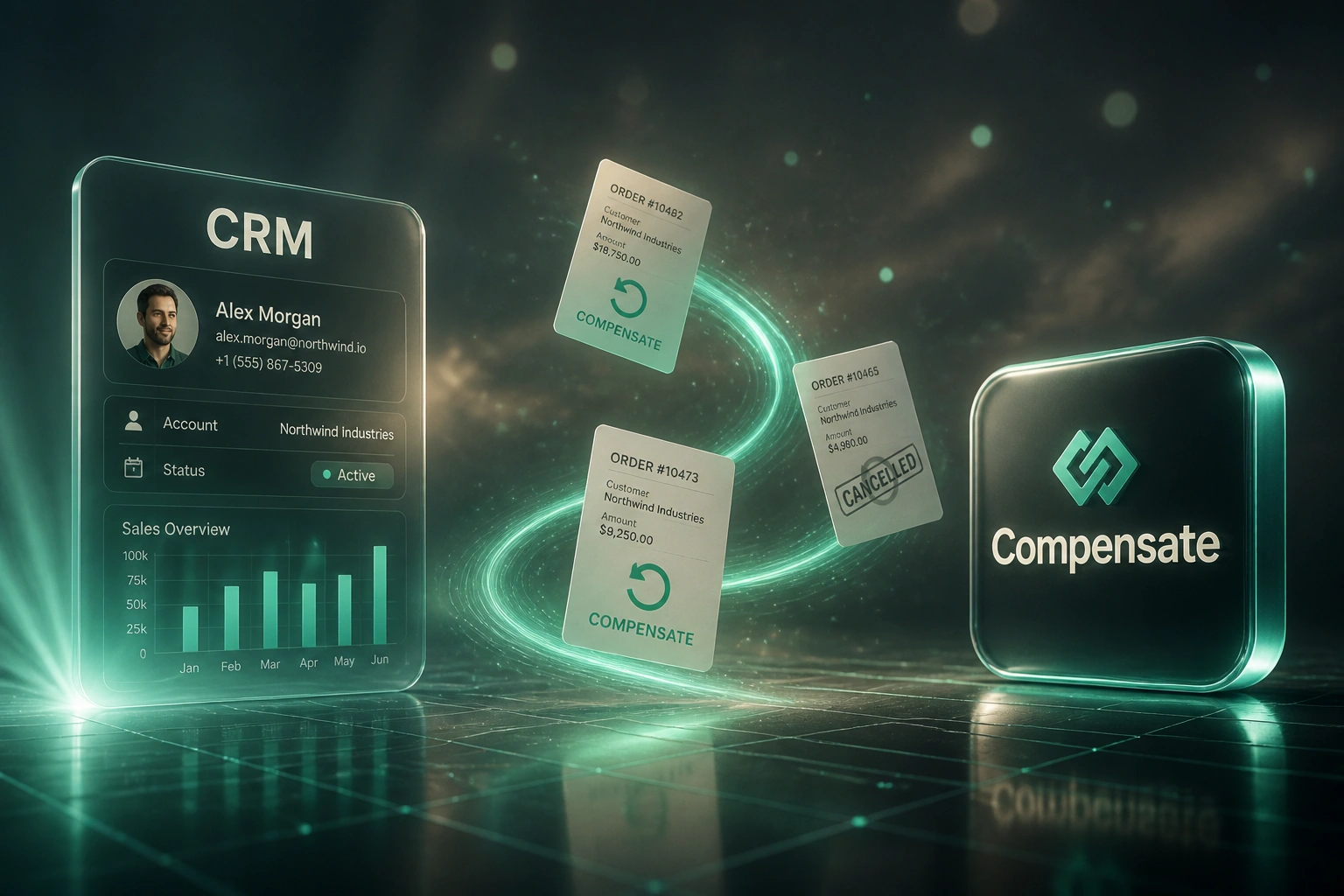
Your order-to-cash flow spans CRM, payments, warehouse, and accounting. When step 3 of 5 fails, you are left with charged cards, locked stock, missing invoices, and half-complete CRM records that ops cleans up by hand.
We build saga orchestration with compensating actions so multi-system operations either finish together or reverse cleanly.
Sound Familiar?
These are the exact issues our clients faced before saga orchestration:
- Payment charges succeed but the invoice never appears in accounting, so finance chases ghosts
- Stock stays reserved after a failed payment, creating phantom stockouts on fast movers
- CRM shows "Won" while warehouse and billing still sit halfway through the same order
- Ops spends mornings matching half-complete records across four systems by spreadsheet
- A failure on step 3 of 5 leaves orphaned orders that take hours to unwind by hand
Distributed locks and "just retry" do not fix this. Once payment has charged and stock has reserved, a failed invoice step needs deliberate compensating actions, not another sync job that piles on more orphans.
What Saga Orchestration Actually Does
Trigger → coordinated steps → compensate on failure → clean outcome. Every system either finishes the flow or undoes its part.
Business Event Fires
Order placed, deal won, or onboarding started across CRM and commerce
Steps Run in Sequence
Reserve stock → charge payment → raise invoice → update CRM, each confirmed before the next
Failure Triggers Undo
If a later step fails, prior steps reverse: refund, release stock, void draft, reset CRM
Clean End State
Either every system shows success, or every system shows a deliberate reverse. No orphans.
Everything You Need for Reliable Distributed Transactions
Saga Orchestration
Order-to-cash runs as one coordinated flow: create order, reserve stock, charge payment, raise invoice, update CRM. Each step only advances when the previous one succeeds.
Compensating Actions
When a later step fails, earlier ones undo in reverse: refund the charge, release the reservation, void the draft invoice, and mark the CRM deal failed. No orphaned leftovers.
Partial-Failure Recovery
Payment charged but invoice blocked? Stock reserved but gateway declined? The saga knows which steps completed and runs only the compensations that apply.
Cross-System Audit Trail
Every forward and undo step is logged with timestamps and outcomes, so finance and ops can see exactly what happened without reconstructing it from four UIs.
Idempotent Steps
Retries never double-charge or double-reserve. Each step can safely re-run after a timeout or crash without creating duplicate records.
Ops Alerts on Stuck Flows
If a compensation itself fails, ops gets an alert with the order ID and the step that stuck. Nothing silent vanishes into a half-complete state.
Systems We've Orchestrated in Sagas
From 12 Hours/Week Cleanup to Under 1 Hour
How a mid-size South African distributor stopped orphaned order-to-cash records across CRM, PayFast, warehouse, and Xero.
The Partial-Failure Mess
- Order → reserve → charge → invoice → CRM ran as separate syncs with no shared undo plan
- Payment successes with missing Xero invoices left finance matching bank lines for hours
- Failed charges left stock reserved, blocking real buyers on scarce SKUs
- Ops rebuilt the truth from four screens and a shared spreadsheet every morning
- Month-end carried a standing list of half-complete orders nobody owned
The Saga Process
- One orchestrator runs the five steps in order and records which completed
- Invoice or CRM failure triggers refund, stock release, and status reverse automatically
- Phantom stockouts from abandoned payments dropped to near zero
- Finance sees a complete trail of forward and compensating actions per order
- Ops only reviews stuck compensations, not every partial failure by hand
Before vs After Saga Orchestration
How It Works
From first conversation to live saga orchestration in 4–8 weeks.
Map the Multi-Step Flow
Which systems run order-to-cash or onboarding today, where steps fail mid-flow, and which orphaned records already cost you hours.
Free Scoping Call
30-minute call to design the saga sequence, compensating actions for each step, and which flows go live first.
Build and Failure-Test
We build the orchestrator, then deliberately fail mid-flow steps to prove every compensation cleans up payment, stock, invoice, and CRM.
Go Live and Monitor
Cut over with saga status dashboards and stuck-flow alerts so every multi-system operation completes or cleanly undoes.
Frequently Asked Questions
What is the saga pattern in plain business terms?
A saga treats a multi-system operation as one business transaction. Each system does its local step in sequence. If a later step fails, earlier steps run compensating actions (refund, release stock, void invoice, reverse CRM status) so the estate ends consistent instead of half-complete.
How is this different from a normal CRM-to-accounting sync?
A sync copies data one way or both ways. A saga coordinates a chain of steps that must succeed together: order, stock, payment, invoice, CRM. When step 3 of 5 fails, sync alone leaves orphans. Saga orchestration with compensating actions undoes the prior steps on purpose.
Which systems can sit inside a saga?
We regularly orchestrate CRM (HubSpot, Salesforce, Pipedrive), ecommerce and warehouse, payment gateways (PayFast, Stripe, Ozow), and accounting (Xero, Sage, QuickBooks). If each system has an API and a clear undo action, it can join the flow.
Will this disrupt live order-to-cash while you build?
No. Staff keep using the same tools. We introduce the orchestrator behind the scenes, run failure drills on non-production or parallel paths, and only switch off brittle handoffs once compensations are proven.
What happens if a compensating action fails?
Compensations retry on a controlled schedule. If they still fail, the flow lands in an ops alert queue with the order ID and stuck step. You never rely on silent cleanup or hope someone notices in month-end.
How much does saga orchestration cost?
Focused order-to-cash sagas for one primary flow start from around R45,000. Multi-flow orchestration covering onboarding, fulfilment, and billing with custom compensations typically ranges from R70,000 to R140,000. Teams spending 10+ hours a week on orphaned-record cleanup usually see ROI within one or two quarters.
Make Multi-System Operations Succeed or Undo Together
If your team still cleans up charged-but-uninvoiced, reserved-but-unpaid, and CRM-out-of-sync records by hand, you are paying for a problem saga orchestration already solves.
Tell us which systems sit in your order-to-cash or onboarding flow, where steps fail today, and how long cleanup takes. We will show you exactly how compensating actions would work for your business.