Build a Usage-Based Billing System That Meters What Matters
API platforms, cloud services, and utilities need billing tied to actual consumption. Spreadsheet meters underbill customers, lose late events, and burn a week of finance time every cycle while competitors already charge for what is used.
We build the metering, rating, and invoicing system that recovers that revenue.
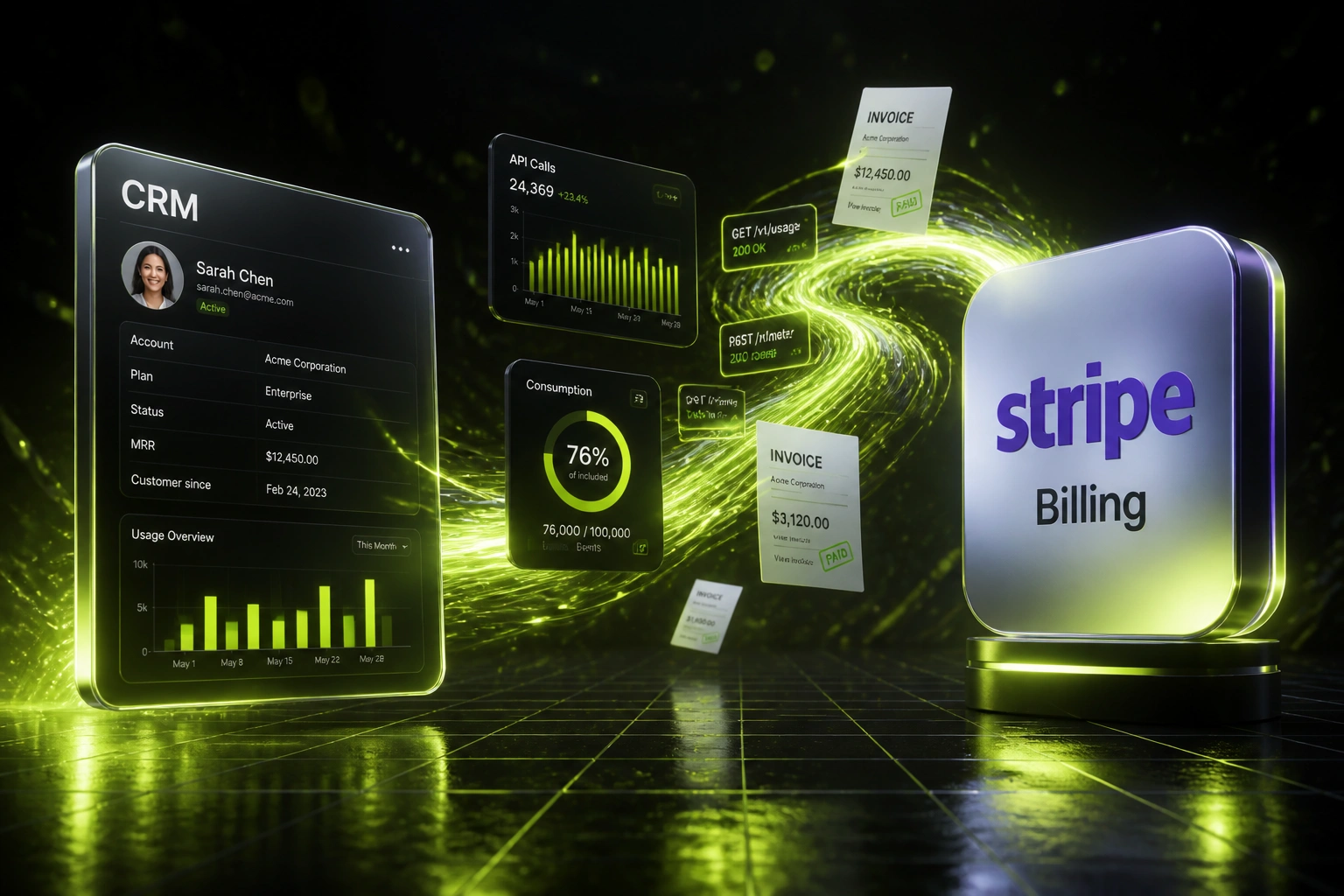
Sound Familiar?
These are the exact issues SaaS and API platform teams faced before a proper usage-based billing system:
- Usage events live in logs and product dashboards, but finance still rebuilds invoices from spreadsheets every cycle
- API calls, tokens, and storage totals never quite match what lands on the customer invoice
- Underbilling slips through quietly: dropped events, rounded-down meters, late arrivals, and missed overages
- Customers demand pay-for-what-you-use transparency, and usage disputes burn days of product and finance time
- Building metering in-house is eating three to six months of engineering while competitors already bill on consumption
Buyers are already there. 39% of CIOs prefer pricing tied to tokens, API calls, or time, ahead of seats. Hybrid pricing jumped from 27% to 41% as the primary model in a single year. If your product meters usage but billing still starts in Excel, underbilling and competitor pricing pressure compound every cycle.
From Billable Events to Rated Invoices
Events captured → aggregated and rated → invoice generated → variance monitored. No spreadsheet metering.
Events Are Metered
API calls, tokens, storage, and custom events stream into an idempotent metering pipeline
Usage Is Rated
Allowances, tiers, and overage rules apply automatically at period close
Invoice Is Generated
Draft invoice lands in Stripe Billing, Chargebee, or your ledger with correct line items
Leakage Is Caught
Metered vs billed variance alerts fire before customers receive the invoice
Everything You Need for Reliable Usage-Based Billing
Event Metering Pipeline
Ingest billable events from APIs, gateways, and product services with idempotent delivery so usage is counted once, not lost or double-billed.
Aggregation and Rating
Roll events into customer and period totals, then apply allowances, tiers, volume bands, and overage rates without a spreadsheet rebuild.
Hybrid Plan Support
Combine base subscriptions with metered components so seat, platform, and consumption charges issue as one coherent invoice.
Invoice Generation
At cycle close, rated usage becomes draft invoices in Stripe Billing, Chargebee, Xero, or your ledger with VAT and account codes intact.
Leakage and Variance Alerts
Reconcile metered totals against billed amounts every cycle and alert finance when variance crosses your threshold before invoices go out.
Usage Transparency
Give customers and account managers clear usage summaries and invoice status so disputes shrink and expansion conversations stay factual.
Platforms We've Wired for Metered Billing
From Spreadsheet Meters to a Live Billing Engine
How a 30-person API platform stopped leaking usage revenue and cut cycle-end from five days to same-day approval.
The Spreadsheet Meter Chaos
- Product exported API and storage logs; finance rebuilt invoices in Excel every month
- 22 hours per cycle reconciling events, allowances, and overages by hand
- Late events and rounding-down quietly underbilled roughly 3% of usage revenue
- Average five business days from period close to invoices sent
- Customers disputed usage because product dashboards and invoices never matched
The Usage-Based Billing System
- Events stream into Stripe Billing meters with idempotent identifiers
- Cycle close rates usage and creates draft invoices for finance approval
- Allowance, tier, and overage rules applied consistently every account
- Same-day invoicing after period close, every cycle
- Metered vs billed variance alerts catch leakage before send
Before vs After a Usage-Based Billing System
How It Works
From first conversation to a live usage-based billing system in 4 to 8 weeks.
Map What You Meter
Which events are billable, how you rate them today, where invoices are built, and where revenue is leaking.
Design the Billing Engine
30-minute scoping call to agree meters, aggregation windows, tiers, overages, hybrid plans, and the invoicing destination.
Build and Parallel-Run
We build metering, rating, and invoice generation, then parallel-run against recent cycles until every rand matches.
Go Live and Monitor
Retire the spreadsheet. Monitoring flags dropped events, variance, and sync failures before customers see them.
Frequently Asked Questions
What is a usage-based billing system?
A usage-based billing system (also called metered or consumption billing) meters what customers actually use (API calls, tokens, storage, messages, compute), aggregates those events into billing periods, rates them against your pricing rules, and generates invoices automatically. Unlike mapping a few CRM meter fields at month end, this is the full pipeline from event to cash: capture, rate, invoice, and reconcile.
How is this different from connecting CRM meters to Xero?
CRM-to-accounting metered sync assumes usage already lives in CRM fields and only needs to become invoice lines. A usage-based billing system builds (or wires) the metering engine itself: event ingestion, aggregation, rating, overages, and hybrid plans, typically on Stripe Billing, Chargebee, or a custom meter, then pushes clean invoices into accounting. It is the productised billing layer API and SaaS platforms need when spreadsheets stop scaling.
Which platforms can you build this on?
We commonly wire Stripe Billing metered usage, Chargebee usage and entitlements, and custom event meters sitting on your product APIs. On the finance side we connect to Xero, QuickBooks, Sage, and similar ledgers. If each system exposes an API, we can join event metering to rated invoices and payment status.
How do you stop underbilling and revenue leakage?
Industry research puts the metering-to-invoice gap at roughly 1 to 3% of usage revenue, with semi-automated environments often leaking 3 to 7% of gross metered revenue. We design idempotent event capture, reconcile metered totals against billed amounts every cycle, apply allowance and tier rules consistently, and alert finance when variance crosses a threshold so underbilling is caught before cash is left on the table.
How long does a usage-based billing system take to build?
A focused metering-to-invoice build on Stripe Billing or Chargebee typically takes 4 to 8 weeks from scoping to go-live. Greenfield custom meters with multi-tier rating, mid-cycle plan changes, multi-currency, and several event sources can take 8 to 12 weeks. That is still far shorter than the 3 to 6 months of engineering Metronome estimates for building robust metering from scratch. We always parallel-run against recent billing cycles before switching off the manual process.
How much does a usage-based billing system cost?
Focused Stripe Billing or Chargebee metered setups start from around R45,000. Full metering engines with custom event pipelines, hybrid plans, variance alerts, and accounting sync typically range from R75,000 to R180,000. Most API or SaaS teams recovering even 1 to 2% of underbilled usage revenue, plus weeks of finance time each year, see payback within one to three billing cycles.
Stop Leaving Usage Revenue on the Table
If consumption tracking still starts in a spreadsheet, you are underbilling customers and burning engineering time on a problem Stripe Billing, Chargebee, and custom meters already solve when wired correctly.
Tell us what you meter, how you rate it today, and where invoices need to land. We will show you exactly how a usage-based billing system would close for your platform.