AI CV Parsing: Automate Candidate Data Extraction for SA Recruiters
Your desk is drowning in PDF CVs. Manual retyping of SA ID numbers, matric, NQF levels, and employment history into the ATS burns hours per role and introduces errors that delay hiring.
We build the CV parsing pipeline that turns each resume into a structured candidate profile in seconds.
Sound Familiar?
These are the exact issues SA recruitment desks faced before CV parsing automation:
- Recruiters retype every SA CV by hand: ID numbers, matric, NQF levels, and employment history into the ATS
- Creative PDF layouts and multi-column templates leave ATS fields blank or scrambled
- Wrong ID digits, missing SAQA titles, and mistyped dates delay background checks and offers
- A mid-level job board post can dump hundreds of CVs overnight, and the inbox never empties
- Candidate personal information sits in email threads and shared drives instead of a controlled ATS
Official unemployment sits near 31%, with the expanded rate above 40%. High SA unemployment is flooding every open role with CVs. Built-in ATS parsers still fail on roughly one in four non-standard resumes, and POPIA fines for mishandled candidate data reach R10 million. Retyping is no longer a workable strategy.
What AI CV Parsing Actually Does
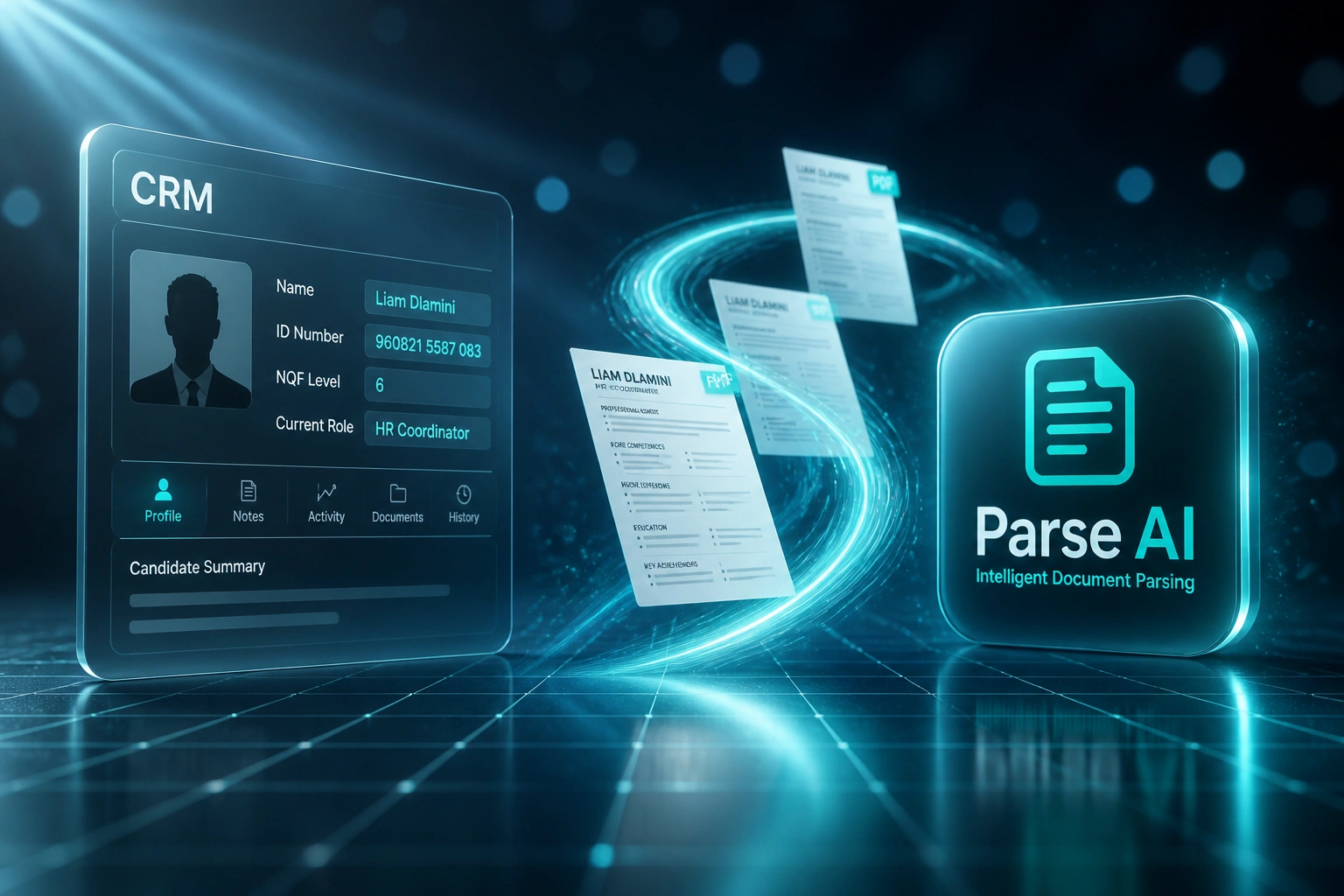
CV arrives → fields extracted → ATS profile complete. No human retyping ID numbers and employment history.
CV Lands in Intake
PDF or DOCX arrives from job boards, email, or your careers portal
AI Extracts Fields
Name, contacts, SA ID, NQF or SAQA quals, and employment history parsed into structured data
Profile Written to ATS
Candidate record created or updated with mapped fields and the original CV attached
Searchable Same Day
Recruiters filter and shortlist on clean fields instead of opening every PDF
Everything You Need for Reliable Resume Extraction
Structured Field Extraction
Each CV becomes a structured candidate profile: name, contacts, SA ID number, education, NQF or SAQA qualifications, and employment history mapped into your ATS fields.
SA Format Handling
Parsers are tuned for South African CVs: 13-digit ID patterns, matric and tertiary titles, NQF levels, and employment date formats recruiters actually receive.
ATS & CRM Write-Back
Parsed profiles write into Bullhorn, Greenhouse, Lever, Workable, or your recruitment CRM so search, filters, and matching run on clean fields, not PDF attachments.
Confidence & Review Queue
Low-confidence fields (unclear scans, unusual layouts) land in a short review queue. Your team corrects edge cases; the rest flow through without retyping.
Duplicate Detection
Incoming CVs match existing candidates on email, phone, and ID number so the same applicant does not create three incomplete records.
POPIA-Aware Intake
Candidate data lands in your ATS with purpose-limited processing, access controls, and retention rules instead of lingering in recruiter inboxes.
ATS Platforms We've Connected for CV Parsing
From 40 Minutes per CV to Under 2 Minutes
How a Johannesburg recruitment agency stopped retyping SA candidate data and recovered hundreds of recruiter hours in year one.
The Manual Process
- Three recruiters opened every PDF and typed ID, education, and work history into Bullhorn
- About 40 minutes per cold application once duplicates and QA were included
- ID digits and NQF levels regularly mistyped, forcing rework before client submission
- High-volume roles sat with incomplete profiles for days while the pile grew
- Candidate CVs and ID details lived in email threads outside the ATS
The Automated Process
- Incoming CVs parse into structured ATS profiles within seconds
- Recruiters only review low-confidence fields and confirm duplicates
- SA ID, NQF, and employment history land in the right fields for search
- Same-day searchable talent pool on every new intake batch
- Personal information stays in the ATS with controlled access
Before vs After CV Parsing
How It Works
From first conversation to live CV parsing in 2–4 weeks.
Tell Us Your Setup
Which ATS you run, how CVs arrive today, and which SA fields matter most for search and compliance.
Free Scoping Call
30-minute call to map intake sources, field mappings, review thresholds, and POPIA handling.
Build & Test
We train and test on your real SA CV sample set, tune NQF and ID extraction, and run parallel entry until accuracy beats manual retyping.
Go Live & Monitor
Switch off bulk retyping. Monitoring tracks parse success, review volume, and field completeness on every intake.
Frequently Asked Questions
How is CV parsing different from AI resume screening?
Parsing extracts structured data into ATS fields: ID number, qualifications, employment history, contacts. Screening scores fit against a job description and ranks a shortlist. Most desks need parsing first so search and matching have clean data to work with.
How long does AI CV parsing take to set up?
A standard ATS-connected CV parsing setup takes 2–4 weeks from scoping to go-live. A single intake channel into one ATS can be live within two weeks. Multi-source intake with SA-specific field maps, duplicate rules, and review queues typically takes 4–6 weeks.
Which ATS and recruitment CRMs do you support?
We have built CV parsing and candidate write-back into Bullhorn, Greenhouse, Lever, Workable, SmartRecruiters, Zoho Recruit, and custom ATS or CRM stacks. If applications land in a system with an API or import path, we can parse CVs into its candidate fields.
Will this handle South African CV formats?
Yes. We design extraction for SA realities: 13-digit ID numbers, matric and tertiary education wording, NQF levels, SAQA-style qualification titles, and the mixed PDF templates local candidates submit. We calibrate on your historical CV sample before go-live.
How do you handle POPIA and candidate personal information?
Parsed data writes into your controlled ATS rather than sitting in email and shared folders. We scope purpose limitation, access, and retention with your team. Parsing extracts fields for hiring; it does not auto-reject candidates or make sole automated hiring decisions.
How much does AI CV parsing cost?
A focused one-way parse into a single ATS starts from around R15,000. Full recruitment AI parsing with SA field maps, duplicate detection, review queues, and ATS write-back typically ranges from R25,000 to R60,000. Desks recovering a day or more of recruiter time each week usually see ROI within 2–3 months.
Stop Retyping South African CVs by Hand
If your recruiters still copy ID numbers, NQF levels, and employment history from PDFs into the ATS, you are spending money on a problem that recruitment AI already solves.
Tell us which ATS you use, how CVs arrive today, and which SA fields matter most for search and client submission. We will show you exactly how parsing would work for your desk.