AI Duplicate Detection in CRM: Catch What Exact Rules Miss
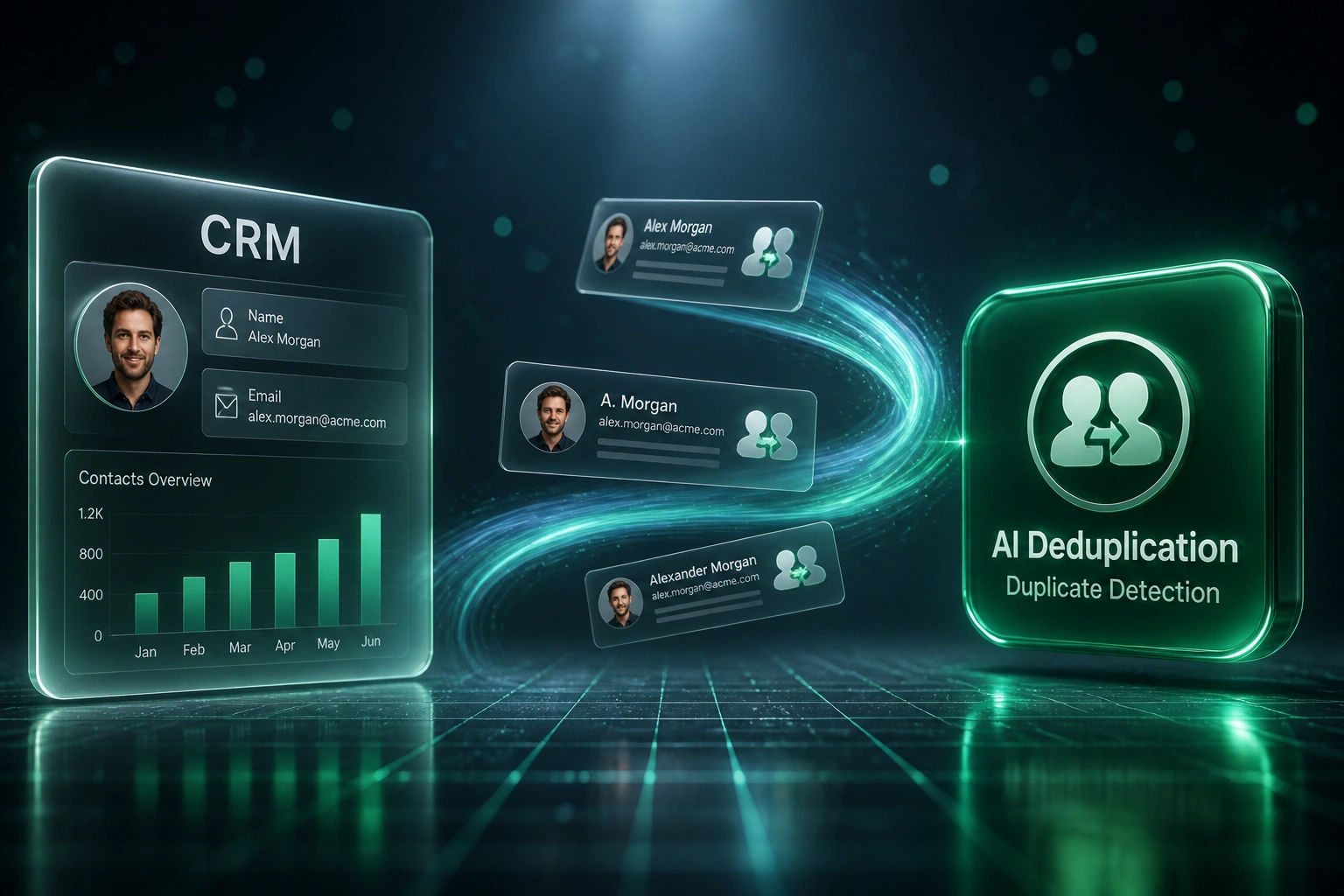
Duplicate records corrupt analytics and embarrass reps who contact the same person twice. Native CRM deduplication leans on exact matches. AI fuzzy matching finds the typos, nicknames, and swapped fields those rules never see, then merges them into one trusted record.
We build the CRM deduplication layer that makes your database trustworthy again.
Sound Familiar?
These are the exact issues CRM admins and ops directors brought to us before AI duplicate detection:
- Reps call the same person twice because "Cathy" and "Catherine" live as separate contacts
- Pipeline and revenue reports inflate because one account appears three times under slightly different company names
- Ops spends evenings in spreadsheets matching emails, phone numbers, and nicknames by hand
- Exact-match HubSpot and Salesforce rules miss typos, swapped first/last names, and trading-as aliases
- Marketing sequences hit the same inbox twice, damaging sender reputation and trust
Exact-match CRM deduplication leaves 30–40% of real duplicates untouched. Salesforce and HubSpot native rules catch identical emails, but nicknames, typos, and trading-as aliases sail through. Audited Salesforce orgs average around 23% duplicate contacts. Every month you delay cleanup, the mess compounds and your reports stay untrustworthy.
What AI CRM Deduplication Actually Does
Scan → score fuzzy matches → review or merge → block new duplicates at entry. Analytics you can finally trust.
Scan the CRM
Contacts and companies indexed across name, email, phone, company, and address fields
AI Fuzzy Match
Nicknames, typos, and near-matches score as likely duplicates exact rules never see
Review & Merge
High-confidence pairs merge; borderline pairs wait in a queue for admin confirmation
Stay Clean
Point-of-entry checks stop new duplicates before they land, so the cleanup sticks
Everything You Need for Reliable CRM Deduplication
AI Fuzzy Matching
Nicknames, typos, phonetic variants, and swapped fields score as likely matches even when strings are not identical. Exact email rules stay for the easy cases.
Contact & Company Survivorship
When two records merge, we keep the richest fields: verified phone, latest job title, full activity history. Nothing important gets wiped.
Review Queue, Not Blind Merges
High-confidence pairs auto-merge under your rules. Ambiguous pairs land in a review queue so a CRM admin confirms before anything is lost.
Point-of-Entry Blocking
Before a new lead saves, the system checks for near-duplicates and alerts the rep. Prevention stops the next wave of dirty records.
Bulk Historical Cleanup
We run your existing database through AI duplicate detection in batches, so years of migration leftovers and import clutter get cleaned, not ignored.
CRM-Native Write-Back
Merges write into HubSpot, Salesforce, Pipedrive, or Dynamics using each platform's merge APIs, with an audit trail your ops team can defend.
CRMs We've Cleaned with AI Duplicate Detection
From 14 Hours/Week of Merges to 2
How a 28-person industrial supplier stopped double outreach and made CRM analytics trustworthy again.
The Manual Mess
- 38,000 HubSpot contacts after a Pipedrive migration, with an estimated 19% duplicates
- Ops lead spent 14 hours a week matching nicknames and company aliases in spreadsheets
- Native HubSpot email rules missed Cathy/Catherine and trading-as company variants
- Sales double-dialed roughly 40 accounts a month without knowing it
- Pipeline reports inflated because the same deal sat under two company records
AI Fuzzy Matching Live
- AI scored fuzzy matches across name, email, phone, and company in one pass
- High-confidence pairs merged with survivorship rules; borderline pairs hit a review queue
- Duplicate rate fell from 19% to 2.1% within eight weeks
- Double-dial complaints dropped to near zero within the first month
- Point-of-entry alerts now stop new near-duplicates before they save
Before vs After AI Duplicate Detection
How It Works
From first conversation to live CRM deduplication in 2–5 weeks.
Tell Us Your Setup
Which CRM, roughly how many contacts and companies, and where double outreach or broken reports hurt most.
Free Scoping Call
30-minute call with your CRM admin or ops lead to sample duplicate patterns, set match thresholds, and define merge rules.
Build & Test
We tune AI fuzzy matching on a held-out sample, validate false-positive rates with your team, then run a parallel cleanup week.
Go Live & Monitor
Historical merges complete, point-of-entry checks go live, and dashboards track duplicate rate and hours recovered.
Frequently Asked Questions
How is AI duplicate detection different from our CRM's built-in dedupe?
Native HubSpot and Salesforce rules lean on exact or near-exact field matches. They catch identical emails but miss "Bob" versus "Robert", "Acme Corp" versus "ACME Corporation", and swapped name fields. AI fuzzy matching scores semantic and phonetic similarity across fields, so those hidden duplicates surface for merge.
Will the system merge records without human approval?
Only when you say so. We set confidence thresholds: high-confidence pairs can auto-merge with an audit log, while borderline pairs go to a review queue. Your CRM admin keeps control of golden records and survivorship rules.
Which CRMs support AI CRM deduplication?
We have built duplicate detection and merge workflows for HubSpot, Salesforce, Pipedrive, Zoho CRM, Microsoft Dynamics, Freshsales, and custom CRMs with an API. If contacts and companies are reachable, we can score and merge them.
How does this improve reporting and analytics?
Duplicates inflate pipeline, double-count revenue, and break attribution. Once contacts and companies collapse to one golden record, dashboards reflect real accounts and real deals. Ops and leadership can trust the numbers again.
How long does an AI duplicate detection project take?
Most builds take 2–5 weeks from scoping to go-live: sample audit, matching model tuning, review-queue setup, historical cleanup, and point-of-entry prevention. Narrow pilots on contacts only can be live in about two weeks.
How much does AI CRM deduplication cost?
Pilots start from around R30,000. Production AI fuzzy matching with review queues, survivorship rules, and point-of-entry blocking typically ranges from R45,000 to R85,000. Teams spending 8+ hours a week on manual merges usually recover the project cost within 2–3 months.
Stop Letting Duplicates Embarrass Your Team
If your reports do not match reality and reps still call the same person twice, you are paying for a problem AI fuzzy matching already solves.
Tell us which CRM you run, roughly how many contacts you have, and where double outreach or broken analytics hurt most. We will show you how AI duplicate detection would work on your data.