AI Legal Extraction: Pull Key Clauses and Dates from Contracts
Your GC and legal ops lose renewals because obligation dates, payment terms, and liability caps still live in PDFs. Manual contract parsing burns hours, and notice periods slip before finance or counsel can act.
We build the document intelligence that extracts those clauses into structured systems so you never miss an auto-renewal again.
Sound Familiar?
These are the exact issues our clients faced before structured legal extraction:
- Renewal and notice dates live in PDFs, so legal ops and finance discover auto-renewals only after the window has closed
- Finding a single clause still takes around 84 minutes on average, before anyone starts tracking the obligation
- Payment terms, liability caps, and renewal windows never land in CRM, calendar, or ERP fields your teams already use
- Spreadsheets of key dates go stale the week after someone updates them, and nobody trusts the register
- POPIA processing schedules and operator obligations stay buried in annexures until a vendor review or audit forces a scramble
WorldCC research puts average contract value leakage near 8.6%, while mid-market studies put the average annual cost of missed renewals around R7.3 million. Contract volume keeps rising, CLM adoption is accelerating, and POPIA still demands clear processing schedules. Dates trapped in PDFs are now a balance-sheet risk, not just a filing problem.
What Legal Clause Extraction Actually Does
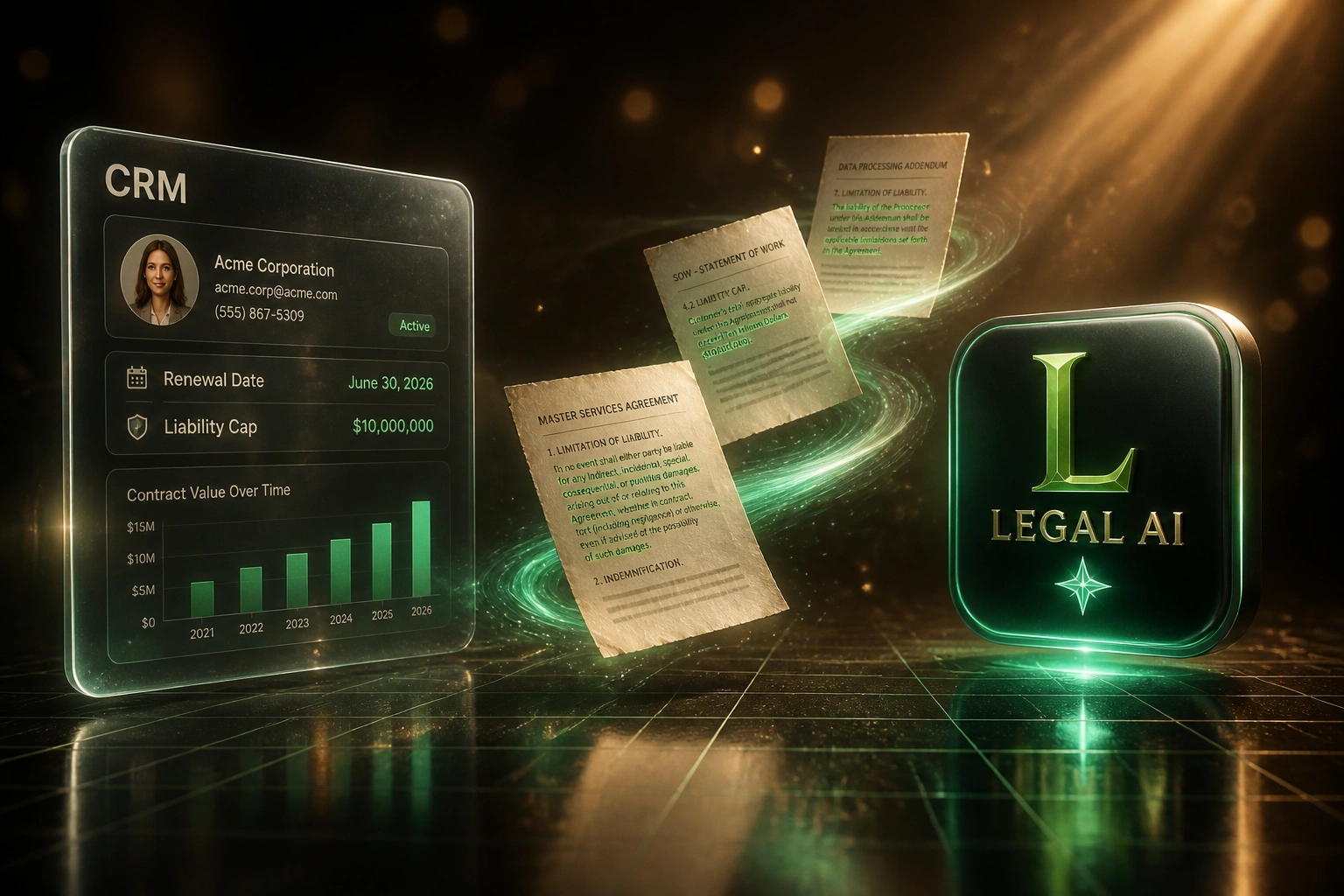
Contract arrives → clauses parsed → dates and terms structured → CRM and calendar updated for obligation tracking.
Contract Lands
MSA, SOW, or vendor PDF from email, SharePoint, or DocuSign enters the extraction queue
Clauses Extracted
Obligation dates, payment terms, renewal windows, and liability caps pulled into structured fields
Human Confirms
High-stakes and low-confidence fields pause for legal ops review with the source clause cited
Systems Updated
CRM, calendar, and ERP records refresh so renewals and obligations surface before the notice window closes
Everything You Need for Reliable Obligation Tracking
Obligation Date Capture
AI pulls effective dates, end dates, notice windows, and milestone deadlines into structured fields so calendar and CRM alerts fire before the clock runs out.
Payment Terms Extraction
Net terms, deposit schedules, escalation clauses, and invoice triggers become searchable data finance can act on, not a paragraph buried on page 18.
Renewal & Auto-Renew Mapping
Auto-renew flags, notice periods, and renewal windows sync to your contract register so legal and procurement renegotiate on time instead of rolling over.
Liability Cap Structuring
Liability caps, carve-outs, and related financial limits are extracted as fields with source citations, ready for counsel confirmation on high-stakes paper.
CRM, Calendar & ERP Write-Back
Extracted dates, terms, and caps write into HubSpot, Salesforce, Outlook or Google Calendar, and ERP records so obligation tracking lives where work already happens.
Human Review on High-Stakes Fields
Low-confidence extractions and high-value contracts pause for legal ops or GC confirmation. Clear, standard fields never wait behind those exceptions.
Document Sources and Systems We've Connected
From 3.5 Hours to 12 Minutes per Contract
How a mid-market SA industrial group stopped missing notice periods and put renewal dates, payment terms, and liability caps into systems legal and finance already open every day.
The Manual Process
- Legal ops hunted obligation dates and renewal windows inside SharePoint PDFs and email attachments
- Abstraction averaged 3.5 hours per commercial agreement, with key fields typed into a spreadsheet that went stale weekly
- Two vendor auto-renewals slipped in one year because notice periods never reached the calendar
- CFO had no reliable view of liability caps or payment terms without asking counsel to re-open the file
- POPIA processing schedules in annexures were invisible until a vendor assessment forced a scramble
The Automated Process
- New contracts from email, SharePoint, and DocuSign enter extraction the moment they arrive
- AI pulls obligation dates, payment terms, renewals, and liability caps into CRM and calendar fields
- Legal ops spends about 12 minutes confirming high-stakes fields, with source clauses cited beside each value
- Notice windows surface 90, 60, and 30 days out so procurement and counsel renegotiate on time
- Finance sees payment terms and caps without reopening the PDF or chasing legal for a status call
Before vs After Legal AI Extraction
How It Works
From first conversation to live clause extraction in 3–5 weeks.
Tell Us Your Setup
Where contracts live, which dates and clauses you miss most, and which CRM, calendar, or ERP fields should hold the structured data.
Free Scoping Call
30-minute call to map intake → clause extraction → field mapping → human review → write-back, and set confidence thresholds.
Build & Test
We encode your field schema, wire document sources, and run parallel on live MSAs and vendor paper until extraction accuracy meets your bar.
Go Live & Monitor
Legal ops reviews exceptions only. Monitoring tracks missed-notice risk, extraction confidence, and hours recovered on abstraction.
Frequently Asked Questions
How is legal clause extraction different from AI contract review?
Review scores risk and redlines against a playbook. Extraction turns obligation dates, payment terms, renewal windows, and liability caps into structured fields in CRM, calendar, and ERP so legal and finance never miss a notice period. Many teams need both. This build is about document intelligence that feeds obligation tracking, not first-pass risk screening.
How accurate is AI clause extraction on commercial contracts?
Independent clause-identification benchmarks such as LexCheck report 94–97% accuracy on standard commercial clauses, with AI first-pass often completing in minutes versus hours of manual abstraction. We start from your field schema and sample contracts, raise confidence thresholds over the first months, and keep humans on low-confidence and high-stakes extractions such as liability caps and unusual renewal wording.
How long does an AI legal extraction project take?
A focused build for one document intake path and a defined field set typically takes 3–5 weeks from scoping to go-live. Simpler date-and-renewal extraction can be live in about two weeks. Multi-entity schemas, CRM plus calendar plus ERP write-back, and POPIA schedule fields usually sit closer to 5–7 weeks.
What happens when the model is unsure about a date or clause?
Low-confidence extractions, scanned PDFs with poor OCR, and high-value liability or renewal fields pause for legal ops or GC confirmation, with the source clause cited beside the suggested value. Clear standard fields write through without blocking the queue.
How do you handle POPIA when extracting South African contracts?
We treat personal information in agreements under POPIA principles: minimise fields, control access, and map processing schedules and operator obligations when they appear in the paper. Extracted data lands in systems you already govern. High-stakes privacy clauses still get human review before they become operational records.
How much does AI legal document clause extraction cost?
Focused builds for one intake channel and a core date-and-terms schema typically start from around R35,000. Multi-source intake, CRM and calendar write-back, and multi-entity field maps usually sit in the R45,000–R75,000 range. Teams abstracting 100+ contracts a year often recover the build cost within 2–3 months from staff time and avoided auto-renewal leakage alone.
Stop Hunting Clauses in PDFs
If obligation dates and liability caps still live only in contracts, you are paying for missed notice periods and hours of manual abstraction that legal AI already solves.
Tell us where contracts arrive, which dates and terms matter most, and which CRM or calendar fields should hold them. We will show you exactly how structured clause extraction would work for your legal ops and finance teams.