AI Meeting Summarisation: Auto-Generate Notes and Action Items
Your team spends hours after every meeting rewriting notes and chasing action items that never get done. Decisions fade, owners stay vague, and leadership time disappears into follow-up admin.
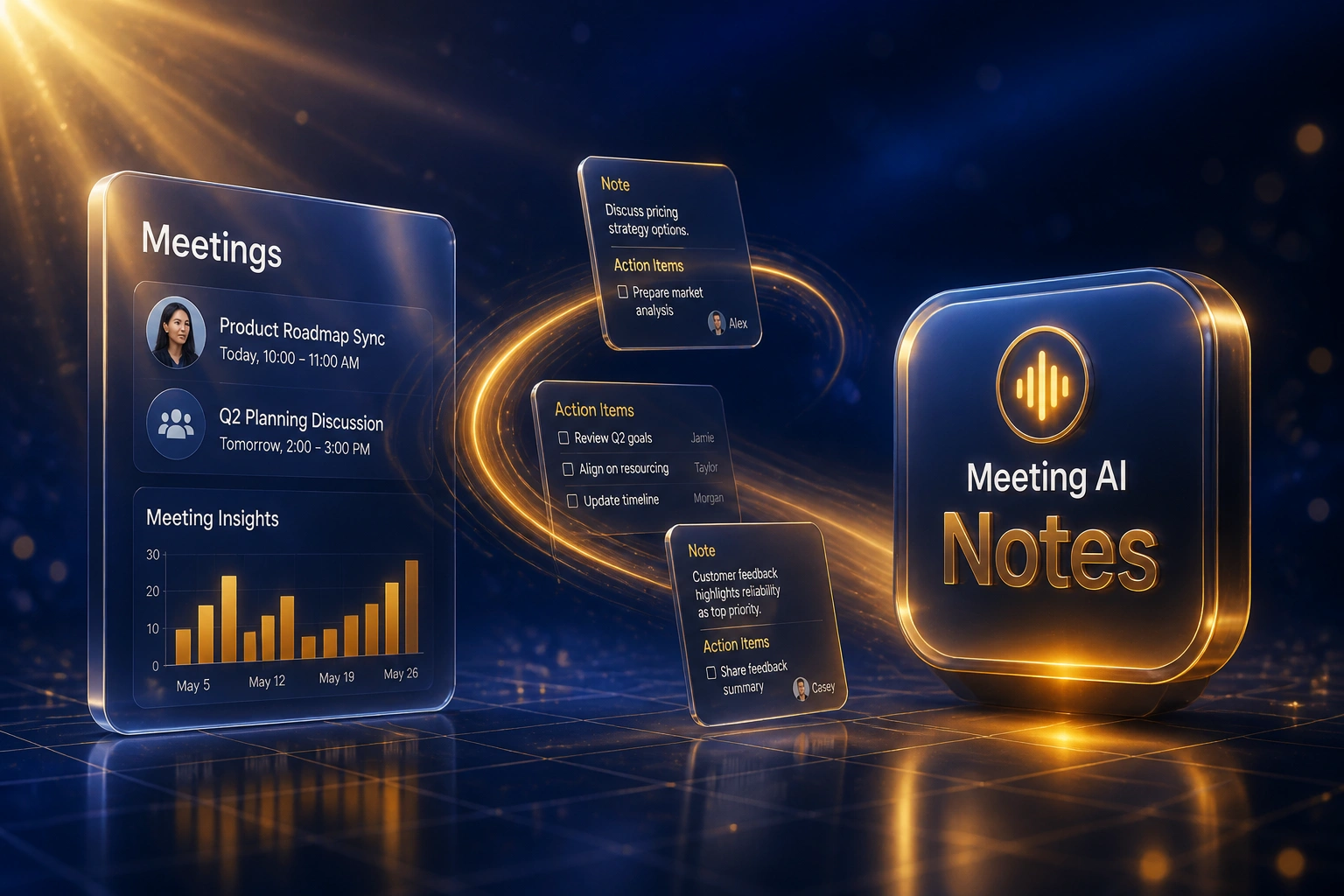
We deploy meeting AI that summarises, assigns owners, and distributes action items without a human writing them up.
Sound Familiar?
These are the exact issues our clients faced before meeting AI handled notes and action items:
- Someone spends an hour after every leadership meeting rewriting notes nobody else trusts
- Action items live in chat threads, notebooks, and memory, then quietly disappear
- Owners are unclear, so the same commitments resurface three meetings later still unfinished
- Decisions were made in the room, but half the attendees leave with a different version
- Managers chase follow-ups all week instead of doing the work the meeting was meant to unlock
The AI notetaker market was already worth about R38 billion in 2025, and hybrid teams buy seats at roughly R290–R330 per user per month. Off-the-shelf bots still leave you rewriting notes and chasing owners. If summaries never reach attendees with deadlines attached, the meeting tax keeps growing.
What Meeting AI Summarisation Actually Does
Meeting ends → summary written → action items assigned and sent. No human typing the minutes.
Meeting Is Captured
Zoom, Teams, or Meet recording feeds the AI assistant automatically
Notes Are Summarised
Decisions, context, and open questions distilled into a readable meeting note
Action Items Assigned
Owners and deadlines extracted, then written into your task tool or digest
Attendees Notified
Everyone who was in the room gets the notes and their own action list
Everything You Need for Reliable Auto-Summarisation
Automatic Meeting Summaries
When the call ends, AI produces structured meeting notes: decisions, open questions, and context. Nobody rewrites the transcript by hand.
Action Items with Owners
Commitments become clear tasks with a named owner and a deadline. Auto-summarisation turns "someone should…" into accountable work.
Distribution to Attendees
Notes and action items go out by email or Slack to everyone who was in the meeting, within minutes of hang-up.
Decision Capture
What was agreed is written once and shared. The next meeting starts from a shared record instead of competing memories.
Tool Write-Back
Action items land in Asana, Jira, Monday.com, or your project tracker so chase work happens in the system people already use.
Exception Review Queue
Ambiguous commitments surface for a quick human check instead of inventing an owner. Your team only touches what needs judgement.
Platforms We've Wired for Meeting Notes and Action Items
From 5.5 Hours/Week to Under 1 Hour/Week
How a 40-person professional services firm stopped rewriting leadership notes and lifted action-item completion from 52% to 90%.
The Manual Process
- Ops lead rewrote notes after every leadership and client sync
- 45–60 minutes per meeting: clean-up, owners, and email distribution
- Nearly half of action items never closed, with no shared tracker
- Attendees argued about what was decided by the following Monday
- Managers spent midweek chasing people who never saw the list
The Automated Process
- Meeting AI summarises decisions and drafts action items within minutes
- Ops lead reviews exceptions only, then approves the note pack
- Owners and deadlines land in Asana and go out to every attendee
- Shared record ends the "what did we agree?" debate
- Overdue items surface before the next leadership meeting
Before vs After Meeting AI Summarisation
How It Works
From first conversation to live meeting summarisation in 2–4 weeks.
Tell Us Your Setup
Which meeting tools you use, how notes are shared today, and where action items should land.
Free Scoping Call
30-minute call with your ops or leadership lead to map summary format, owners, and distribution rules.
Build & Test
We wire capture, summarisation, and distribution, then parallel-test against live meetings for a week.
Go Live & Monitor
Stop rewriting notes by hand. Monitoring watches missing owners, failed delivery, and overdue items.
Frequently Asked Questions
How is meeting summarisation different from transcription alone?
Transcription captures every word. Summarisation turns that transcript into decisions, owners, deadlines, and a shareable note pack, then distributes action items to attendees automatically. You get follow-through, not just a searchable recording.
Which meeting platforms and task tools can you connect?
We capture from Zoom, Microsoft Teams, and Google Meet, and can sit on top of Otter.ai, Fireflies.ai, or similar assistants when you already licence them. Action items write into Asana, Jira, Monday.com, Slack, email digests, or a tracker with an API.
Will this change how our leadership team runs meetings?
No. You keep the same calendar links and agendas. Capture, auto-summarisation, and distribution happen after the call. We run parallel for a week so you can compare AI notes against your current write-up before switching off the manual process.
What about privacy, consent, and POPIA?
We configure consent notices, retention rules, and access controls to match your policy. Summaries and action items stay in systems you control, with role-based visibility so sensitive sessions are not open to the whole company.
How accurate are the summaries and action items?
Modern meeting AI is strong on clear audio. We add a light review step for high-stakes leadership sessions in the first weeks, then tighten extraction so owners and deadlines land reliably. Ambiguous commitments go to a short exception queue instead of inventing an assignee.
How much does AI meeting summarisation and action-item distribution cost?
A focused one-platform capture with email or Slack distribution starts from around R25,000. Multi-platform capture with project-tool write-back, exception queues, and monitoring typically ranges from R40,000 to R75,000. Teams spending 4+ hours a week on notes and chase-ups usually see payback within 2–3 months.
Stop Rewriting Notes and Chasing Action Items
If your ops or leadership team still spends Friday reconstructing what was agreed, you are paying for a problem meeting AI already solves.
Tell us which meeting platforms you use, how notes are shared today, and where action items should land. We will show you exactly how auto-summarisation and distribution would work for your business.