AutoTrader Vehicle Monitoring with Apify: SA Automotive Intelligence
Your dealership principal, used-car buyer, or pricing desk still spot-checks AutoTrader for competitor stock and pricing. Used-car margins compress when a rival drops price overnight, and stock turns depend on knowing the market floor, yet the portal only updates when someone opens it.
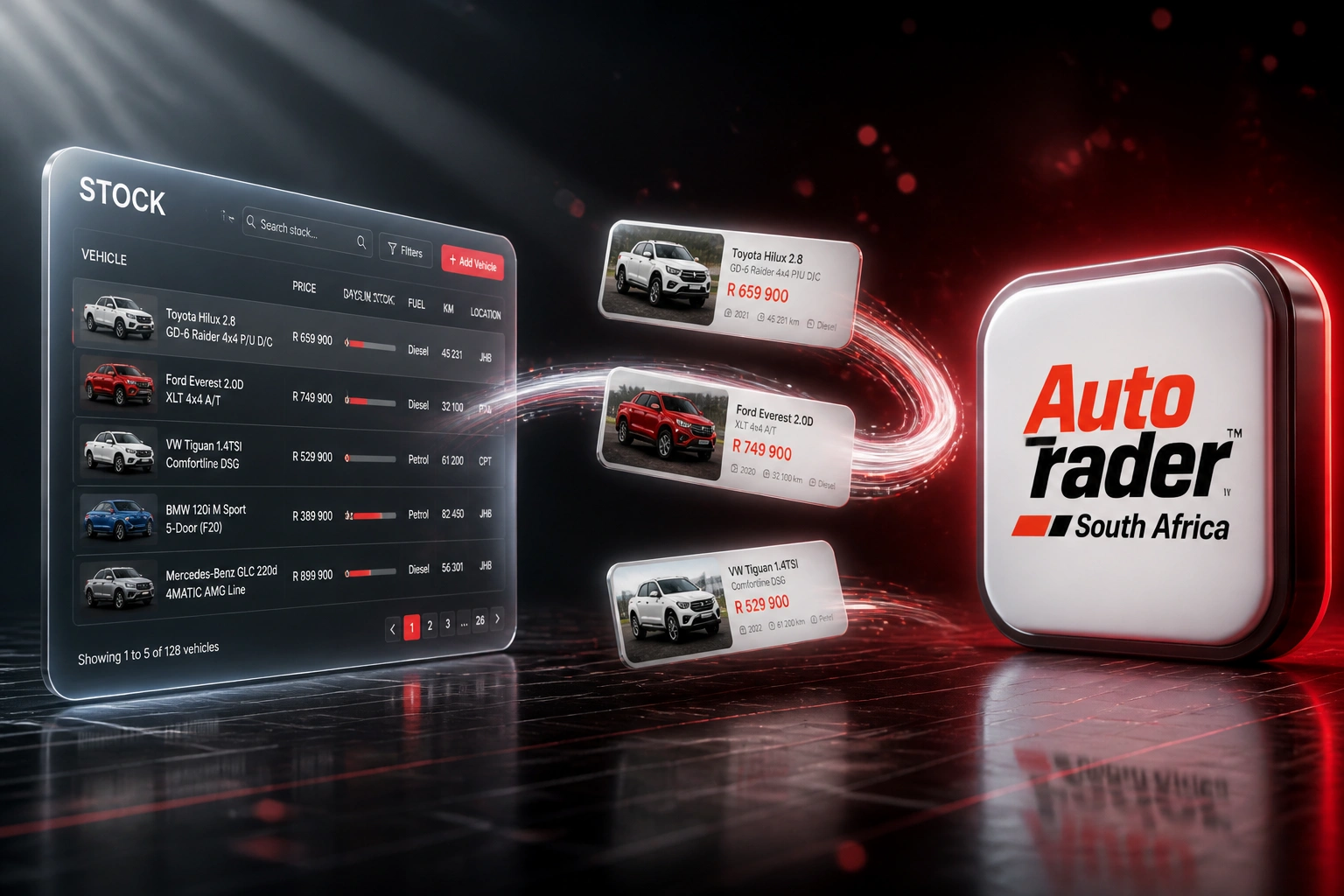
We schedule Apify Actors that track AutoTrader vehicle listings, pricing trends, and stock levels so the desk reacts without all-day babysitting.
Sound Familiar?
These are the exact issues our clients faced before AutoTrader scraping ran on a schedule:
- Pricing desks still open AutoTrader each morning to spot-check competitor stock on Polo, Hilux, and Ranger-class models
- A rival drops price overnight and your comparable unit sits above the market floor until someone notices by hand
- Days-in-stock creep past 45 while finance still quotes last week's "market" from memory
- Used-car buyers miss under-priced private and dealer listings because nobody refreshes the portal all day
- Nobody trusts the spreadsheet of competitor prices, so the team babysits AutoTrader again before every appraisal
Asian new-vehicle price competition is compressing used-car margins across South Africa. WeBuyCars and industry coverage through 2026 describe a deflationary used market where overnight undercuts and slow stock turns punish desks that still price from yesterday's AutoTrader screenshot.
What AutoTrader Scraping with Apify Actually Does
Listings change → Actor captures the delta → desk gets the alert. No human refreshing the portal all day.
Actor Run Schedules
Apify runs overnight against your VIN-class filters on AutoTrader
Listings Structured
Price, mileage, province, and days-live land as clean rows, not screenshots
Undercuts Flagged
Price drops and new competitor stock alert the pricing desk by morning
Floor Adjusted
Buyers and principals reprice or source stock before the market moves on
Everything You Need for a Reliable Vehicle Listing Monitor
Scheduled AutoTrader Actors
Apify Actors crawl live AutoTrader vehicle listings on a cadence you set: overnight, twice daily, or hourly for high-turn VIN-class models.
Price & Stock Delta Alerts
New listings, price cuts, and removals surface as structured alerts so the pricing desk reacts to undercuts without refreshing the portal.
VIN-Class Model Tracking
Filter by make, model, year band, mileage, and province so you watch the stock that actually competes with your floor, not the whole marketplace.
Days-in-Stock Intelligence
Track how long comparable units have been live, spot ageing competitor stock, and time your own markdowns before holding costs eat the deal.
Pricing Desk Delivery
Structured rows land in Sheets, a warehouse, or your DMS-adjacent tools so buyers and principals review market floors in one place.
Run Monitoring & Retries
Failed Actor runs alert your team automatically. Retries keep the overnight feed intact so Monday does not start from a blank export.
Where Vehicle Listing Data Lands
From 10 Hours/Week to a Morning Alert Review
How a multi-brand used-car desk stopped babysitting AutoTrader and turned competing stock ~5 days faster.
The Manual Process
- Pricing manager opened AutoTrader several times a week to check Polo, Hilux, and Ranger-class competitors
- Hundreds of listings reviewed by hand across rival dealerships and private sellers
- Overnight price cuts discovered late, after buyers had already compared sessions spanning several days
- Units drifting past 45 days while the "market floor" lived in someone's head
- Appraisals delayed while the buyer refreshed the portal one more time
The Automated Process
- Scheduled Apify Actors capture AutoTrader listing deltas overnight for the VIN-class set
- Morning Slack and sheet alerts flag new stock and undercuts before the floor walk
- Days-in-stock and price trends sit in one dashboard the principal can open in minutes
- Early 3–5% markdowns happen while units still have enquiry momentum
- Buyer time shifts to appraisals and sourcing, not portal babysitting
Before vs After Vehicle Listing Monitoring
How It Works
From first conversation to live AutoTrader monitoring in 2–4 weeks.
Tell Us Your Setup
Which dealerships and VIN-class models you watch on AutoTrader, how the pricing desk works today, and where stock decisions stall.
Free Scoping Call
30-minute call to define Actor filters, alert thresholds, delivery targets, and which overnight undercuts matter most.
Build & Test
We schedule Apify runs, validate listing fields against live AutoTrader stock, and run parallel with your manual checks for a week.
Go Live & Monitor
Switch off all-day portal babysitting. Alerts catch price moves and failed runs so the desk stays ahead of the market floor.
Frequently Asked Questions
What is AutoTrader vehicle listing monitoring with Apify?
It is a scheduled pipeline where Apify Actors extract public AutoTrader South Africa vehicle listings (make, model, price, mileage, location, and listing status) into structured datasets. Pricing desks, used-car buyers, and marketplace operators see competitor stock and pricing trends without manually refreshing the portal all day.
Why monitor AutoTrader specifically for SA automotive data?
AutoTrader ended 2025 as South Africa's largest automotive marketplace, with more than 130,000 live listings, over 15 million monthly visits, and reach roughly three times its nearest competitor. If competitor stock and used-car pricing floors move anywhere first, they usually move there.
How long does manual AutoTrader competitor checking take?
Industry guidance on dealer competitor pricing notes that a mid-volume desk tracking about six competitors across three platforms reviews hundreds of vehicle listings multiple times each week. That load sits on top of appraisals and floor management, so overnight undercuts often go unnoticed until the next manual pass.
Will this replace AutoTrader Intelligence or dealer tools we already pay for?
No. We build complementary monitoring for the competitor and market-floor views your team still gathers by hand. Your existing AutoTrader advertising and dealer products stay in place. The Apify pipeline feeds the structured deltas into the tools your pricing desk already opens each morning.
Is scraping AutoTrader allowed, and what should decision makers consider?
Public listing data sits in a policy and compliance grey area rather than a simple yes or no. We are not giving legal advice. We help teams document purpose, prefer public vehicle fields, respect POPIA when personal seller details appear, throttle responsibly, and weigh official data products versus Actor-based workflows with their own counsel where needed.
How much does AutoTrader listing monitoring with Apify cost?
Simple one-way scheduled Actor feeds start from around R15,000. Pipelines with VIN-class filters, alert routing, and warehouse delivery typically range from R25,000 to R60,000. Desks burning several hours a week on portal babysitting, or losing margin on aged stock past 45 days, usually recover the project cost within 2 to 3 months.
Put SA Automotive Data on a Schedule
If your pricing desk or used-car buyer still spot-checks AutoTrader for competitor stock and pricing, you are spending money on a problem scheduled Apify Actors already solve.
Tell us which VIN-class models you watch, how the desk works today, and where overnight undercuts hurt most. We'll show you exactly how a vehicle listing monitor would run for your operation.