Data Deduplication for Scraped Records: Clean Apify Output Pipelines
Raw Apify output is not ready for your CRM. Without a web data quality pipeline, duplicate record removal happens on Friday afternoons, after you have already paid for the scrape and polluted lead counts.
We build the matching and merge layer that ships clean, database-ready records.
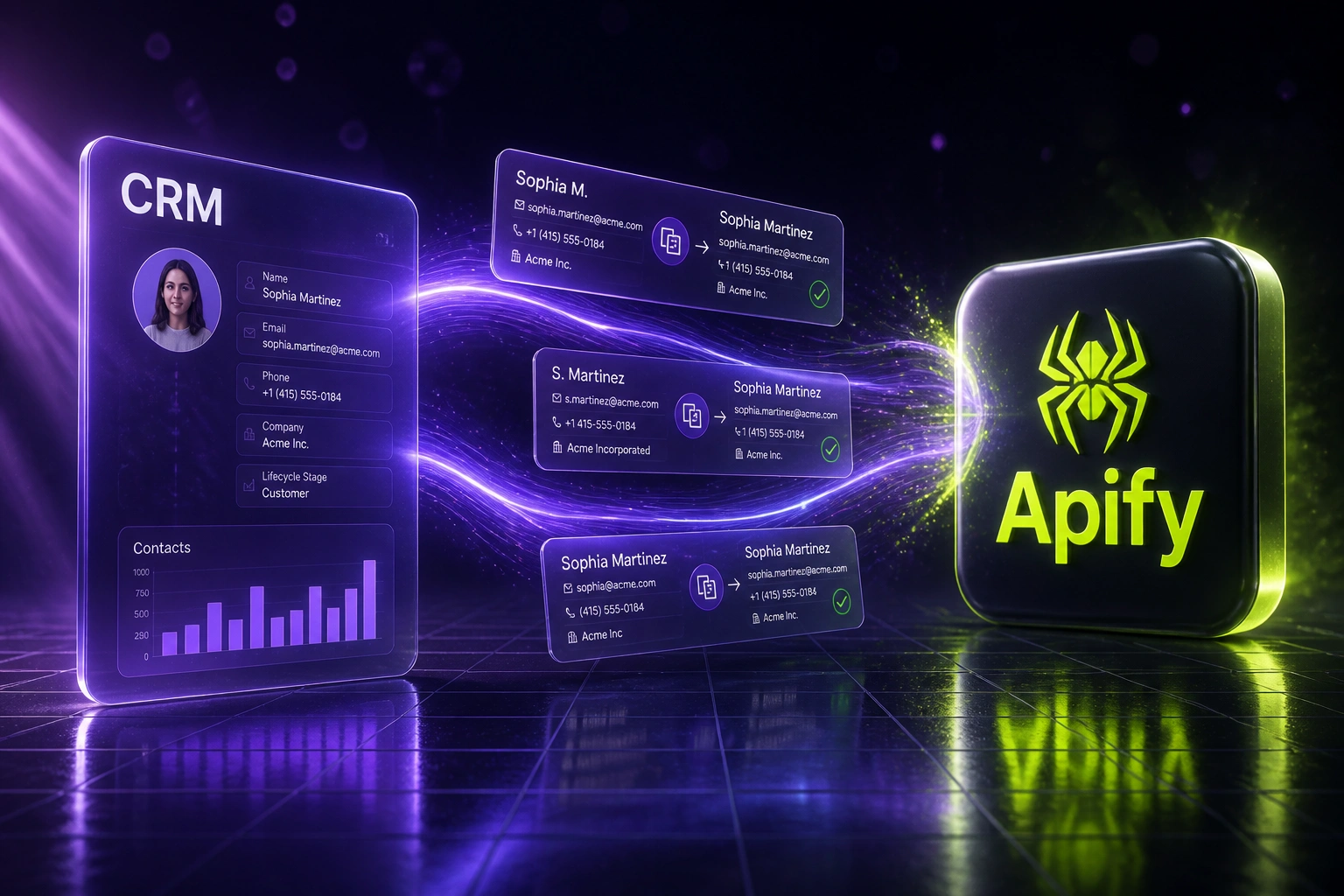
Sound Familiar?
These are the exact issues our clients faced before a proper Apify data cleaning pipeline:
- Weekly Apify scrapes dump contacts and companies straight into the CRM, and the same person lands three times under slight name and email variants
- Sales works inflated lead counts while marketing double-emails the same prospect, burning sender reputation and trust
- Ops spends Fridays merging records by hand, and exact-match rules still miss the fuzzy duplicates that look different but are the same person
- Scrape cost is paid once, then paid again in cleanup hours and bad decisions built on polluted pipeline numbers
- Nobody trusts the database enough to load the next scrape until someone has already spent half a day cleaning the last one
Prevention costs about R16 per record; remediation about R163; the business impact of leaving a duplicate alone can reach roughly R1,630 (classic 1:10:100 data quality ratio at ~R16.30/USD). Loading raw Apify datasets without scraper deduplication means you pay for bad data twice.
What the Deduplication Pipeline Actually Does
Apify run finishes → records matched and merged → clean upsert. No human copying CSV rows into the CRM.
Apify Dataset Ready
Actor run completes and the raw scraped contacts, companies, or products land in a dataset
Match & Score
Exact keys plus fuzzy scores on names, companies, and addresses flag duplicate clusters
Merge Rules Apply
Survivorship picks the best fields; borderline pairs go to a short review queue
Clean CRM Upsert
Golden records load once; inflated counts and double-emails stop at the door
Everything You Need for a Reliable Web Data Quality Pipeline
Exact + Fuzzy Matching
Strong IDs (email, URL, SKU) match exactly. Names, companies, and addresses score with fuzzy algorithms so typos and abbreviations still merge.
Composite Match Keys
Combine email, domain, phone, LinkedIn URL, and normalised name-plus-company so one weak field never decides alone.
Survivorship Merge Rules
Decide which fields win when duplicates collide: freshest phone, richest company name, verified email. One golden record leaves the pipeline.
Confidence Review Queues
Clear matches merge automatically. Borderline pairs land in a review queue so your team only judges the hard cases.
Apify Dataset → Clean Load
Pull Actor datasets, deduplicate and merge, then upsert into CRM or warehouse. Raw scrape output never lands as-is.
Audit Trails & Quarantine
Every merge is logged. Rejected and ambiguous rows quarantine instead of polluting the live database.
Sources and Destinations We Wire Into Deduplication Pipelines
From 8 Hours/Week Cleanup to 1 Hour/Week Review
How a Johannesburg B2B lead team stopped loading raw Apify scrapes into HubSpot and recovered trusted lead counts.
The Manual Process
- Weekly Apify directory scrapes exported to CSV and imported straight into HubSpot
- About 22% of contacts were duplicates after three months of loads
- Ops merged by email only, then spent Fridays fixing the rest by hand
- Marketing double-emailed overlapping prospects on every nurture send
- Pipeline dashboards showed more leads than unique people the team could actually call
The Automated Process
- Apify dataset feeds a matching layer before any CRM write
- Exact email/URL keys plus fuzzy name-and-company scores build golden records
- Borderline pairs land in a 15-minute review queue; clear matches merge alone
- Duplicate rate dropped under 2% on ongoing scrapes
- Lead counts and campaign lists finally match the people sales can reach
Before vs After Scraper Deduplication
How It Works
From first conversation to live deduplication pipeline in 2–4 weeks.
Tell Us Your Setup
Which Apify Actors feed your CRM or warehouse, how duplicates show up today, and which fields define a unique contact, company, or product.
Free Scoping Call
30-minute call to map match keys, merge rules, confidence thresholds, and where clean records should land.
Build & Test
We build the deduplication pipeline on a sample of your real Apify output, tune false-positive rates, and run parallel against your current cleanup week.
Go Live & Monitor
Switch off the Friday merge marathon. Monitoring flags failed runs and rising duplicate rates before the next campaign send.
Frequently Asked Questions
What is scraper deduplication for Apify output?
It is a data quality pipeline that sits between Apify datasets and your CRM or database. Matching algorithms find duplicate contacts, companies, or products across scrape runs, merge them into golden records using your rules, and only then load clean, merge-ready rows. Collection stays on Apify; cleaning happens before ingest.
Why is exact-match email dedup not enough?
Email-only checks miss an estimated 15–25% of true duplicates in scraped data because of formatting drift and alternate addresses. Exact matching on dirty names and addresses can recover fewer than 40% of true links when roughly 30% of strings have a one-character typo. Hybrid exact-plus-fuzzy matching with composite keys closes that gap.
How common are duplicate records after scraping?
Organisations without formal data quality processes commonly see 10–30% duplication. A Salesforce study cited by Validity found the average contact database contains more than 25% duplicates. Loading raw Apify output without a cleaning step pushes that problem straight into CRM and campaign metrics.
Where do clean records go after deduplication?
Wherever ops already works: HubSpot, Salesforce, Pipedrive, Zoho, PostgreSQL, BigQuery, or Sheets. We upsert golden records, quarantine ambiguous rows, and keep an audit trail of every merge so finance and sales can trust the counts.
Will this stop double-emails and inflated lead counts?
That is the point. Duplicate records inflate funnel metrics by 10–30% and cause the same prospect to receive multiple outreach. A tuned deduplication pipeline collapses those rows before marketing automation and sales queues see them, so counts and sends reflect unique people and companies.
How much does an Apify data cleaning pipeline cost?
Simple one-way dataset-to-CRM dedupe pipelines start from around R15,000. Fuzzy matching, survivorship merges, review queues, and warehouse feeds typically range from R25,000 to R60,000. Teams spending 6+ hours a week on manual merge and cleanup usually recover the project cost within 2–3 months from staff time alone, before counting avoided campaign waste.
Stop Loading Duplicate Scraped Records Into Your CRM
If Apify scrapes still land as raw rows and your team merges them by hand, you are paying for data collection and for data repair.
Tell us which Actors you run, where records should land, and how duplicates show up today. We will show you exactly how a matching and merge pipeline would work for your business.