Ecommerce Product Catalogue Scraping: Build Product Databases with Apify
Your category team still walks competitor sites to rebuild SKU lists by hand. By the time product catalogue scraping is done the manual way, new arrivals and delists have already reshaped the assortment. Spot price checks alone will not show you SKU coverage gaps.
We wire Apify scrapers so full competitor catalogues land in a living product database before the market moves again.
Sound Familiar?
These are the exact issues our ecommerce and marketplace clients faced before Apify catalogue scraping:
- Category and merchandising leads still walk competitor sites tab by tab to build SKU lists, then paste titles into spreadsheets
- By the time a full catalogue audit finishes, rivals have already launched new arrivals and quietly delisted underperformers
- Manual site walks cover hero products only, so assortment gaps in the long tail go unseen until share has already moved
- New SKUs and category expansions land weeks late: the average manual detection lag for a competitor catalogue change is about 23 days
- Nobody can prove whether a lost category was a stockout, a gap in your range, or a competitor assortment shift nobody tracked
Marketplaces and fast-moving brands refresh catalogues weekly, adding 3–5 new products a week in competitive categories, while about 40% of delists happen with no public announcement. If assortment monitoring still waits for a quarterly site walk, you are already late on SKU coverage and share.
What Product Catalogue Scraping Actually Does
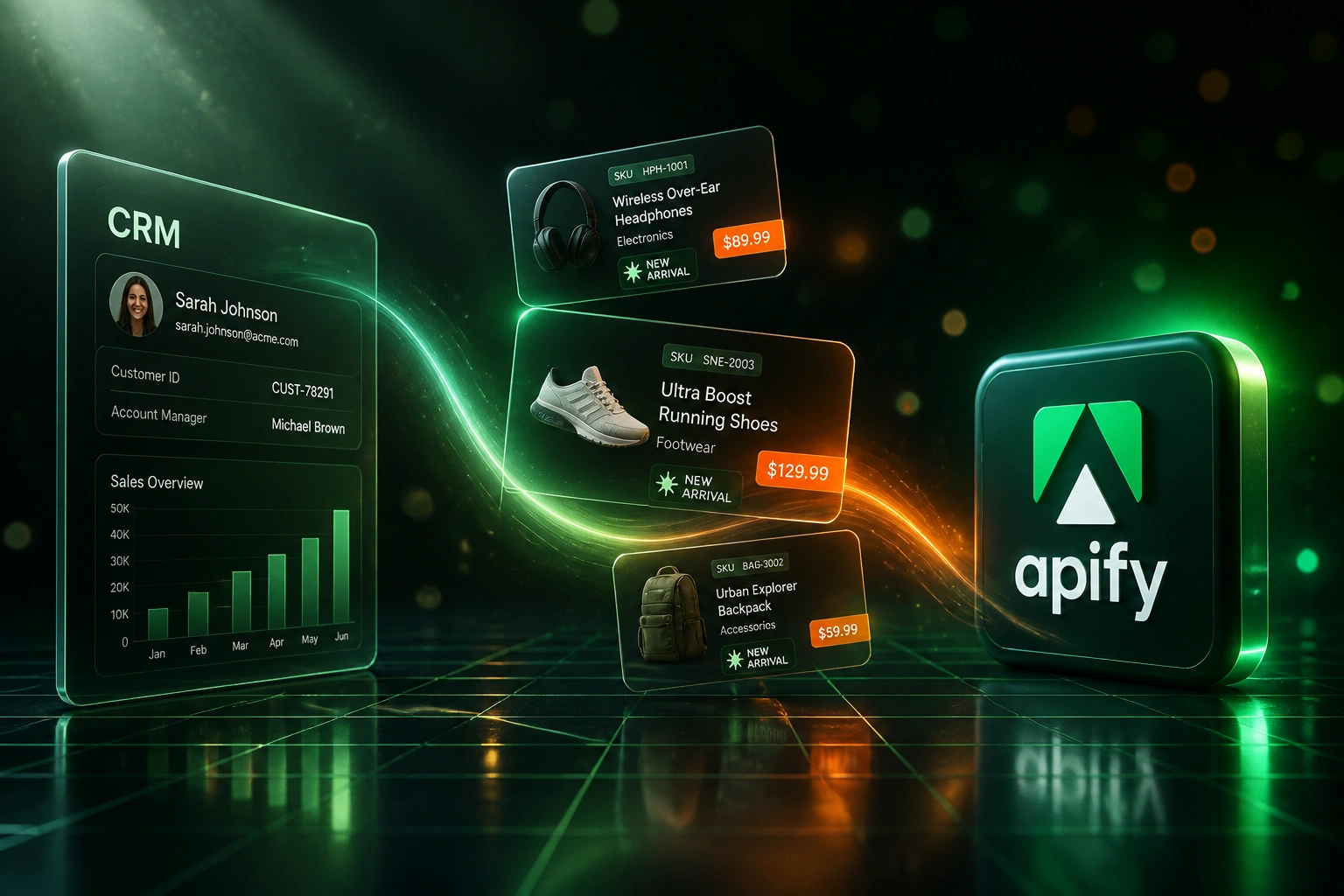
Competitors list → Apify scrapes the full catalogue → your product database updates → merchandising acts on gaps and new arrivals. No Friday site walks.
Competitor Sites Named
You name the storefronts and categories that matter for assortment and SKU coverage
Apify Scrapes Catalogues
Actors pull titles, SKUs, categories, variants, and availability into timestamped datasets
Database & Alerts Update
Rows land in Sheets or BI; Slack fires on new arrivals, delists, and category expansions
Merchandising Acts
Category leads close gaps, match new SKUs, and plan range with evidence instead of guesswork
Everything You Need for Assortment Monitoring
Full Catalogue Scrapes
Apify ecommerce scrapers pull product titles, SKUs, categories, variants, images, and availability across entire competitor catalogues, not just price ticks on hero items.
Living Product Databases
Structured rows land in Sheets, BigQuery, or your warehouse so merchandising works from a maintained product database, not a one-off spreadsheet dump.
New Arrivals & Delist Alerts
Email or Slack when a rival adds SKUs, expands a category, or removes products. Assortment monitoring that flags change, not every static listing.
Assortment Gap Views
Compare your range against competitor SKU coverage so category managers see white space, over-assortment, and missing variants before planning cycles.
Multi-Site Coverage at Scale
Watch thousands of SKUs across Takealot, Amazon, Shopify storefronts, and local ecommerce without burning a merchandiser's week on site walks.
Assortment History for Strategy
Timestamped catalogue snapshots show when rivals launched, delisted, or reshuffled categories so you act on pattern, not anecdote.
Platforms and Destinations We've Wired for Catalogue Scraping
From 14 Hours/Week to 2 Hours/Week
How a mid-size ecommerce category team stopped missing competitor new arrivals and closed assortment gaps before share slipped.
The Manual Process
- Two merchandisers walked competitor sites to rebuild category SKU lists every week
- Full audits of multi-thousand SKU ranges took weeks and were stale before synthesis
- New arrivals were often spotted three weeks late, after rivals had already claimed search and shelf
- Delists and long-tail gaps went unseen because site walks focused on hero products
- Range planning meetings argued from incomplete screenshots, not a shared product database
The Automated Process
- Apify Actors refresh full competitor catalogues overnight into a living product database
- Slack alerts fire when rivals add SKUs, expand a category, or delist products
- Category leads review new arrivals and gaps in about two hours a week, then brief buyers
- Same-day visibility on launches that used to sit unnoticed for three weeks
- Assortment history shows who is expanding where, so planning stops relying on memory
Before vs After Product Catalogue Scraping
How It Works
From first conversation to live assortment monitoring in 2–4 weeks.
Tell Us Your Setup
Which competitor catalogues you need, how you track assortment today, and where missed new arrivals or gaps hurt share most.
Free Scoping Call
30-minute call to pick Apify Actors, fields, run frequency, and how product rows should land in your database or BI stack.
Build & Test
We wire catalogue scrapes to your destinations, pilot a category across sites, and compare coverage against your manual site-walk week.
Go Live & Monitor
Switch off the Friday site walk. Monitoring catches failed runs so assortment intelligence never goes dark during a launch week.
Frequently Asked Questions
What is ecommerce product catalogue scraping with Apify?
It is a scheduled pipeline where Apify Actors extract public product listings, SKUs, categories, variants, and availability from ecommerce sites into a structured product database. Category managers, merchandising leads, and marketplace ops directors use it for assortment monitoring: catching new arrivals, delists, and SKU coverage gaps before the market moves.
How is this different from Apify price monitoring?
Price monitoring watches price ticks and offer changes on a known SKU watchlist. Catalogue scraping builds and refreshes the full product database: which SKUs exist, what is new, what vanished, and where your assortment has gaps. Many retailers need both, but this page is about catalogue breadth and assortment intelligence, not margin floors alone.
How long do manual competitor catalogue audits take?
Industry guides put a full catalogue sweep of about 2,000 SKUs across five competitors at roughly 167–250 staff hours (Shopify 2025 Merchant Operations Survey figures for comparable manual collection). Catalogue-change detection averages about 23 days when done by hand, while active competitors add 3–5 new products a week and turn over 12–18% of the catalogue each quarter. At a loaded labour rate around R730 per hour, one full sweep alone is roughly R122,000–R182,000 before anyone analyses gaps.
Is scraping competitor catalogues allowed?
Public product pages are commonly used for competitive assortment intelligence, but site terms, robots rules, and POPIA still matter when personal data appears. We are not giving legal advice. We help teams document purpose, stick to product and catalogue fields, throttle responsibly via Apify, and weigh risks with counsel where needed.
Where does the scraped catalogue data go?
Wherever your merchandising lead already works: Google Sheets, Excel, BigQuery, Snowflake, or a dashboard in Looker Studio or Power BI. We can also fire Slack or email alerts when rivals add SKUs, delist products, or expand a category. The goal is a living product database, not another file nobody opens.
How much does Apify product catalogue scraping cost?
Simple one-way Actor-to-sheet catalogue pipelines start from around R15,000. Scheduled multi-site scrapes with change detection, gap views, and warehouse feeds typically range from R25,000 to R60,000. Teams burning 14+ hours a week on competitor site walks usually recover the project cost within 2–3 months from merchandiser time alone, before counting share protected by faster new-arrival response.
Stop Missing Competitor New Arrivals and Assortment Gaps
If your category and merchandising leads still rebuild competitor catalogues by hand while rivals refresh weekly, you are spending share on a problem that Apify-powered product catalogue scraping already solves.
Tell us which storefronts you watch, how large the category ranges are, and where delayed assortment monitoring hurts most. We will show you exactly how a living product database would land in your sheet or BI stack.