Google Reviews Collection and Response Tracking with Apify
Unanswered Google Reviews cost local ranking and trust. Across a multi-location brand, a 1-star can sit public for days while marketing hops Business Profiles, competitors keep posting, and CX only finds the damage in a weekly spreadsheet.
We build the Apify pipeline that collects reviews, triggers response workflows, and tracks sentiment so your team closes the loop first.
Sound Familiar?
These are the exact issues our multi-location clients faced before Google Reviews response automation:
- A 1-star Google Review sits public for days because nobody saw it across 10+ Business Profiles
- Franchise and multi-location marketing leads hop location by location instead of working one response queue
- Competitor review volume and star trends live in screenshots, not a weekly sentiment view the CX lead can act on
- Average brands take about 6 days to reply while high-visibility brands answer in roughly 2 days
- Review management SaaS quotes R4,870 to R7,320 per location per month, yet still leaves you without owned review data
Agency review platforms keep pricing per location, often R4,870 to R7,320 a month each, while competitors keep posting fresh Google Reviews. Owned Apify collection plus response workflow triggers gives franchise CX the same freshness without locking reputation data inside a SaaS inbox.
What Google Reviews Response Automation Actually Does
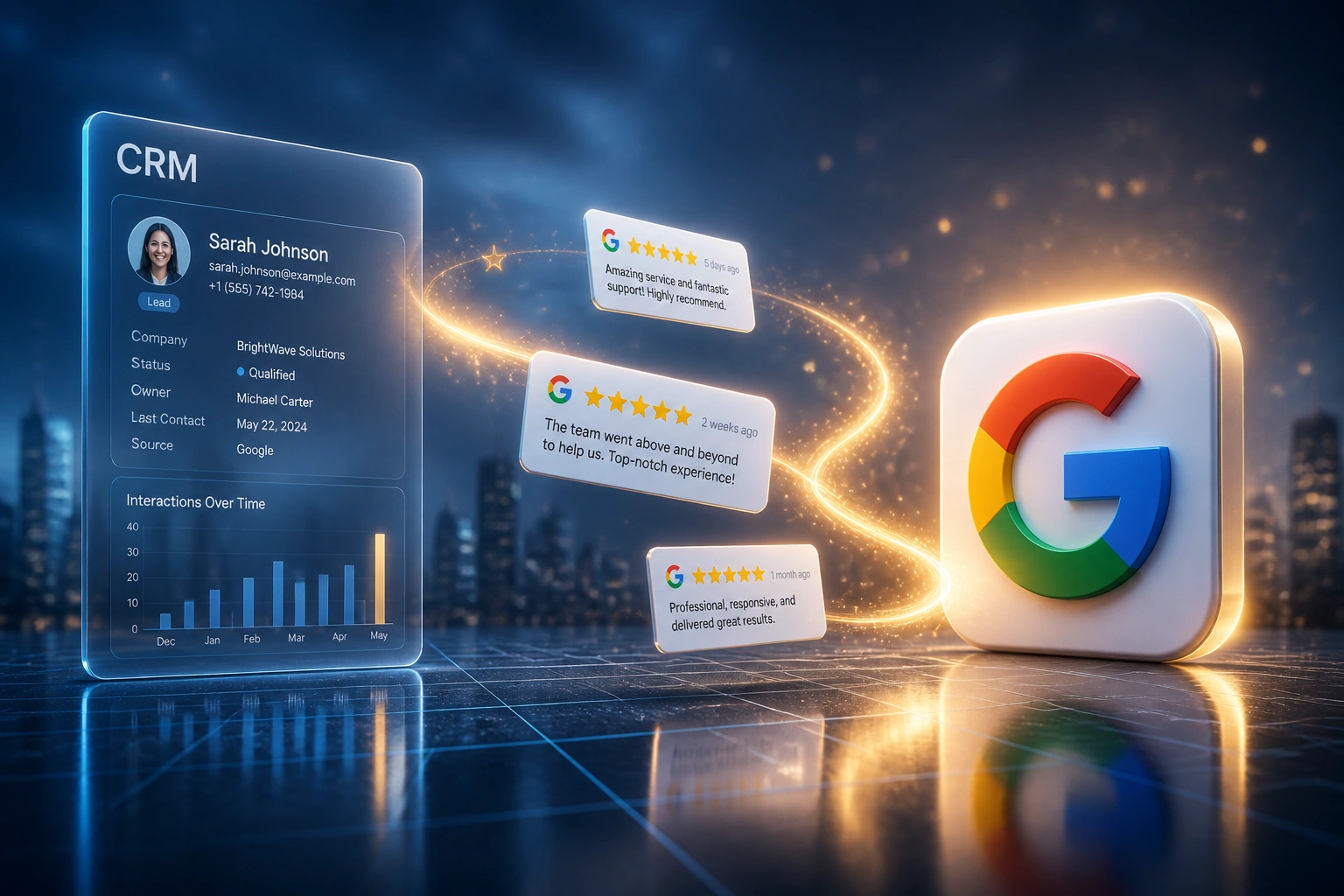
Reviews arrive → workflows fire → replies go out → sentiment trends. No more hopping Business Profiles by hand.
Apify Scrapes Google Reviews
Actors pull new reviews across your locations and competitor listings on the cadence you set
Response Workflows Trigger
Unanswered negatives and SLA breaches alert Slack, WhatsApp, or open a ticket for the right manager
CX Closes the Loop
Your team replies from one queue with location, rating, and competitor context attached
Sentiment Trends Update
Weekly location scores and themes show whether reputation is improving or slipping
Everything You Need for Reputation Tracking Apify Pipelines
Google Reviews Collection
Apify Actors scrape Google Reviews across your locations on a schedule you choose, so star ratings, text, dates, and owner-reply status land without opening every Business Profile.
Competitor Location Watchlists
Track rival Google listings on the same cadence so marketing sees review volume and rating gaps before they show up in local pack share.
Response Workflow Triggers
New reviews, unanswered negatives, and SLA breaches open tickets or Slack and WhatsApp alerts so CX closes the loop before a 1-star ages in public.
Sentiment Trend Tracking
Score each review and roll themes by location and week so reputation tracking Apify data shows whether a region is improving or slipping.
CRM & Sheet Feeds
Clean rows land in HubSpot, Google Sheets, or your warehouse so franchise marketing and CX work from structured customer review data, not screenshots.
Owned Historical Archive
Structured Google Reviews datasets stay in systems you control, so sentiment history survives vendor switches and board reporting stays exportable.
Systems We've Connected for Review Response Automation
From 5.5 Days to Under 4 Hours
How a 14-location franchise marketing and CX team stopped hopping Google Business Profiles and closed the loop on every review.
The Manual Process
- CX lead opened each Business Profile in turn, often late in the week
- Average Google review response time sat at 5.5 days across the estate
- Only about 42% of reviews received any public reply
- Competitor star trends lived in screenshots for the monthly board pack
- Fourteen hours a week burned on collection before anyone drafted a response
The Automated Process
- Apify scrapes land new Google Reviews into one queue within the hour
- Negatives and unanswered items trigger Slack and WhatsApp to the right manager
- Reply coverage climbed to 96% with under-four-hour median response
- Weekly sentiment trends by location sit next to a short competitor watchlist
- CX spends about three hours a week reviewing and approving replies
Before vs After Review Response Automation
How It Works
From first conversation to live Google Reviews response automation in 2–4 weeks.
Tell Us Your Setup
How many locations and competitor listings matter, how you reply today, and where unanswered reviews hurt ranking and trust most.
Free Scoping Call
30-minute call to pick Actors, fields, scrape cadence, response SLA rules, and where sentiment trends should land.
Build & Test
We wire Apify Google Reviews scrapes to your queue and CRM, pilot a location cluster, and compare freshness against your manual week.
Go Live & Monitor
Switch off the location hop. Alerts catch failed runs and unanswered negatives so reputation ops stay proactive.
Frequently Asked Questions
What is Google Reviews collection and response tracking with Apify?
It is an automated pipeline where Apify Actors extract public Google Reviews, star ratings, dates, and owner-response status for your locations and named competitors. That feed powers response workflow triggers, sentiment trend tracking, and a single queue so multi-location CX and marketing leads stop hopping Business Profiles and start closing the loop before a 1-star sits public for days.
Does responding to Google Reviews affect local ranking and conversion?
Review response activity correlates with stronger local visibility: one 2026 study of 5,000 businesses found those responding to 75%+ of reviews ranked about 2.3 positions higher in the local pack, and replies within 24 hours ranked about 1.6 positions higher than week-plus delays. Separately, 97% of review readers also read business responses, and firms that reply to all reviews see up to 18% higher revenue in widely cited research.
How much do multi-location review management tools cost compared with Apify?
Platforms such as Birdeye commonly list about R4,870 to R7,320 per location per month at current Rand rates (roughly R16.30 per US dollar for US$299 to US$449 plans), so a 14-location footprint can exceed R68,000 a month before add-ons. Apify Google Reviews scrapers typically charge cents per thousand reviews on pay-per-event Actors. A pipeline you own usually costs far less to run at scale once built, and the customer review data stays in your warehouse.
Will this post replies for us or only collect and trigger workflows?
We focus on Google Reviews scraping, competitor collection, sentiment trends, and response workflow triggers into Slack, WhatsApp, tickets, or CRM. Your CX team still owns the public reply. If you already use a response tool, we feed it fresher, structured data so nobody discovers a 1-star three days late.
Can we track competitors as well as our own locations?
Yes. Most clients run every owned Google listing plus a short competitor watchlist so reputation tracking covers share of voice, review velocity, and sentiment gaps, not only your own inbox. That is the competitive layer franchise marketing leads want from Google Reviews scraping.
How much does Google Reviews response automation cost to build?
Simple one-way Actor-to-sheet syncs start from around R15,000. Multi-location pipelines with competitor watchlists, sentiment scoring, and response workflow triggers typically range from R25,000 to R60,000. Teams burning 10+ hours a week hopping Business Profiles usually recover the project cost within 2 to 3 months from CX time alone, before counting ranking and conversion lift from faster replies.
Stop Letting Google Reviews Sit Unanswered
If your multi-location team is still hopping Business Profiles while competitors keep posting, you are paying for a reputation gap that Apify collection and response workflows already solve.
Tell us how many locations you manage, which competitors matter, and how replies happen today. We will show you exactly how Google Reviews scraping, workflow triggers, and sentiment trend tracking would work for your brand.