Private Property Listing Monitor: Track SA Real Estate with Apify
A listing appears on Private Property on Saturday night. Your rival's buyer's agent sees it first. By Monday your team is refreshing search tabs while the viewing diary is already full. Price-cut windows close just as fast.
We build the Apify schedules that watch Private Property and push alerts before the desk opens.
Sound Familiar?
These are the exact issues principals and buyer's agents brought us before SA real estate monitoring was automated:
- New Private Property stock in your suburbs goes live overnight, and nobody sees it until Monday morning
- Price cuts land while your team is offline, and rival buyer's agents get first call on the window
- Agents burn evenings refreshing Private Property search tabs instead of working active buyers
- Withdrawals and re-listings slip past your watch list, so stale opportunities clog the pipeline
- WhatsApp and Slack stay quiet while competitors already have viewings booked on the same listings
Most SA agencies still list on both Property24 and Private Property, yet after-hours portal enquiries routinely go unanswered (local automation providers report 50–60% ignored overnight). If your desk only checks Private Property when someone is at a laptop, weekend stock and Sunday price cuts are already gone.
What the Private Property Scraper Actually Does
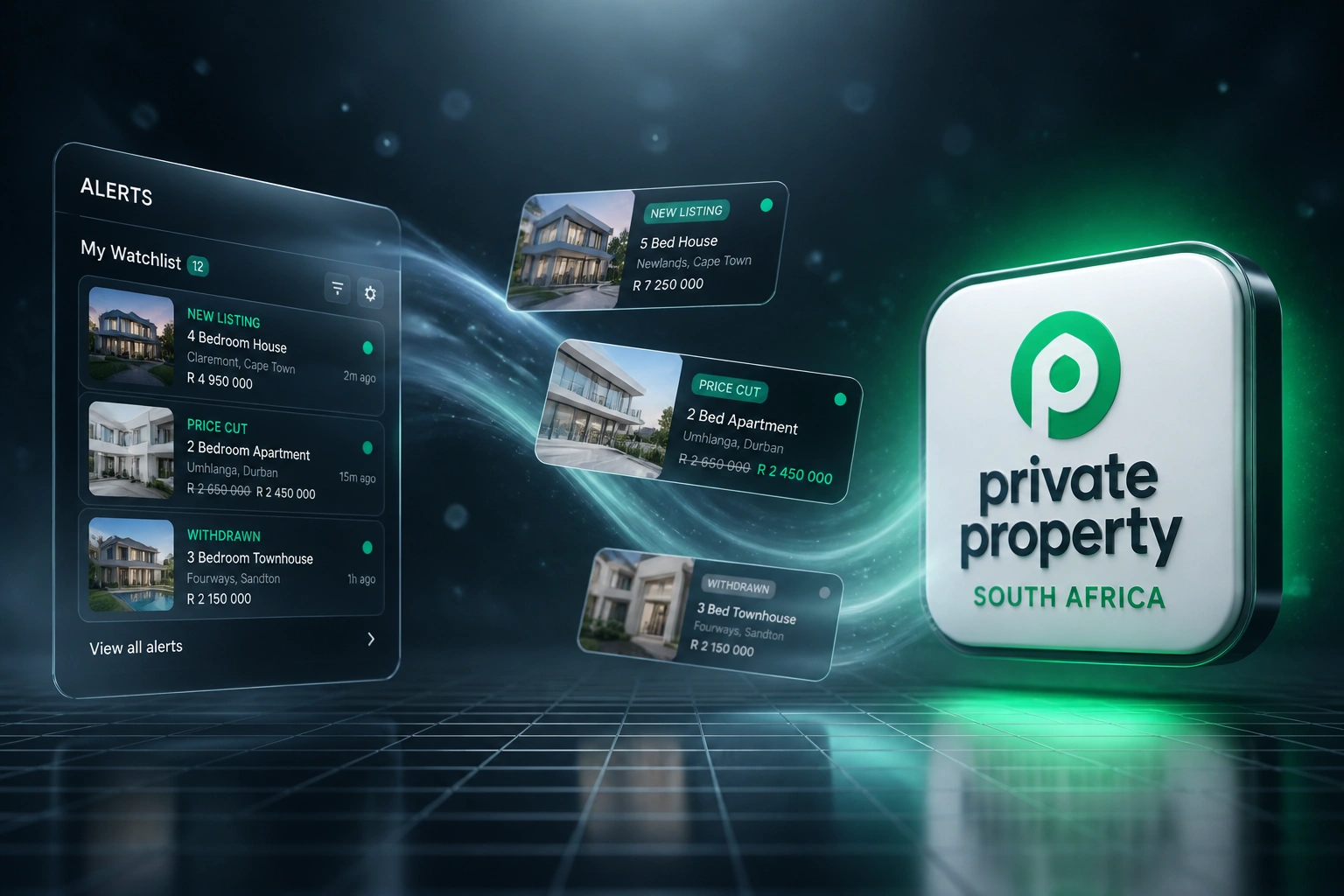
Watch list runs → change detected → alert pushed → your desk moves first. No human refreshing search tabs.
Apify Schedule Fires
Actors check your Private Property suburbs, agencies, and price bands on the cadence you set
Change Detected
New listing, price cut, or withdrawal matched against the last known snapshot
Alert Delivered
Structured notice lands in WhatsApp, Slack, email, or Sheets with address, price, and change type
Desk Moves First
Your agent or investor responds while rivals are still refreshing the portal on Monday
Everything You Need for Reliable Property Listing Tracking
Scheduled Private Property Scraper
Apify Actors run on a schedule against your suburb and agency watch lists, so SA real estate monitoring never depends on someone refreshing a browser tab.
New Listing Alerts
When a matching Private Property listing appears, your team gets a structured alert within minutes, not after the morning stand-up.
Price-Cut Detection
The property listing tracker flags reductions against the last known asking price so buyer's agents and investors can move while the window is still open.
Withdrawal & Re-list Flags
Listings that disappear or return under a new ID are surfaced as market movements, not lost in scroll fatigue.
Watch Lists by Suburb & Agency
Monitor the suburbs, price bands, and competing agencies that matter to your desk, without scraping the entire portal.
WhatsApp, Slack, Email & Sheets
Apify property data pushes into the channels your principals already live in, with an optional Google Sheets or CRM log for audit.
Channels & Tools We've Wired for Apify Property Data
From Monday Discoveries to Sub-15-Minute Alerts
How a Cape Town agency principal stopped losing Southern Suburbs stock that appeared on Private Property over the weekend.
The Manual Process
- Two senior agents refreshed Private Property search tabs each morning and after show houses
- Weekend new listings often surfaced only on Monday, after rivals had already booked viewings
- Price cuts were spotted late, when buyer urgency had already cooled
- No shared watch list: each agent monitored different suburbs inconsistently
- Principals heard about missed stock in debriefs, not in real time
The Automated Process
- Apify schedules watch agreed suburbs and competing agencies around the clock
- New listing and price-cut alerts land in a shared WhatsApp group within minutes
- Withdrawals and re-lists are flagged so the CRM stays honest
- Sheets log keeps a clean audit trail for principals and buyer's agents
- Agents stop babysitting the portal and start calling first
Before vs After the Property Listing Tracker
How It Works
From first conversation to live Private Property monitoring in 2–4 weeks.
Tell Us Your Watch List
Which suburbs, agencies, and price bands you need to catch first, and where alerts should land.
Free Scoping Call
30-minute call to map change types (new stock, price cuts, withdrawals), cadence, and alert destinations.
Build & Test
We configure the Apify Private Property scraper, validate alerts against live listings, and tune noise thresholds.
Go Live & Monitor
Switch off manual portal refreshing. Scheduled runs and alerts keep your desk first to the stock that matters.
Frequently Asked Questions
What does a Private Property listing monitor actually watch?
We schedule Apify Actors against the suburbs, agencies, and price bands you care about. The property listing tracker detects new listings, asking-price changes, and withdrawals or re-lists, then pushes structured alerts into WhatsApp, Slack, email, or Sheets. It is change detection and alerting, not a bulk research dump into a database.
How is this different from Private Property's built-in saved alerts?
Saved alerts help consumers. An agency principal or buyer's agent usually needs multi-suburb watch lists, agency filters, price-cut deltas, withdrawal flags, and team routing into Slack or WhatsApp. We build that monitoring layer on Apify schedules so the desk moves on market movements, not on whoever remembered to refresh the portal.
How fast can alerts arrive after a listing changes?
Cadence is yours: every 15 minutes, hourly, or overnight for quieter bands. Most clients run frequent checks on hot suburbs so new Private Property stock and price cuts surface in minutes. That matters when research shows agents who respond within five minutes are far more likely to qualify the opportunity than those who wait half an hour.
Is scraping Private Property allowed, and how do you stay careful?
We design Actors for targeted watch lists, respectful request rates, and operational use by licensed agencies and investors who already operate on the portal. We do not build indiscriminate full-site harvests. Scope, frequency, and storage stay under your control, and we review any terms or compliance constraints during scoping.
Will this disrupt how our agents work today?
No. Agents keep using Private Property and their CRM. The automation watches in the background and only interrupts when something on the watch list changes. We run parallel testing before you switch off manual checking so the team trusts the alerts.
How much does a Private Property listing monitor cost?
Focused suburb watch lists with WhatsApp or Slack alerts typically start from around R15,000. Multi-agency monitoring with price-cut logic, Sheets logging, and CRM hooks usually sits between R25,000 and R60,000. One recovered mandate on a mid-market home often covers the project: at a common 5% commission on a R2.5m sale, that is R125,000 before VAT.
Stop Losing Deals to Overnight Private Property Listings
If your desk still discovers new stock and price cuts when someone next opens the portal, you are competing with agencies that already get alerts in minutes.
Tell us which suburbs and agencies matter, where alerts should land, and how often you need checks. We will show you exactly how an Apify Private Property listing monitor would work for your team.