SA Tender Alert System: Email and SMS Notifications from Apify
Bid managers and MDs at SA contractors still lose six-figure opportunities because a matching eTender or provincial notice sits unseen for days. Automated tender alerts with keyword filters put government tender notifications on the team's phones before competitors open the portal.
We build the Apify tender scraper workflow that emails and SMSes the moment a match appears.
Sound Familiar?
These are the exact issues our clients faced before automated tender alerts:
- The bid manager checks eTender twice a week, so a matching RFQ can sit unseen for three or four days while the clock runs
- Keyword matches live in a spreadsheet nobody opens after lunch; the site team never gets the notice on their phones
- Email digests arrive overnight and drown in inboxes; compulsory briefing dates are already past when someone opens them
- eTender itself has no saved searches and no alert system, so every new notice depends on someone remembering to log in
- Missing a matching tender by even a day can wipe a six-figure bid window that competitors already started preparing
eTender has no built-in alert system. National and provincial notices still require a manual login, while PFMA and MFMA rules reject late bids without exception. Competitors already running automated government tender notifications see matching RFQs hours earlier than desks that browse twice a week.
What the Tender Alert Workflow Actually Does
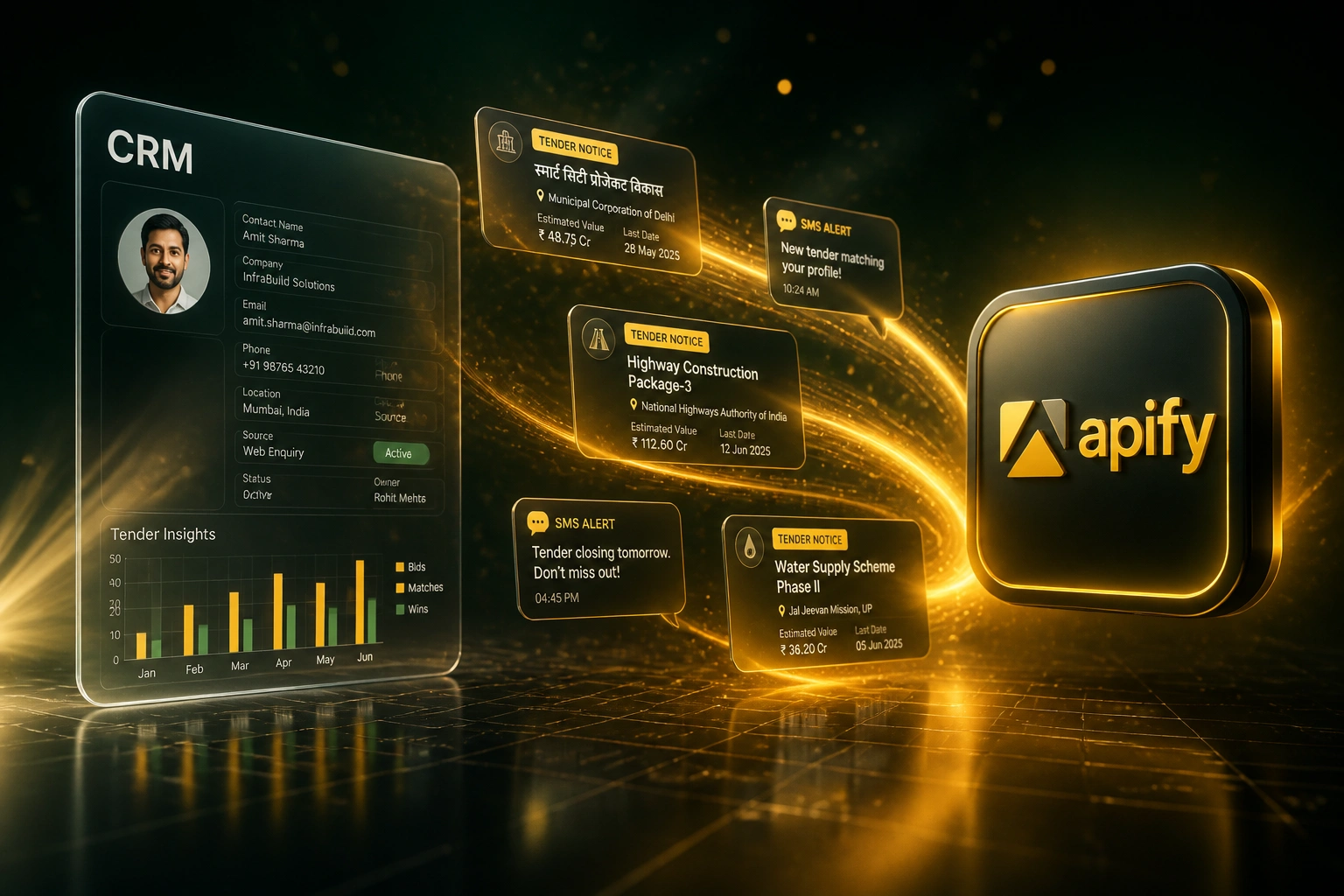
Match found → keyword filter → email and SMS out. The bid team reacts; nobody copies portal results by hand.
Apify Run Completes
Scheduled Actors pull new eTender and provincial notices on your cadence
Keywords Filter Matches
Only notices that fit your grade, province, and service phrases pass through
Email & SMS Fire
Bid manager gets email; critical matches also SMS the estimator or MD
Team Starts the Bid
Go or no-go happens the same day, with full response window still ahead
Everything You Need for Reliable Automated Tender Alerts
Keyword Match Engine
Filter on your CIDB grade, provinces, departments, and service keywords so only tenders your firm can actually bid on trigger an alert.
Instant Email Alerts
The moment a matching notice appears, the bid desk and MD get a clear email with reference, buyer, closing date, and a link to the pack.
SMS to the Bid Team
Critical matches also SMS the estimator or site lead at roughly R0.20–R0.35 per message, so the alert lands on a phone even when email is ignored.
Scheduled Apify Checks
Apify Actors run on a cron you choose (hourly or several times a day), so matching notices surface within hours of publication, not at the next Monday browse.
Escalation Rules
Route high-value or short-window RFQs to WhatsApp or a second SMS ring; quieter matches stay as email digests so the team is not flooded.
Audit Trail
Every alert logs who was notified, when, and on which channel, so you can prove the desk saw the opportunity before the briefing closed.
Channels & Tools We've Wired for Tender Alerts
From 7 Hours/Week Portal Checking to Under 1
How a Gauteng civil contractor put matching tenders on phones in minutes and caught three RFQs the desk would have missed.
The Manual Alert Gap
- Bid manager logged into eTender and two provincial sites twice a week
- Matching notices sat in a shared inbox for days before anyone forwarded them
- One short RFQ was found four days late; the briefing had already closed
- No SMS path, so site leads never saw opportunities away from a desk
- MD only heard about pipeline gaps after month-end reviews
The Automated Alert Flow
- Apify runs several times a day; keyword filters decide what is worth an interrupt
- Email hits the bid desk within minutes of a match; SMS wakes the estimator for short windows
- Three additional bid-worthy RFQs surfaced in six months that twice-weekly checks would have missed
- Portal hunting dropped to a short daily review of pre-filtered alerts
- MD sees a weekly digest of matches and go or no-go outcomes
Before vs After Automated Tender Alerts
How It Works
From first conversation to live email and SMS alerts in 2–4 weeks.
Tell Us Your Keywords
Provinces, CIDB grades, departments, and the phrases that mean a tender is worth interrupting the MD for.
Free Scoping Call
30-minute call to agree alert channels (email, SMS, both), quiet hours, and who gets woken for short RFQ windows.
Build & Test
We wire Apify schedules to your keyword filters, send test alerts to the bid team, and tune false positives before go-live.
Go Live & Monitor
Matching tenders hit phones and inboxes on your cadence, with run monitoring when a scrape or SMS provider fails.
Frequently Asked Questions
How is a tender alert system different from portal monitoring?
Monitoring finds and stores matching notices. A tender alert system is the next step: keyword filters decide which notices matter, then email and SMS push those matches to the bid manager and MD the moment they appear. Your team stops hunting the portal and starts reacting to alerts on their phones.
Does eTender send government tender notifications itself?
No. The National Treasury eTender portal has basic keyword search but no saved searches and no email or SMS alert system. Suppliers who rely on it alone must log in manually. That is why automated tender alerts, built on scheduled Apify runs plus your keyword list, close the gap competitors already exploit.
How fast can matching tenders reach the bid team?
Apify schedules can run Actors hourly or several times a day (platform minimum interval is 10 seconds between runs). Once a match clears your keyword filters, email goes out immediately and SMS typically delivers within seconds on SA networks. Most desks see matching notices within hours of publication instead of days later.
What does SMS alerting cost in South Africa?
SA bulk SMS providers typically charge R0.12 to R0.35 per message excluding VAT, on a sliding scale with no monthly platform fee for many prepaid plans. A bid desk sending a few dozen match alerts a month spends tens of rands on SMS, not thousands. Email alerts are effectively free once the pipeline is live.
What does Apify platform usage cost in Rand?
Apify's Starter plan is US$29 a month (about R470 at roughly R16.30 per US dollar), with Scale at US$199 (about R3,240). That prepaid usage runs the scheduled Actors. Build and delivery of a production email and SMS tender alert workflow typically sits in our R25,000 to R60,000 range, with simpler one-channel setups from around R15,000.
How much does an SA tender alert system cost to build?
Simple email-only alert workflows start from around R15,000. Keyword matching with email plus SMS escalation, quiet hours, and multi-recipient routing typically ranges from R25,000 to R60,000. Desks reclaiming 6 to 8 hours a week of portal checking, and catching even one additional winnable tender a year, usually see payback within a few months.
Stop Missing Matching Tenders Between Portal Checks
If your bid team still finds opportunities by logging into eTender twice a week, you are leaving response window on the table while competitors already have government tender notifications on their phones.
Tell us your keywords, who should get email versus SMS, and how short an RFQ window needs to interrupt the MD. We will show you exactly how an Apify-powered tender alert system would work for your desk.