BBBEE Compliance Tracking: Monitor Scorecard Elements and Supplier Status Digitally
Verification season should not be the first time you learn your scorecard is short. CFOs, procurement leads, and BBBEE managers deserve weekly visibility on scorecard tracking, supplier BBBEE credentials, and preferential procurement spend, not an annual scramble when the auditor arrives.
We build the live compliance control tower that keeps you verification-ready all year.
Sound Familiar?
These are the exact issues our clients faced before live BBBEE compliance tracking:
- Scorecard position is unknown until the SANAS agency starts raising queries
- Supplier BBBEE certificates expire quietly and preferential procurement spend loses recognition
- Preferential procurement targets are checked once a year in a spreadsheet, not against live ledger spend
- Finance, HR, and procurement rebuild an 80–150 item evidence pack in the last 30 days of the measurement period
- CFOs only learn about priority-element shortfalls weeks before verification, when fixes are expensive
Preferential Procurement sits inside ESD, a priority element with a 40% sub-minimum. Miss that threshold and you drop one B-BBEE level automatically. Falling from Level 4 to Level 5 cuts customer procurement recognition from 100% to 80%. JSE-listed entities also face mandatory B-BBEE Commission reporting within 30 days of AFS approval or 90 days of year-end, whichever is earlier.
What BBBEE Compliance Tracking Actually Does
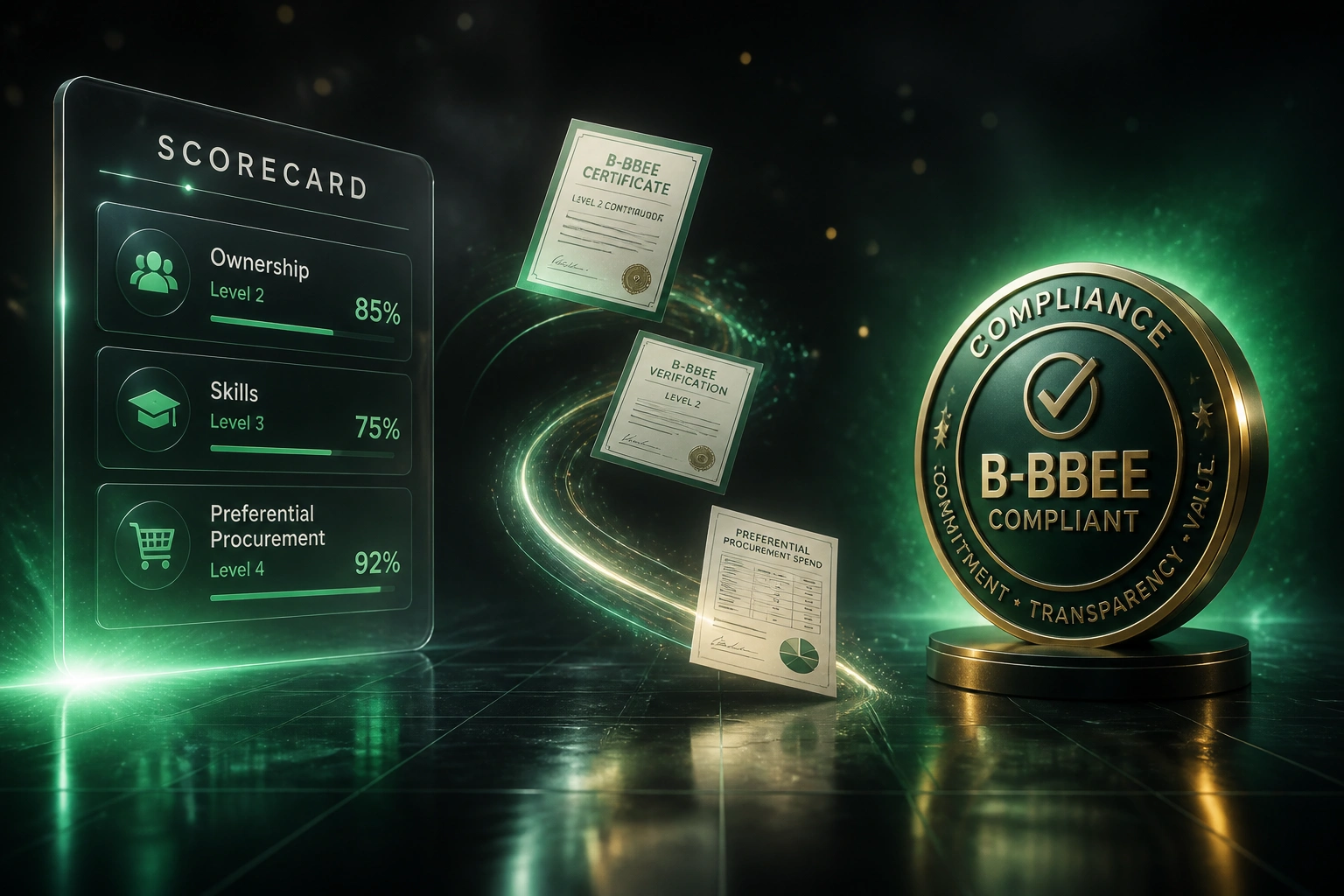
Spend lands → certificates stay current → scorecard updates → gaps flag early. No annual spreadsheet rebuild.
Evidence & Spend Flow In
Supplier certificates, skills evidence, and AP ledger spend feed the working scorecard continuously
Elements Stay Live
Ownership, Skills, Preferential Procurement, and other pillars refresh against recognised status and spend
Gaps Flag Weekly
Expiry windows, target shortfalls, and missing evidence alert element owners while there is still time to act
Verification Is Review
Agency packs export cleanly so the 4–8 week cycle is substantiation, not a certificate scavenger hunt
Compliance Automation Built for Ongoing Scorecard Tracking
Live Scorecard Dashboard
Ownership, Management Control, Skills Development, ESD (preferential procurement), and SED update as evidence and spend land, so BBBEE managers see working points every week.
Supplier Certificate Expiry Alerts
Certificates and affidavits are valid for 12 months. 90/60/30-day expiry windows flag renewals before recognition drops to zero on measured spend.
Preferential Procurement Targets
Supplier BBBEE status ties to AP or ERP spend so you track recognised procurement against scorecard targets in real time, not after year-end.
Element Owners & Evidence Trail
Each scorecard element has an owner, due dates, and attached evidence so the annual pack is assembled as the year runs, not in a verification-season fire drill.
Priority-Element Risk Flags
Ownership, Skills Development, and ESD carry 40% sub-minimums. Miss any one and you drop a level automatically. The control tower surfaces shortfalls while you can still act.
Verification-Ready Export
Supplier ledger, certificate references, and element totals export in the shape SANAS-accredited agencies expect, cutting evidence queries and cycle time.
Systems We've Connected for BBBEE Compliance Tracking
From Eight Weeks of Verification Scramble to Five Days
How a Midrand industrial manufacturer kept Level 4 with weekly scorecard visibility instead of an annual evidence fire drill.
The Manual Process
- BEE coordinator rebuilt supplier certificate status from email folders once a year
- Preferential procurement spend was reconciled against BBBEE levels in spreadsheet pivots after year-end
- Expired supplier certificates only surfaced when the agency sampled the ledger
- Finance, HR, and procurement chased 100+ evidence items in the final month of the measurement period
- CFO had no weekly view of whether priority elements were on track for the sub-minimum
The Automated Process
- Working scorecard updates as certificates and spend land through the year
- Expiry alerts chase renewals 90 days out so preferential procurement recognition stays intact
- Live spend versus target shows whether ESD preferential procurement is on track monthly
- Element owners attach evidence as initiatives run, so the pack is already organised
- Verification prep becomes exception review and export, not a company-wide fire drill
Before vs After BBBEE Compliance Tracking
How It Works
From first conversation to live compliance tracking in 3–5 weeks.
Tell Us Your Setup
How many suppliers you measure, which ERP holds spend, who owns each scorecard element, and where verification season hurts most.
Free Scoping Call
30-minute call to map scorecard pillars, certificate expiry rules, preferential procurement targets, and the weekly rhythm your BEE team needs.
Build & Test
We wire ledger and certificate feeds, configure alerts and element owners, and run parallel against your last verification pack until the dashboard matches reality.
Go Live & Monitor
Switch off annual spreadsheet rebuilds. Monitoring tracks expiry risk, spend versus target, and hours recovered ahead of the next verification.
Frequently Asked Questions
How is ongoing BBBEE compliance tracking different from one-off certificate verification?
Verification AI extracts fields from certificates when they arrive. Compliance tracking keeps a live control tower: working scorecard elements, supplier certificate expiry calendars, and preferential procurement spend against targets every week of the measurement period. You know your position before the auditor arrives, not only when the agency raises queries.
Which scorecard elements and systems can you connect?
We typically track Ownership, Management Control, Skills Development, Enterprise and Supplier Development (including preferential procurement), and Socio-Economic Development. Spend and supplier masters usually sit in Sage, Xero, SAP, Syspro, Microsoft Dynamics, Excel or SharePoint packs, or custom procurement systems. If the source has an API or reliable export, we keep the working scorecard current.
What happens when a supplier BBBEE certificate expires?
Certificates and affidavits are valid for 12 months from issue. Spend with suppliers lacking valid evidence for the measured period generally attracts zero preferential procurement recognition. The system flags upcoming expiry so procurement can chase renewals months ahead, instead of discovering gaps during verification or tender submissions.
How does this help defend our B-BBEE level?
Ownership, Skills Development, and ESD are priority elements with 40% sub-minimums. Missing any one triggers an automatic one-level downgrade. Falling from Level 4 to Level 5 cuts customer procurement recognition from 100% to 80%. Weekly scorecard tracking and spend-target visibility surface shortfalls while you can still redirect procurement or close evidence gaps.
Will this replace our SANAS-accredited verification agency?
No. Your agency still verifies. We keep scorecard position, supplier credentials, and preferential procurement evidence current year-round so verification is a review of organised packs, not an 80–150 item scavenger hunt assembled in the last 30 days.
How much does BBBEE compliance tracking automation cost?
A focused live scorecard with certificate expiry alerts and preferential procurement spend targets typically starts from around R45,000. Multi-source builds covering element owners, evidence trails, ERP write-back, and agency export usually sit in the R60,000–R120,000 range. Mid-market firms that burn six-figure admin every verification cycle often recover the build within one cycle against staff time and level-risk exposure.
Stop Discovering Scorecard Gaps When the Auditor Arrives
If your BBBEE compliance still lives in year-end spreadsheets and last-minute certificate chasing, you are paying for a problem that continuous scorecard tracking already solves.
Tell us how many suppliers you measure, which systems hold spend and certificates, and where verification season hurts most. We will show you exactly how a live compliance control tower would work for your business.