Business Scorecards: Automate KPI Collection and Reporting Across Departments
Every Monday your finance and ops team stitches Excel exports from five systems into a board pack that is already stale. That is not performance tracking. It is unpaid reporting labour dressed up as management discipline.
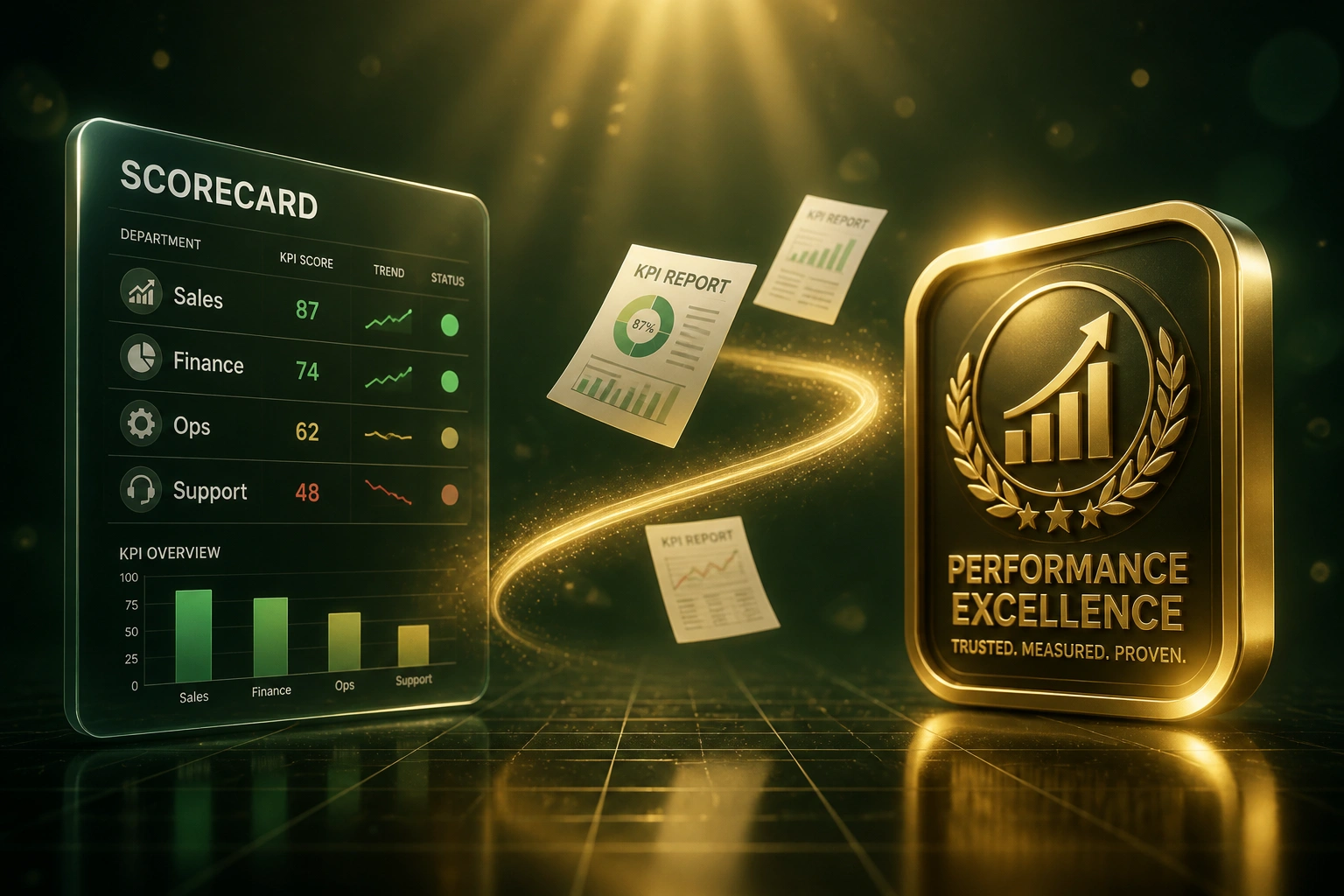
We build the automated scorecard that pulls live KPIs and presents one trusted performance view.
Sound Familiar?
These are the exact issues our clients faced before KPI automation:
- Monday mornings start with Excel exports from CRM, accounting, ops, and support before any real work begins
- Department heads each send a different KPI definition, so the business scorecard never quite reconciles
- By the time the board pack is finished, the numbers are already a week or two behind the business
- Finance and ops spend evenings chasing missing rows instead of reviewing performance
- Investor and EXCO packs still depend on one person who knows which spreadsheet to trust
Month-end, EXCO, and PE/investor cadences do not wait for clean data. Mid-market leadership teams already spend 60–80 hours preparing each quarterly board pack. If your scorecard still depends on Monday stitching, the pack that reaches the board is late, contested, and already out of date.
What Automated KPI Collection Actually Does
Systems refresh → scorecard assembles → departments reviewed → board pack ready. No human copying between five tools.
Sources Refresh Overnight
CRM, accounting, ops, and support feeds update on a fixed schedule
Scorecard Assembles
Shared metric rules build the unified department performance view
Exceptions Surface
Off-track departments, stale feeds, and missing KPIs raise alerts
Board Pack Ships
Weekly and monthly packs distribute themselves to the right readers
Everything You Need for Department Reporting You Can Trust
Multi-System KPI Collection
Pull live metrics from CRM, accounting, ops tools, and support into one business scorecard on a schedule you choose.
Department Scorecard Views
Sales, finance, operations, and support each get a department-level performance view with shared definitions and status.
Scheduled Board Pack Assembly
Weekly and monthly packs build themselves overnight. Leadership reviews exceptions, not paste jobs.
Metric Definition Contract
Lock what revenue, utilisation, SLA, and cash mean once. The scorecard applies those rules every cycle.
Freshness and Source Checks
Failed feeds, stale sources, and missing departments raise alerts before the pack goes to the board.
Role-Based Distribution
CFO, COO, and department heads open the same trusted pack filtered to their remit, without rebuilding it.
Systems We've Connected into Business Scorecards
From 14 Hours on Monday to 90 Minutes
How a 180-person industrial services company automated KPI collection and stopped shipping a stale board pack every month.
The Manual Process
- Finance analyst exported HubSpot, Xero, Jira, Zendesk, and payroll every Monday
- Ops coordinator pasted figures into a master scorecard workbook for four hours
- Department heads argued about definitions until Wednesday
- EXCO pack went out Thursday with numbers already a week old
- Quarterly board prep still consumed most of a leadership week
The Automated Process
- Overnight jobs pull KPIs from the five systems into one business scorecard
- Shared metric contract ends the definition debates
- CFO and COO review exceptions in ninety minutes on Tuesday morning
- Weekly and monthly packs distribute themselves to EXCO and the board
- Stale-feed alerts fire before anything reaches investors
Before vs After Automated Scorecards
How It Works
From first conversation to a live business scorecard in 3–5 weeks.
Map Your Scorecard Sources
Which KPIs the board and EXCO actually use, which systems own them today, and where Monday stitching breaks.
Free Scoping Call
30-minute call to lock department views, reporting cadence, and the metric definitions everyone must share.
Build & Parallel-Run
We connect the feeds, assemble the automated scorecard, and run it beside your current pack until trust is proven.
Go Live & Retire the Ritual
Switch off the export-and-paste cycle. Monitoring keeps collection and scheduled reporting healthy.
Frequently Asked Questions
How is an automated business scorecard different from a custom department dashboard?
A custom department dashboard is usually built for one leader's view. An automated business scorecard collects KPIs from multiple systems into one trusted performance view, then publishes department-level slices and a scheduled board pack on a cadence. We build both; this page is about collection, assembly, and reporting that runs itself.
Which systems can feed the scorecard?
We typically connect CRM (HubSpot, Salesforce, Pipedrive), accounting (Xero, Sage), ops and project tools (Jira, Asana, Monday.com), and support (Zendesk, Freshdesk), then present in Power BI, Looker, or Metabase. If a system has an API or reliable export, we can include it.
Will this replace how departments already work?
No. Teams keep working in the tools they already use. The scorecard reads from those systems on a schedule, applies shared metric definitions, and distributes the pack. We run parallel testing before you retire the spreadsheet ritual.
How do you keep the board pack from going stale?
Collection jobs run on a fixed cadence (overnight or hourly for priority feeds). Each pack shows last-refreshed times per source. If a feed fails or falls behind your freshness rule, the right person is alerted before distribution.
How long does a business scorecard system take to set up?
A focused four-department scorecard across three to five source systems typically takes 3 to 5 weeks from scoping to go-live. Broader board-pack automation with investor packs, alerting, and role-based distribution usually sits closer to 5 to 8 weeks.
How much does automated KPI collection and scorecard reporting cost?
Focused multi-system scorecards start from around R45,000. Builds with scheduled board packs, freshness checks, and role-based distribution typically range from R75,000 to R140,000. Teams recovering 10+ hours a week of finance and ops time usually see payback inside one to two quarters.
Stop Stitching Scorecards by Hand
If your CFO and COO are still building Monday's performance view from five Excel exports, you are spending senior time on a problem that already has a proven fix.
Tell us which systems own your KPIs, how your EXCO and board packs currently get assembled, and where the stitching breaks. We will show you exactly how automated scorecards and department reporting would work for your business.