Competitor Price Monitoring Automation: Stop Missing Rival Moves
You still check competitor sites once a week. By then a Takealot flash sale is over, a rival has undercut your hero SKU for days, and the next discount you approve is a guess. Pricing decisions need competitive context, not a stale spreadsheet.
We build daily price scraping with alerts so you see rival moves in time to protect margin.
Sound Familiar?
These are the exact issues pricing and ecommerce leads bring us before competitive pricing automation:
- Someone still opens Takealot, Makro, and rival storefronts once a week and pastes prices into a spreadsheet
- Flash sales and marketplace drops finish before your next scheduled check, so you match late or not at all
- You cover only a fraction of the catalogue, while hero SKUs move several times a week on big marketplaces
- Blind matching after a late discovery cuts margin on SKUs that did not need a discount
- MAP breaches and undercutting go unnoticed until a brand partner or sales rep complains
Manual coverage usually reaches only 20–30% of the competitive landscape (Competera). On marketplaces where top retailers change prices multiple times per week, a Friday spreadsheet check is already obsolete before Monday trading opens.
What Competitor Price Scraping Actually Does
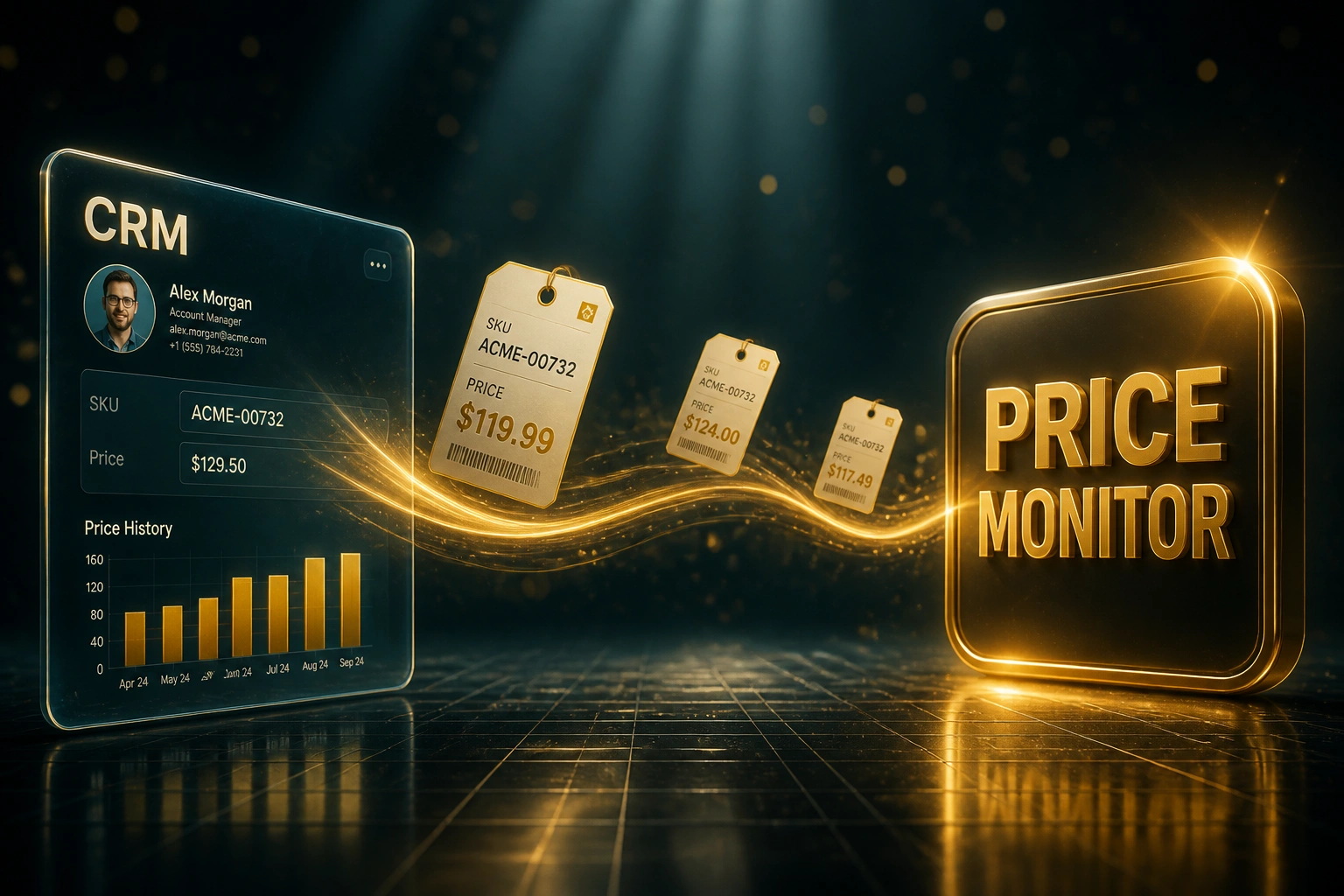
Rivals move → you get alerted → context hits your CRM. You decide; the data arrives on time.
Sources Scheduled
Named competitor and marketplace URLs scraped on the cadence your category needs
Prices Matched
SKUs matched to your catalogue; changes compared against your last known price and threshold
Alerts Fired
Email, Slack, or WhatsApp when a rival moves outside your band or a promo appears
CRM Updated
Competitive context lands where pricing decisions happen, ready for hold, match, or ignore
Everything You Need for Competitive Pricing Automation
Daily Competitor Scrapes
Scheduled price scraping pulls rival and marketplace prices for the SKUs you care about, every day (or more often on high-velocity lines).
Change Alerts That Matter
Threshold alerts fire when a competitor moves by more than your band, so the team reviews exceptions instead of reading every URL.
CRM & Pricing Feed
Fresh competitor prices land in your CRM, pricing worksheet, or BI feed so commercial decisions use today's market, not last week's paste.
Catalogue Coverage at Scale
Monitor hundreds or thousands of SKUs across named competitors without staffing a full-time checker. Priority lists keep hero items freshest.
Promo & Stock Context
Capture advertised price, promo badges, and in-stock signals where pages expose them, so you do not treat a clearance dump like a permanent cut.
Audit Trail for Pricing
Every scraped change is logged with source URL and timestamp, so finance and brand teams can see why a recommendation was made.
Sources and Destinations We Commonly Wire
From 14 Hours/Week to 2 Hours/Week
How a mid-market electronics retailer stopped missing Takealot flash sales and protected margin with daily competitor price monitoring.
The Manual Process
- Pricing analyst checked Takealot, Makro, and four rival stores once a week
- About 800 hero SKUs pasted into a shared spreadsheet, often after trading hours
- Flash sales discovered 4–5 days late, when the promo had already ended
- Panic matches on KVIs cut margin on items that were never losing volume
- Commercial lead had no audit trail for why a price was cut
The Automated Process
- Daily scrapes cover all monitored SKUs across the same six sources
- Threshold alerts land in Slack; only material moves need a human
- Competitor prices write into the CRM pricing view the commercial team already uses
- Same-day visibility on flash sales and undercuts, while the promo is still live
- Every change logged with URL and timestamp for MAP and margin reviews
Before vs After Competitor Price Monitoring
How It Works
From first conversation to live competitor price monitoring in 3–5 weeks.
Tell Us What You Track
Which competitors, which hero SKUs, how often you check today, and where alerts should land.
Free Scoping Call
30-minute call to map sources, thresholds, MAP constraints, and the CRM or spreadsheet that must receive the feed.
Build & Validate
We wire scrapers, match SKUs, run parallel against your weekly spreadsheet, and tune alert bands before go-live.
Go Live & Monitor
Daily competitor price monitoring goes live. You review alerts; we watch scrape health and coverage.
Frequently Asked Questions
How is competitor price monitoring different from dynamic pricing?
Competitor price monitoring automation collects rival prices and alerts you when the market moves. It feeds competitive context into your pricing decisions. Dynamic pricing changes your own storefront prices. We build the intelligence layer first so commercial leads decide when to hold, match, or ignore a rival move.
Which sites can you scrape for competitor prices?
We commonly monitor Takealot, Makro, rival Shopify and WooCommerce stores, and other public storefronts your category competes on. If the price is on a public page, we can usually schedule a scrape. Restricted or login-walled catalogues need a separate conversation.
Will this automatically change our prices?
No. This build is monitoring and alerting, not auto-repricing. Competitor moves land in your CRM, sheet, or alert channel. Your pricing manager still decides. If you later want approved prices pushed to Shopify or WooCommerce, that is a separate dynamic pricing project.
How often do you need to scrape?
Most mid-market catalogues start with a daily scrape on monitored SKUs. Electronics and marketplace-heavy lines often need 6 to 12 hour cycles on hero items. We match frequency to how fast your rivals actually move, so you are not paying for noise.
What about MAP policies and brand restrictions?
Monitoring helps you spot when a rival advertises below MAP or when your own channel drifts. We log source and timestamp so compliance conversations have evidence. We do not advise breaking MAP; we make breaches and gaps visible sooner.
How much does competitor price monitoring automation cost?
Focused daily scrapes with alerts and a CRM or sheet feed typically start from around R25,000. Broader catalogues, multi-site matching, and BI dashboards usually sit between R40,000 and R75,000. Teams recovering even a few margin points on hero SKUs, or cutting double-digit weekly hours of manual checks, usually see payback within 2 to 4 months.
Stop Pricing Blind Against Last Week's Spreadsheet
If your team still tabs through competitor sites once a week, you are leaking margin to flash sales and overreacting to moves you discover too late.
Tell us which rivals you watch, how many SKUs matter, and where alerts should land. We will show you how automated price scraping would work for your catalogue, including a path into CRM or BI via our data-to-API work when you need a clean feed.