Complaint Escalation: Ensure Critical Issues Reach the Right People Fast
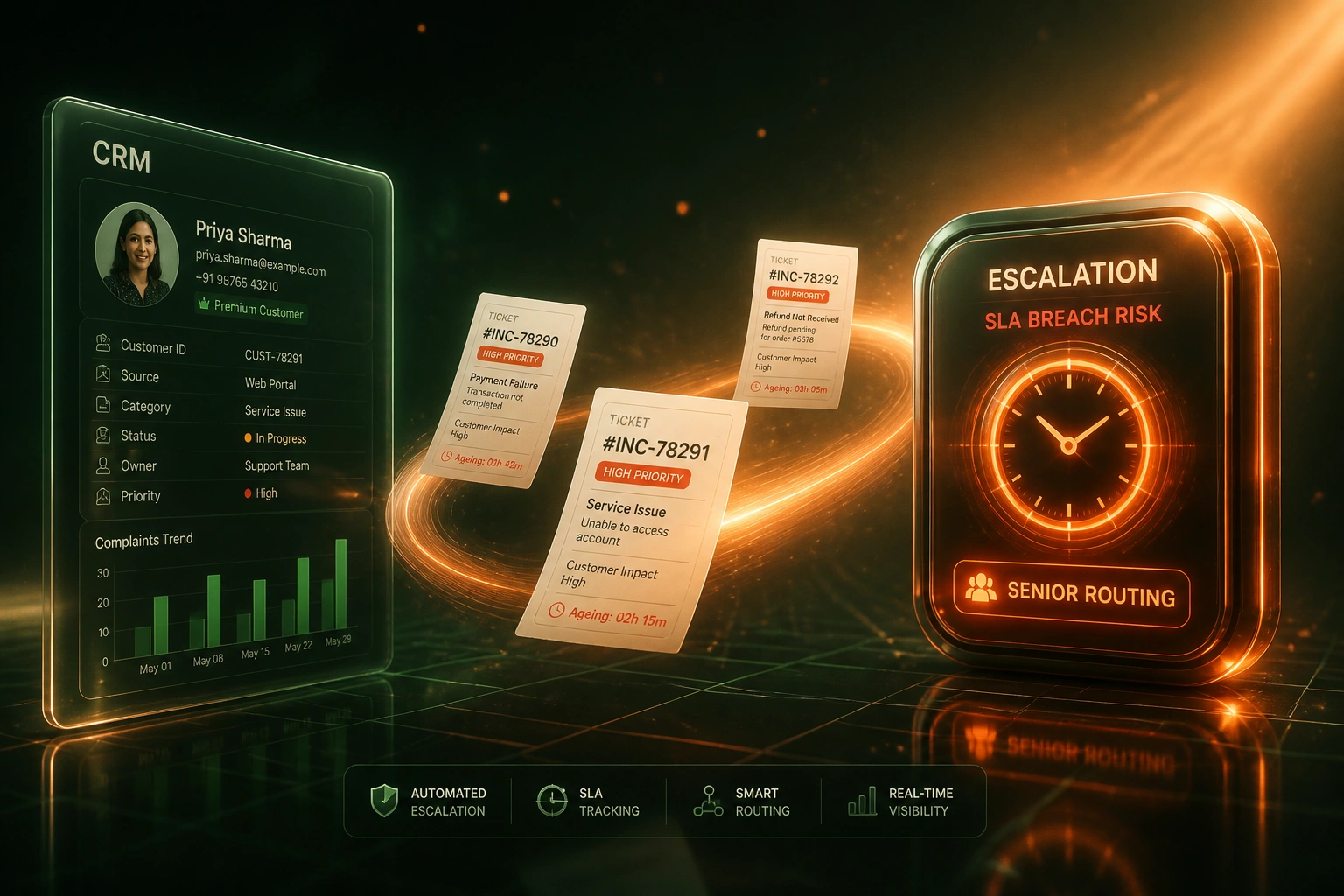
You find out about a VIP meltdown on Twitter or WhatsApp hours after frontline staff already knew. Escalation is a rules-and-routing problem: severity and SLA clocks should push urgent complaints to seniors before breach, with a clear trail of who owned what.
We build the escalation framework that makes that automatic.
Sound Familiar?
These are the exact issues our clients faced before complaint escalation and SLA management:
- Frontline staff know about a VIP meltdown for hours before the service director hears about it on Twitter or WhatsApp
- Severity lives in people's heads: juniors park high-risk tickets in their own queue while SLA clocks keep ticking
- First-response and resolution SLAs are tracked in a spreadsheet nobody opens until Monday's ops review
- Social and WhatsApp complaints sit outside the helpdesk, so public amplification starts before senior ownership
- When the CGSO or NCC asks who owned what and when, the audit trail is a reconstructed inbox, not a system record
Conversations that breach SLA show 22% lower CSAT, and customers who hit two or more breaches in 90 days are 3.2× more likely to churn. Social amplification and CGSO or NCC exposure raise the cost of slow escalation far beyond a single ticket.
What Complaint Escalation and Issue Routing Actually Does
Complaint lands → severity scored → SLA clock starts → senior owns it before breach.
Complaint Captured
Ticket, WhatsApp, email, or social mention lands in CRM or helpdesk with customer tier and channel
Severity & SLA Set
Rules assign P1–P4, start first-response and resolution clocks, and flag VIP or regulatory risk
Auto-Route to Senior
Urgent issues assign to the named lead or on-call director with full context and breach warnings
Trail & Outcome
Ownership, acknowledgements, and outcomes logged for customer resolution and audit readiness
Everything You Need for Reliable Customer Resolution Escalation
Severity & VIP Rules
Customer tier, channel, sentiment, and issue type set severity automatically. VIP and high-risk complaints skip the junior queue on day one.
SLA Clock Management
Separate first-response and resolution timers per severity. P1 clocks start when the complaint lands, not when someone notices it.
Auto-Route to Seniors
Urgent tickets assign to the named service lead, account owner, or on-call director with full context. No hoping the right person opens the shared inbox.
Breach-Before Alerts
Warnings at 50%, 75%, and 90% of the SLA window escalate before the deadline. Managers intervene while there is still time to recover CSAT.
Audit-Ready Ownership Trail
Every route, reassignment, acknowledgement, and breach is logged with identity and timestamp. Ready for CGSO, NCC, and board scrutiny.
CRM & Helpdesk Sync
Escalation state writes back to HubSpot, Zendesk, Freshdesk, or your CRM so sales and ops see the same owner and SLA status.
Platforms We've Wired for Escalation & SLA
From 6-Hour VIP Lag to 12-Minute Senior Ownership
How a Cape Town multi-site services firm stopped learning about critical complaints on social media first.
The Manual Escalation Path
- Frontline agents decided severity by gut feel and kept VIP tickets in their personal queues
- Average 6 hours before a service director knew about a P1 or social-amplified complaint
- First-response SLA hit rate on P1 tickets sat at 61%
- Monday reports listed breaches after the CSAT damage was already done
- CGSO evidence packs meant reconstructing ownership from email and WhatsApp threads
The Rules-Based Escalation Path
- Severity rules score VIP, social, and regulatory risk the moment a complaint lands
- P1 tickets auto-route to the named senior within minutes, with breach-before alerts
- P1 first-response SLA attainment lifted from 61% to 94%
- Directors see live queue age instead of discovering meltdowns on Twitter
- Every ownership change is logged for customer resolution and ombud readiness
Before vs After Escalation Framework
How It Works
From first conversation to live escalation framework in 2–4 weeks.
Map Severity & Ownership
VIP tiers, P1–P4 definitions, SLA clocks, and who owns each ladder. We capture how escalation should work, not how WhatsApp happens today.
Free Scoping Call
30-minute call to size complaint volume, tools, and where urgent issues are stalling before senior staff see them.
Build & Parallel Test
We build the routing and SLA engine against your stack, run live tickets in parallel for a week, and tune breach alerts with ops.
Go Live & Monitor
Manual chase stops. Dashboards show queue age, escalation lag, SLA attainment, and who owned every critical complaint.
Frequently Asked Questions
How is this different from a full complaint management system?
A complaint CMS covers the full lifecycle: capture, resolve, and learn. This page is the escalation layer: severity rules, SLA clocks, auto-route to seniors, breach alerts, and an audit trail proving critical issues did not sit in a junior queue. Many clients run both.
How long does a complaint escalation and SLA platform take to set up?
A standard severity-and-routing build takes 2–4 weeks from scoping to go-live. Simple one-ladder escalations for a single helpdesk can be live within a week. Multi-channel setups with VIP tiers, WhatsApp intake, and CRM write-back usually take 4–6 weeks.
Will every complaint still land on a director's phone?
No. That is the point of severity routing. Routine P3 and P4 stay with frontline agents. VIP, social amplification, regulatory risk, and P1 issues escalate to named seniors before breach. Directors recover attention without losing control of critical cases.
How does this help with CPA, CGSO, and NCC readiness?
Under accredited CGSO rules, subscribers typically have 15 business days to investigate and respond once a complaint is referred, and the ombud aims to resolve within 60 business days. Your internal first-response and resolution clocks must beat those external windows. The system logs who owned each step so you can show the trail, not rebuild it from email.
What happens when the on-call senior is unavailable?
Pre-configured delegation and next-in-ladder routing activate automatically. If nobody acknowledges within the SLA warning window, escalation continues up the chain so leave or load-shedding never freezes a VIP complaint.
How much does a complaint escalation tracking platform cost?
Simple one-ladder severity routing starts from around R15,000. Multi-channel frameworks with VIP rules, dual SLA clocks, breach alerts, CRM write-back, and audit export typically range from R25,000 to R60,000. Most mid-market service teams recovering even a handful of VIP or social escalations per month see payback within 2–3 months from avoided churn and rework.
Stop Learning About Critical Complaints Hours Late
If your service directors still hear about VIP meltdowns on social media after frontline staff already knew, you are paying for a routing problem that already has a solution.
Tell us which helpdesk or CRM you use, how severity is decided today, and where urgent complaints stall. We will show you exactly how complaint escalation and SLA management would work for your operation.