CRM for Healthcare: Patient Relationships Beyond the EMR
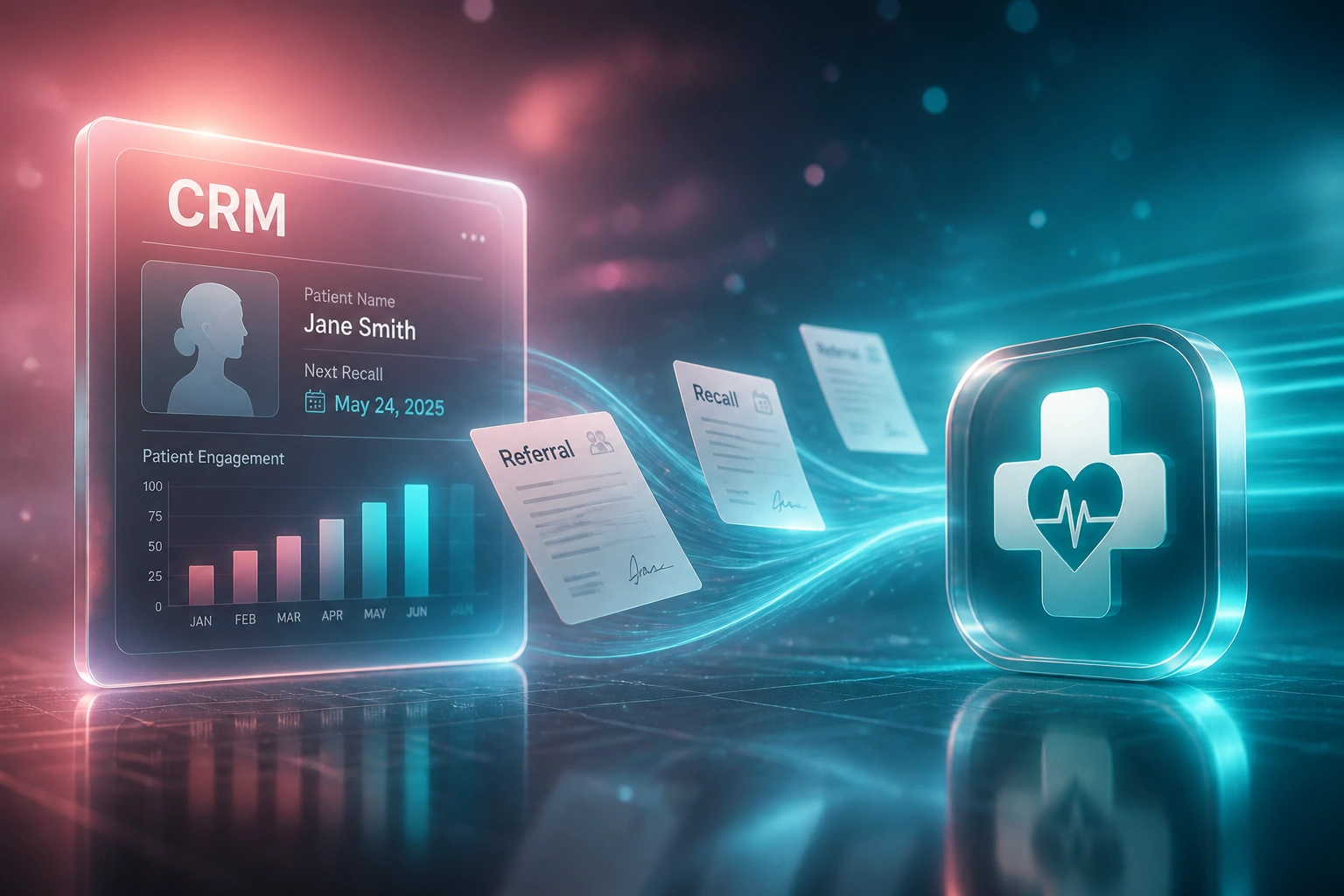
Your EMR handles clinical records. It does not own referrals, recalls, or the follow-up campaigns that keep a medical practice diary full. Those relationships die in WhatsApp while no-shows and incomplete referrals quietly drain revenue.
We build the patient CRM that sits beside your EMR and manages the relationship layer.
Sound Familiar?
These are the exact issues practice managers brought us before a purpose-built patient CRM:
- Your EMR holds clinical notes, but referral sources and recall due dates live in WhatsApp and spreadsheets
- Half of specialty referrals never become booked visits because nobody owns the follow-up
- Front desk spends hours a week chasing confirmations by phone while patients ignore voicemail
- Recall campaigns for chronic and preventive care stall when the list sits in someone's inbox
- Patient contact details, consent flags, and engagement history are scattered across tools that are not POPIA-ready
Under POPIA, health information is special personal information. Chasing patients on personal WhatsApp accounts and shared spreadsheets creates exposure the Information Regulator can fine up to R10 million. HPCSA confidentiality rules expect controlled disclosure, not informal chat threads holding referral and recall lists.
What a Medical Practice CRM Actually Does
Referral lands → patient engaged → recall scheduled → loop closed. The EMR stays clinical. The CRM owns the relationship.
Referral Captured
Inbound or outbound referral is logged with source, owner, and due chase date, not left in a chat thread
Patient Engaged
Consent-aware SMS or email nudges the patient to book, with staff only handling non-responders
Recall Automated
Chronic and preventive due dates trigger campaigns so overdue patients reappear on the diary
Loop Closed
Practice managers see conversion, no-shows, and hours recovered without hunting WhatsApp history
Capabilities of a Purpose-Built Healthcare CRM
Patient Relationships Beside the EMR
Keep clinical records in your EMR. The CRM owns engagement: preferences, household links, recall due dates, and every touchpoint after the consult.
Closed-Loop Referral Tracking
Log inbound and outbound referrals, assign owners, chase incomplete loops, and report which sources actually convert to booked visits.
Recall and Follow-Up Campaigns
Segment by condition, last visit, or care pathway. Automate SMS and email recalls so overdue patients rebook without a phone-tag marathon.
POPIA-Ready Engagement
Consent flags, access controls, audit trails, and purpose-limited contact history so health-related outreach stays inside lawful processing.
No-Show Recovery Workflows
When a patient misses a slot, the CRM triggers rebooking outreach and waitlist backfill so empty diary time does not stay empty.
Practice Dashboards Practice Managers Trust
Referral conversion, recall completion, no-show rate, and front-desk hours recovered, not vanity login charts from a generic sales CRM.
Stacks We Commonly Sit Beside or Replace for Engagement
From WhatsApp Chase to a Closed Referral Loop
How a four-doctor specialist practice cut no-shows from 14% to 6%, closed referrals that used to vanish, and recovered R380,000 in year one.
EMR Plus Informal Chase
- Clinical notes lived in the EMR; referrals sat in WhatsApp and a shared Excel sheet
- Roughly half of outbound referrals never showed as booked visits
- Front desk spent about 8 hours a week on reminder and recall phone tag
- No-show rate sat near 14%, with empty specialist slots hard to backfill
- Consent and contact history were informal, with POPIA risk on personal devices
Patient CRM Beside the EMR
- Referrals owned in the CRM with chase dates and source reporting
- Automated confirmations and recalls; staff only handle non-responders
- No-shows fell to 6% with same-day rebooking and waitlist backfill
- Consent flags and audit trails on every engagement touchpoint
- Practice manager dashboard for conversion, recalls, and diary fill
EMR-Only Chase vs Patient CRM
How Healthcare CRM Engagements Run
From first conversation to a live patient CRM in roughly 8 to 14 weeks for a focused MVP.
Map the Practice Workflow
We walk referral intake, recalls, confirmations, and where WhatsApp currently holds the relationship layer.
Scope Beside Your EMR
Clear boundary: clinical stays in the EMR, relationships and campaigns live in the CRM, with a fixed quote for v1.
Build, Migrate, Train
We build patient CRM modules, migrate clean contact and referral data, and train reception and practice managers.
Go Live and Optimise
Launch with monitoring, then tune recall cadences and referral chase rules against your real diary data.
Frequently Asked Questions About Healthcare CRM
How is a healthcare CRM different from our EMR or practice management system?
Your EMR is built for clinical documentation, billing codes, and medical aid claims. A medical practice CRM sits beside it and owns patient relationships: referral sources, recall campaigns, engagement history, and follow-up ownership. We do not replace the EMR. We stop relationships dying in WhatsApp while clinical notes stay where clinicians expect them.
Will this help with POPIA compliance for patient contact data?
Health information is special personal information under POPIA. A purpose-built patient CRM gives you consent flags, role-based access, audit trails, and retention controls that informal WhatsApp threads and shared spreadsheets cannot. Administrative fines under POPIA can reach R10 million. We design engagement workflows so outreach stays inside lawful, purpose-limited processing.
How much does a healthcare CRM for a medical practice cost?
Most practice CRM builds we scope land between R150,000 and R400,000, depending on modules, EMR adjacency, referral workflows, and campaign automation. A focused MVP with patients, referrals, and recall campaigns sits toward the lower end. Multi-branch practices and deeper integrations push higher. We quote fixed scope after discovery.
How long before the front desk sees less phone tag?
A focused MVP typically ships in 8 to 14 weeks. Practices usually run automated confirmations and recalls in the first release, so front-desk hours on manual chase drop as soon as the diary is connected. We phase delivery so reception can use core workflows before every report is finished.
Can you work with our existing South African practice software?
Yes. We commonly sit beside GoodX, MedTech, HealthBridge, Practice Perfect, and similar stacks. Where APIs or exports exist, we sync demographics and appointment anchors. Where they do not, we design a clean handoff so clinicians keep their EMR and the CRM owns relationships and campaigns.
How quickly does a patient CRM pay for itself?
Most practices we work with break even inside 8 to 14 months when you count recovered no-show slots, closed referral loops, and front-desk hours returned to the floor. Preventing a handful of missed specialist visits a week at roughly R3,200 each, plus converting referrals that used to vanish, is usually enough to fund the build.
Stop Letting Referrals and Recalls Die in WhatsApp
If your EMR is solid but patient relationships, referral tracking, and follow-up campaigns still live in chat threads and spreadsheets, a purpose-built healthcare CRM is the missing system of engagement.
Tell us which practice software you run, how referrals arrive today, and what your no-show and recall pain looks like each week. We will show you a POPIA-aware design that sits beside the EMR, typically in the R150,000 to R400,000 range, with payback measured against recovered visits and front-desk hours.