CRM for Nonprofits: Donor Management and Grant Tracking
Spreadsheets and generic sales CRM lose donor history, miss renewal windows, and fail funder reporting. On a tight budget, every hour spent chasing grants or rebuilding Section 18A receipts is an hour not spent on programme work.
We build the nonprofit CRM that ties donor stewardship, grants, and volunteers into one operational view.
Sound Familiar?
These are the exact issues executive directors and fundraising leads describe before a nonprofit CRM:
- Donor history lives in spreadsheets and email, so renewal windows pass before anyone notices a lapsed major gift
- Year-end appeals go out without knowing who gave last December, who needs a Section 18A receipt, or who asked not to be solicited
- Grant applications and acquittals pull data from three folders, so programme staff lose days assembling reports funders already expect
- Volunteer hours and skills sit in a WhatsApp group, disconnected from donor stewardship and programme capacity planning
- Board packs stitch exports from Excel, the bank, and a generic sales CRM that still calls gifts "deals"
Year-end campaigns, audit season, and SARS Section 18A rules leave no slack for spreadsheet stewardship. From 1 March 2026, Section 18A receipts need expanded donor fields and unique serials, with IT3(d) third-party data still due bi-annually. NPOs still issuing certificates from Excel risk invalid receipts and lost donor trust when funding cycles are already tight.
What a Nonprofit CRM Actually Does for Donor Management
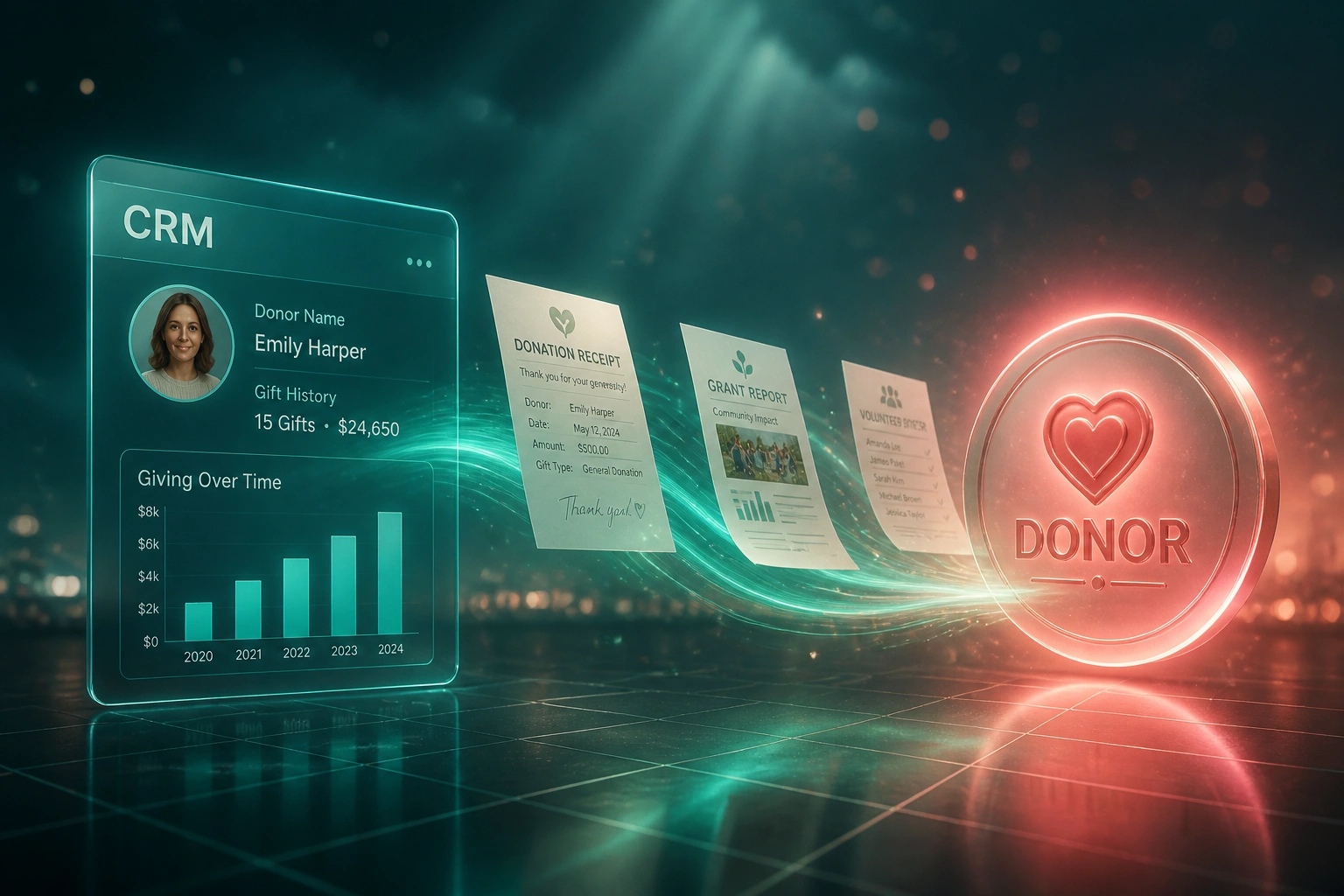
Gift recorded → donor stewarded → grant reported → volunteer hours captured. No stitching three systems before the board pack.
Capture the Gift
Donations land on the donor record with history, preferences, and receipt status attached
Steward and Renew
Renewal alerts and segmented appeals keep mid-level and major donors in the cycle
Track Grants
Applications, awards, and reporting deadlines sit on the funder record with evidence attached
Report and Comply
Section 18A receipts, IT3(d) exports, and funder packs pull from the same source of truth
Everything an NGO CRM Needs for Grant Tracking and Stewardship
Donor Stewardship and Retention
Gift history, communication preferences, and renewal dates sit on one donor record. Alerts surface lapsed mid-level and major donors before the funding cycle closes.
Grant Pipeline and Tracking
Applications, deadlines, awards, and reporting obligations tracked against the funder record, so your team stops chasing status across email threads.
Volunteer Coordination
Skills, availability, and hours logged against programmes and events. Volunteer contributions feed impact reports instead of living in a chat group.
Section 18A and Funder Reporting
Compliant donation receipts with the fields SARS requires, exportable for IT3(d) submissions, plus funder-ready expenditure and outcome packs.
Campaign and Appeal Workflows
Segment by gift level, last gift date, and engagement. Year-end and mid-year campaigns go out with accurate history, not a stale mailing list.
Board and Impact Dashboards
Retention rate, new vs repeat donors, grant pipeline value, and volunteer hours in one view. No more stitching three exports before the board meeting.
Systems We Commonly Replace or Connect
From 34% Retention to 46% with One Donor Record
How a 14-person Gauteng education NPO replaced spreadsheets, a sales CRM, and grant folders with a purpose-built nonprofit CRM and recovered R820,000 in retained gifts in year one.
The Spreadsheet Stack
- Donor list lived in Excel; gift notes sat in the fundraising lead's inbox
- A generic sales CRM labelled gifts as "deals", so board reports made no sense to trustees
- Grant deadlines lived in a shared calendar; 59% of peers nationally report near-misses on reporting
- Section 18A receipts rebuilt manually each February for IT3(d)
- Volunteer hours tracked in WhatsApp, never reaching funder impact packs
The Nonprofit CRM
- Every gift, preference, and renewal date on one donor card with stewardship tasks
- Grant pipeline with deadlines, evidence folders, and funder status in one place
- Grant-report prep cut from six hours a week to about 90 minutes
- Section 18A receipts issued from the system; IT3(d) export ready for SARS
- Volunteer hours roll into the same impact dashboard the board sees monthly
Before vs After a Nonprofit CRM
How It Works
From first conversation to a live nonprofit CRM in roughly 10 to 16 weeks for a focused MVP.
Map Your Fundraising Ops
Donor sources, grant calendar, volunteer workflows, Section 18A process, and the tools your team already fights with.
Scope the Nonprofit CRM
Fixed modules for donors, grants, volunteers, and reporting, with a clear quote and timeline before build starts.
Build, Migrate, Train
We build the system, migrate donor and grant history, and train fundraising, finance, and programme leads on day-one workflows.
Go Live and Refine
Cut over with parallel running through a campaign or reporting cycle, then tighten dashboards once the team is comfortable.
Frequently Asked Questions
How is a nonprofit CRM different from a sales CRM like HubSpot?
Sales CRMs track deals and pipeline stages. A nonprofit CRM (or NGO CRM) tracks donors, gifts, renewals, grants, volunteers, and funder reporting on the same constituent record. Off-the-shelf sales tools force you to bolt on spreadsheets for stewardship and Section 18A receipts, which is how renewal windows and grant deadlines get missed.
Can you configure Salesforce Nonprofit Cloud, Bloomerang, or NationBuilder instead of building from scratch?
Yes. For many organisations we configure and integrate an existing nonprofit platform (Salesforce Nonprofit Cloud from about R1,000 per user per month after free Power of Us seats, Bloomerang from about R2,070 per month, NationBuilder from about R560 to R2,650 per month at current rates) rather than building everything custom. Where budgets are tighter or workflows are unique, we build a purpose-fit donor and grant CRM that connects to the finance and payment tools you already use.
Will this help with Section 18A receipts and IT3(d) reporting?
That is a core design requirement for South African NPOs. We capture the donor and donation fields SARS expects on Section 18A receipts (including the expanded mandatory fields applying from 1 March 2026), keep unique receipt serials, and produce exports suitable for bi-annual and annual IT3(d) third-party data submissions so your finance lead is not rebuilding certificates in Excel at tax year-end.
How long does a nonprofit CRM take to set up?
A focused MVP covering donor management, gift history, basic grant tracking, and Section 18A receipts typically ships in 10 to 16 weeks. Deeper grant lifecycle, volunteer modules, campaign automation, and accounting sync usually take 4 to 6 months, phased so fundraising can start using donor stewardship earlier.
What happens to our existing donor spreadsheets and grant folders?
We plan a structured migration: clean duplicates, map gift and grant history, validate major-donor and open-grant records before cutover, and run in parallel through at least one appeal or reporting cycle. Programme and finance keep access to archived source files until the team trusts the new system of record.
How much does a nonprofit CRM cost in South Africa?
Most nonprofit CRM builds we scope land between R150,000 and R380,000+, depending on grant complexity, volunteer modules, and integrations. Configuring an existing platform with data migration and training often sits lower. Organisations that lift retention a few points or reclaim grant-admin hours typically see payback well inside the first year against retained gifts and staff time returned to programme work.
Stop Running Donors, Grants and Volunteers in Spreadsheets
If renewal windows still slip and grant reports still cost half a week of programme time, you are funding a problem that a purpose-built nonprofit CRM already solves.
Tell us how you raise (individual donors, foundations, CSI), how grants are reported, and where Section 18A creates the most friction. We will show you what donor management and grant tracking would look like for your NPO, your funders, and your board.