CRM for Travel Agencies: Bookings, Itineraries and Follow-Ups
Your bookings sit across supplier portals, WhatsApp, and spreadsheets. Itineraries get rebuilt by hand. Commissions hide in Excel. Post-trip follow-ups never happen, so the clients who just had a brilliant holiday book their next trip somewhere else.
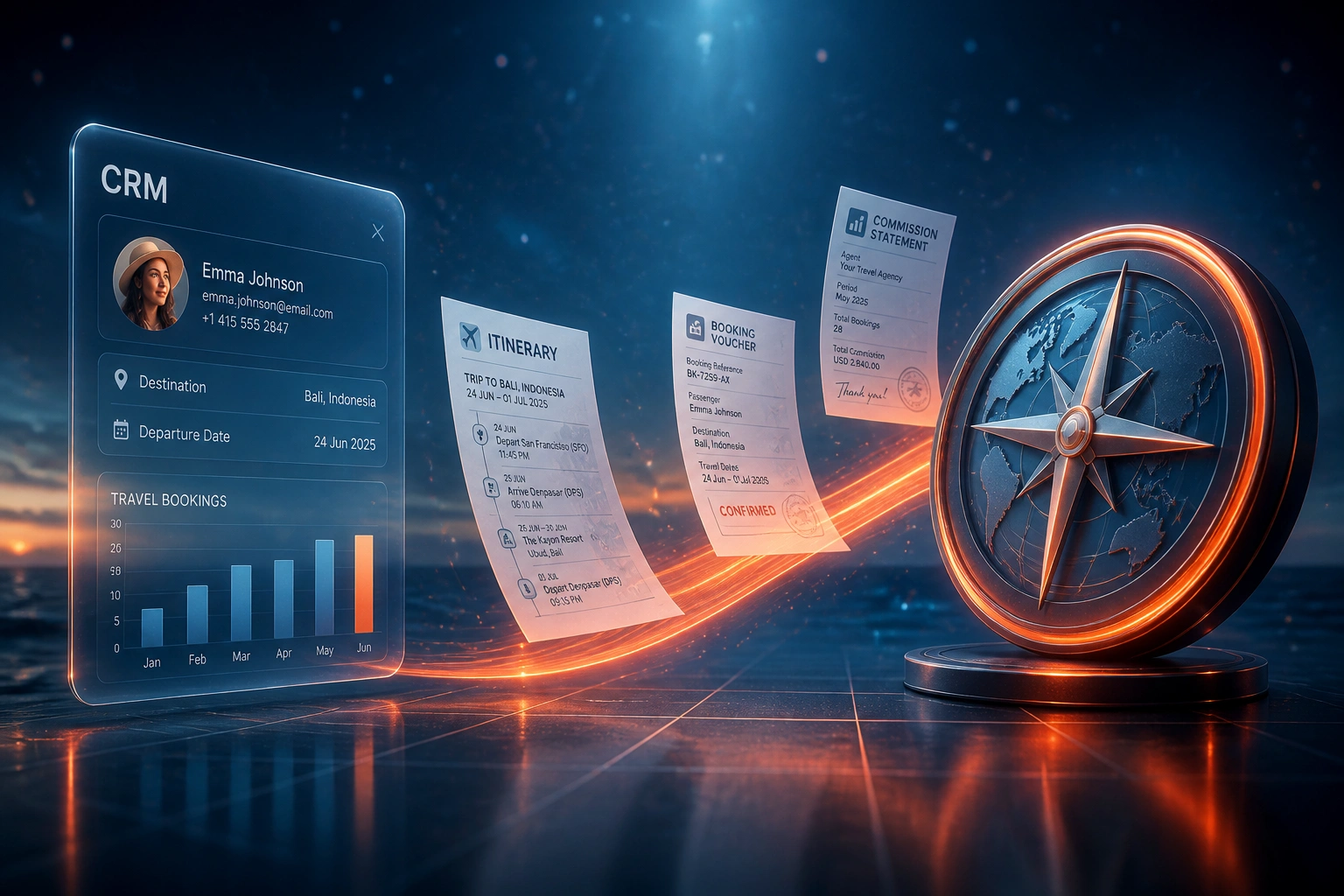
We build the travel CRM that unifies bookings, itineraries, commissions, and post-trip nurture.
Sound Familiar?
These are the exact issues travel agency owners and operations managers brought us before a purpose-built travel CRM:
- Bookings live across supplier portals, GDS confirmations, WhatsApp threads, and a shared spreadsheet nobody trusts
- Consultants rebuild itineraries by hand for every quote, retyping flights, hotels, and transfers from scratch
- Supplier commissions are tracked in Excel, so shortpayments and missed statements go unnoticed for months
- Post-trip follow-ups never happen, so clients who just had a great holiday book their next trip with someone else
- Owners cannot see pipeline, repeat rate, or commission leakage without chasing every consultant for a status update
One in five lost travel clients leaves because nobody followed up, not because a competitor won them. Industry benchmarks put 10 to 15% of lost bookings on missing follow-up alone. Meanwhile agencies with thorough CRM use across sales and service report retention above 50% at 68%, versus 52% when CRM use is limited. Neglect is more expensive than you think.
What a Travel Agency CRM Actually Does
Enquiry lands → itinerary built → booking confirmed → post-trip nurture starts. One system owns the client lifecycle that supplier portals never will.
Enquiry Captured
Lead, destination, budget, and travellers land on a client record, not a chat thread that disappears by Friday
Itinerary Assembled
Flights, hotels, and transfers build into a structured itinerary consultants can revise without starting from blank
Booking Confirmed
Supplier refs, vouchers, and expected commission sit on the booking so finance and the desk share one truth
Repeat Nurtured
Post-trip sequences and anniversary prompts bring clients back before they open another agency's WhatsApp
Capabilities of a Purpose-Built Tourism CRM
Bookings in One Place
Every enquiry, hold, and confirmed booking sits on a client record with supplier refs, passenger names, and payment status. No more hunting WhatsApp for a voucher number.
Itineraries That Rebuild Themselves
Flights, hotels, transfers, and activities flow into a structured itinerary from the booking record. Revisions update the document instead of starting another Word file from zero.
Commission Tracking That Pays You
Expected vs received commission by supplier, with chase lists for shortpayments. Month-end reconciliation stops being a spreadsheet archaeology project.
Post-Trip Nurture That Wins Repeats
Automated thank-you, review, and anniversary sequences so the clients who just travelled hear from you before a competitor does. Retention becomes a system, not a hope.
POPIA-Ready Client Records
Consent flags, access controls, and retention windows on passenger and payment data. Shared chat threads and personal phones stop being your compliance plan.
Agency Dashboards Owners Trust
Quote-to-book conversion, average booking value, repeat rate, and commission recovered: the numbers that run a travel agency, not a generic sales pipeline chart.
Stacks We Commonly Sit Beside or Replace for Engagement
From Spreadsheet Chaos to Repeat Bookings
How a Cape Town leisure agency cut itinerary builds from three hours to under 45 minutes, lifted repeat bookings from 28% to 42%, and recovered R420,000 in year one.
Portals, WhatsApp, and Excel
- Bookings lived across supplier portals, GDS confirmations, and a shared spreadsheet
- Consultants spent roughly three hours rebuilding each custom itinerary by hand
- Commission reconciliation took about 20 hours a month and still missed shortpayments
- Repeat booking rate sat near 28%, with almost no structured post-trip contact
- Owners guessed at pipeline because status lived in consultants' phones
Purpose-Built Travel CRM
- Every booking, passenger, and supplier ref on one client record
- Structured itineraries from booking data; revisions without starting from blank
- Expected vs received commission with a chase list for shortpayments
- Automated post-trip and anniversary sequences driving repeat enquiries
- Owner dashboard for conversion, repeat rate, and commission recovered
Scattered Booking Tools vs Travel CRM
How Travel CRM Engagements Run
From first conversation to a live travel agency CRM in roughly 8 to 14 weeks for a focused MVP.
Map the Agency Workflow
We walk enquiry intake, quoting, supplier booking, itinerary delivery, commissions, and where WhatsApp currently holds the client relationship.
Scope the Travel CRM
Clear boundary: bookings, itineraries, commissions, and post-trip nurture in v1, with a fixed quote before build starts.
Build, Migrate, Train
We build travel CRM modules, migrate clean client and booking history, and train consultants on live desk workflows.
Go Live and Optimise
Launch with monitoring, then tune nurture cadences and commission chase rules against your real booking data.
Frequently Asked Questions About Travel CRM
How is a travel CRM different from HubSpot or a generic sales CRM?
Generic CRMs model deals and contacts. A travel agency CRM models bookings, passengers, itineraries, supplier commissions, and post-trip nurture as first-class objects. That is the difference between a sales tool with workarounds and a system consultants actually live in between supplier portals and client WhatsApp.
How much does a tailored travel CRM cost in South Africa?
Most travel CRM builds we scope land between R120,000 and R350,000, depending on modules, GDS or tour-operator adjacency, commission automation, and multi-branch needs. A focused MVP covering clients, bookings, itineraries, and post-trip sequences sits toward the lower end. Deeper supplier sync and commission recovery workflows push higher. We quote fixed scope after discovery.
How long before consultants stop rebuilding itineraries by hand?
A focused MVP typically ships in 8 to 14 weeks. Agencies usually run structured itineraries and booking records in the first release, so quote time drops as soon as consultants stop starting from a blank document. We phase delivery so the desk can use core workflows before every report is finished.
Can you work with our existing booking tools and supplier portals?
Yes. We commonly sit beside Travelport or Amadeus exports, Tourplan, Travelogix, and similar stacks, plus the supplier portals and WhatsApp threads agencies already use. Where APIs or exports exist, we pull booking anchors into the CRM. Where they do not, we design a clean handoff so consultants keep their booking tools and the CRM owns relationships, itineraries, commissions, and follow-up.
Will this help recover missed supplier commissions?
That is a core reason agencies buy. Mid-size agencies commonly spend 15 to 25 hours a month on manual commission reconciliation, and industry case studies show shortpayment rates around 3 to 4% of expected commission when tracking is informal. A purpose-built travel CRM turns expected vs received into a chase list instead of an annual surprise.
How quickly does a travel CRM pay for itself?
Most agencies we work with break even inside 6 to 12 months when you count consultant hours recovered on itineraries, commission shortpayments collected, and repeat bookings that used to walk away after the trip. A Cape Town leisure agency we modelled cut builds from roughly three hours to under 45 minutes, lifted repeat rate from 28% to 42%, and recovered over R420,000 in year one.
Stop Letting Repeat Bookings Die After the Trip
If your bookings, itineraries, and commissions still live across supplier portals, WhatsApp, and spreadsheets, a purpose-built travel CRM is the system that turns one holiday into the next booking.
Tell us which booking tools you run, how itineraries get built today, and what your repeat rate and commission chase look like each month. We will show you a design that unifies booking management for a travel agency CRM, typically in the R120,000 to R350,000 range, with payback measured against consultant hours, recovered commissions, and retained trips.