Cross-Sell and Upsell Email Automation: Product Recommendation Emails That Earn
Your existing customers already trust you. The money is in the right offer after purchase, not another cold Meta campaign. Generic post-purchase blasts waste that moment; purchase-history driven recommendations turn it into repeat revenue.
We build the cross-sell automation that makes every order trigger the next relevant ask.
Sound Familiar?
These are the exact issues ecommerce marketing leads brought us before we automated product recommendation emails:
- Post-purchase emails push the same bestsellers to everyone, regardless of what they just bought
- Marketing spends 6–8 hours a week hand-picking product blocks that go stale within days
- Shopify Email's 10,000 free monthly sends run out before cross-sell flows can scale
- No reliable link between purchase history and the next product recommendation email
- Ad spend keeps rising while repeat-purchase revenue sits flat because offers arrive too late or too generic
Meta and Google acquisition costs keep climbing for South African ecommerce (Shopping CPA commonly R150–R600, Meta CPA often R200–R900), while Shopify Messaging caps free sends at 10,000 a month. Brands that keep pouring budget into cold traffic while post-purchase upsell emails stay manual are paying twice for the same revenue.
What Cross-Sell Automation Actually Does
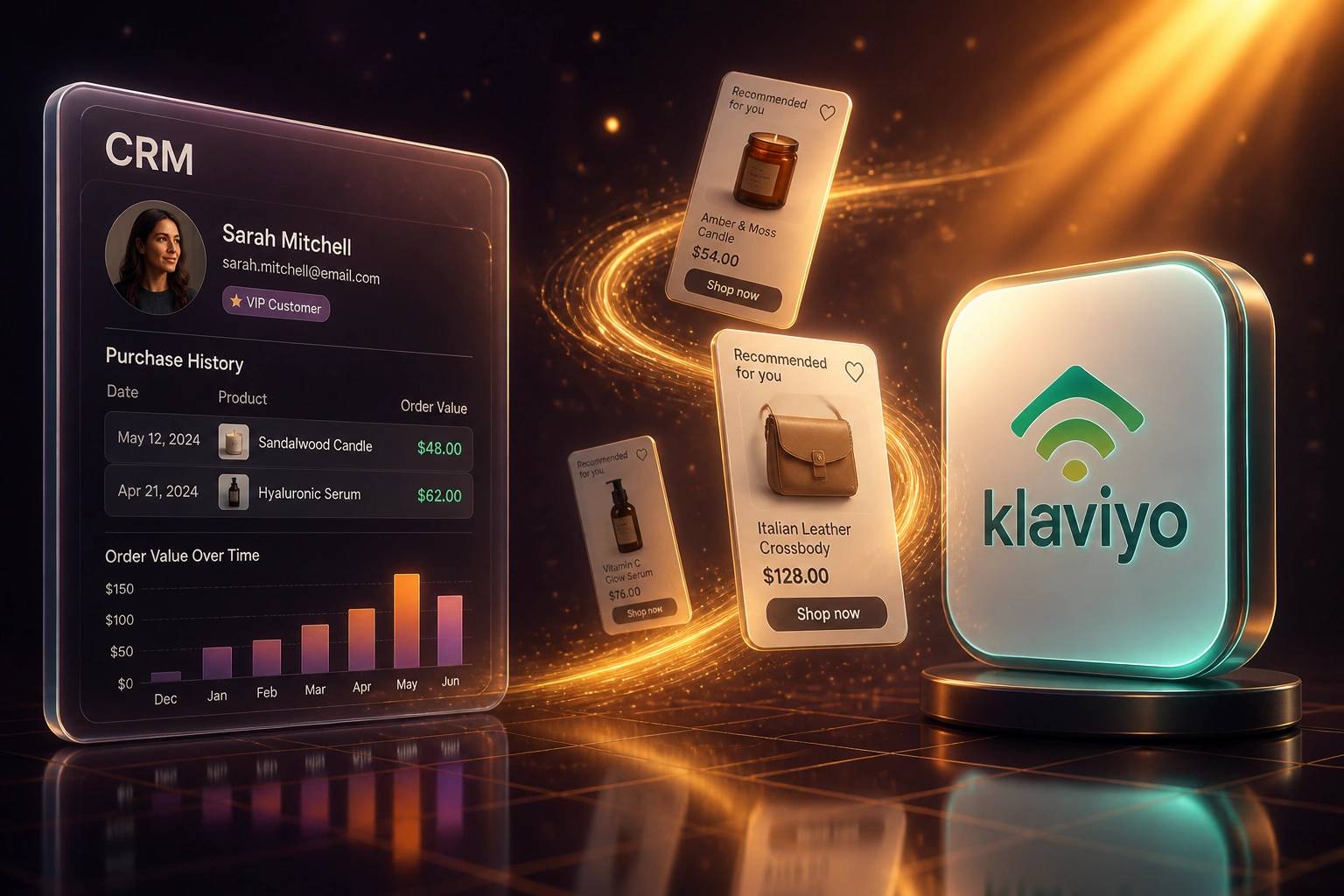
Order placed → purchase history matched → product recommendation email sent → next order attributed. No weekly product-block scramble.
Order Lands
Customer buys in Shopify, WooCommerce, or your storefront; the order event hits your ESP
History Matched
Rules pull complementary or next-tier SKUs from the live catalogue based on what they bought
Timed Upsell Emails
Cross-sell or upgrade offer sends in the 3–14 day window when engagement is still warm
Revenue Tracked
Second-order revenue and AOV lift attribute back to the flow, not a generic campaign blast
Everything You Need for Product Recommendation Emails
Purchase-History Matching
Every order triggers product recommendation emails based on what the customer actually bought, not a static bestsellers block.
Cross-Sell Flows
Complementary items land 3–14 days after purchase, timed when buyers are still engaged and open rates stay high.
Upsell Next-Tier Offers
Customers who bought the mid-tier SKU see the next size, kit, or subscription upgrade, not a random promo blast.
Catalogue Sync
Shopify or HubSpot product catalogues stay in sync with Klaviyo or ActiveCampaign so recommendations never show out-of-stock items.
Segment Rules & Suppressions
Exclude recent buyers of the recommended SKU, VIP discount tiers, and refunded orders so every send stays relevant.
Revenue Attribution
Track revenue per recipient, AOV lift, and second-order conversion back to each cross-sell and upsell flow.
Platforms We've Wired for Cross-Sell Flows
From Hand-Picked Blocks to R1.4M Incremental Revenue
How a Cape Town DTC beauty brand turned post-purchase silence into purchase-history driven upsell emails and lifted second-order AOV by 22%.
The Manual Process
- Marketing coordinator rebuilt Klaviyo product blocks every Monday from a spreadsheet
- 6–8 hours a week matching bestsellers to recent orders by eye
- Same three hero SKUs recommended to every buyer, regardless of purchase history
- Shopify Messaging free sends burned on promo blasts before cross-sell flows could run
- Repeat revenue stuck near 28% while Meta CPA climbed past R450
The Automated Process
- Shopify order events trigger Klaviyo flows with catalogue-synced recommendations
- Cross-sell complementary items at day 5; upsell next-tier kits at day 12
- Suppressions stop recommending products the customer already owns
- Marketing reviews exception reports, not every email block
- Returning-customer revenue share climbed toward the 35–55% healthy band
Before vs After Cross-Sell Automation
How It Works
From first conversation to live product recommendation emails in 2–4 weeks.
Tell Us Your Stack
Which storefront, which ESP, and how you currently decide what to recommend after an order.
Free Scoping Call
30-minute call to map purchase triggers, catalogue fields, and the cross-sell windows that fit your AOV.
Build & Test
We wire catalogue sync, recommendation logic, and flows, then A/B test against your current post-purchase emails.
Go Live & Monitor
Flows go live with attribution dashboards. We tune pairing rules as your catalogue and seasons change.
Frequently Asked Questions
How is this different from cart abandonment or lifecycle emails?
Cart and browse abandonment recover lost intent. Lifecycle journeys move people through stages (welcome, win-back, replenishment). Cross-sell and upsell automation is purchase-history driven: after someone buys, we recommend complementary products or the next tier based on what they already own. Same ESP, different job.
Which platforms do you connect for product recommendation emails?
We most often connect Shopify or WooCommerce catalogues to Klaviyo, HubSpot Marketing Hub, or ActiveCampaign. If your storefront and ESP both expose product and order APIs, we can wire the same purchase-history matching.
Will this disrupt our current email calendar?
No. Cross-sell and upsell flows sit alongside your campaigns. We add suppressions so buyers do not get conflicting offers, and we respect frequency caps so post-purchase recommendation emails do not crowd out your promo calendar.
How do you keep recommendations relevant as the catalogue changes?
Catalogue sync keeps stock status, collections, and price tiers current. Pairing rules can be category-based, affinity-based, or manually curated for hero collections. Your team only reviews exceptions, not every product block by hand.
How long does setup take?
A focused Shopify-to-Klaviyo cross-sell flow is typically live in 2–3 weeks. Multi-ESP or multi-store setups with custom upsell logic usually take 3–5 weeks, including parallel testing against your existing post-purchase sends.
How much does cross-sell and upsell email automation cost?
Simple one-way post-purchase recommendation flows start from around R15,000. Catalogue sync with conditional cross-sell and upsell branching typically ranges from R25,000 to R55,000. Most DTC brands recovering even a few points of AOV and second-order revenue see payback within 2–4 months against rising Meta and Google acquisition costs.
Stop Paying CAC for Revenue You Could Earn from Buyers You Already Have
If your post-purchase emails still push the same three bestsellers to everyone, you are leaving the highest-intent moment in the customer journey on the table.
Tell us which storefront and ESP you run, how you currently choose recommendations, and where repeat AOV is stuck. We will show you exactly how purchase-history driven cross-sell and upsell automation would work for your catalogue.