d6 Communicator Fee Reminder Automation: Reduce Outstanding Balances
Unpaid school fees sit unpaid because reminder sequences are manual and late. Your finance system already knows who owes what. Syncing those balances into d6 Communicator and triggering staged parent payment notifications recovers cash without hiring more admin staff.
We build the school fee automation that turns ageing balances into timely d6 fee reminders.
Sound Familiar?
These are the exact issues principals, SGB finance chairs, and school business managers face when fee reminders stay manual:
- Outstanding balances sit in Edupac, SA-SAMS, or d6 Finance while fee reminders are still typed into d6 Communicator by hand
- Friendly reminders go out days or weeks late, so accounts age into the low-recovery window before parents hear from you
- Finance staff spend peak weeks on phone lists instead of payment plans, exemptions, and cashflow planning
- Parents get conflicting balance figures because the statement in d6 does not match the live debtor book
- SGB finance chairs see rising arrears and mid-year cashflow stress, with no clear sequence that works while recovery odds are still high
Mid-year cashflow and POPIA both raise the stakes. Independent schools feel arrears in payroll and supplier timing first. NAISA has reported 20–25% regional default pockets, while Fedsas noted about 29% of high-school parents defaulting or on exemptions in 2023–2024. Late, ad-hoc SMS blasts without consent checks create POPIA risk on top of the debtor book problem.
What d6 Fee Reminder Automation Actually Does
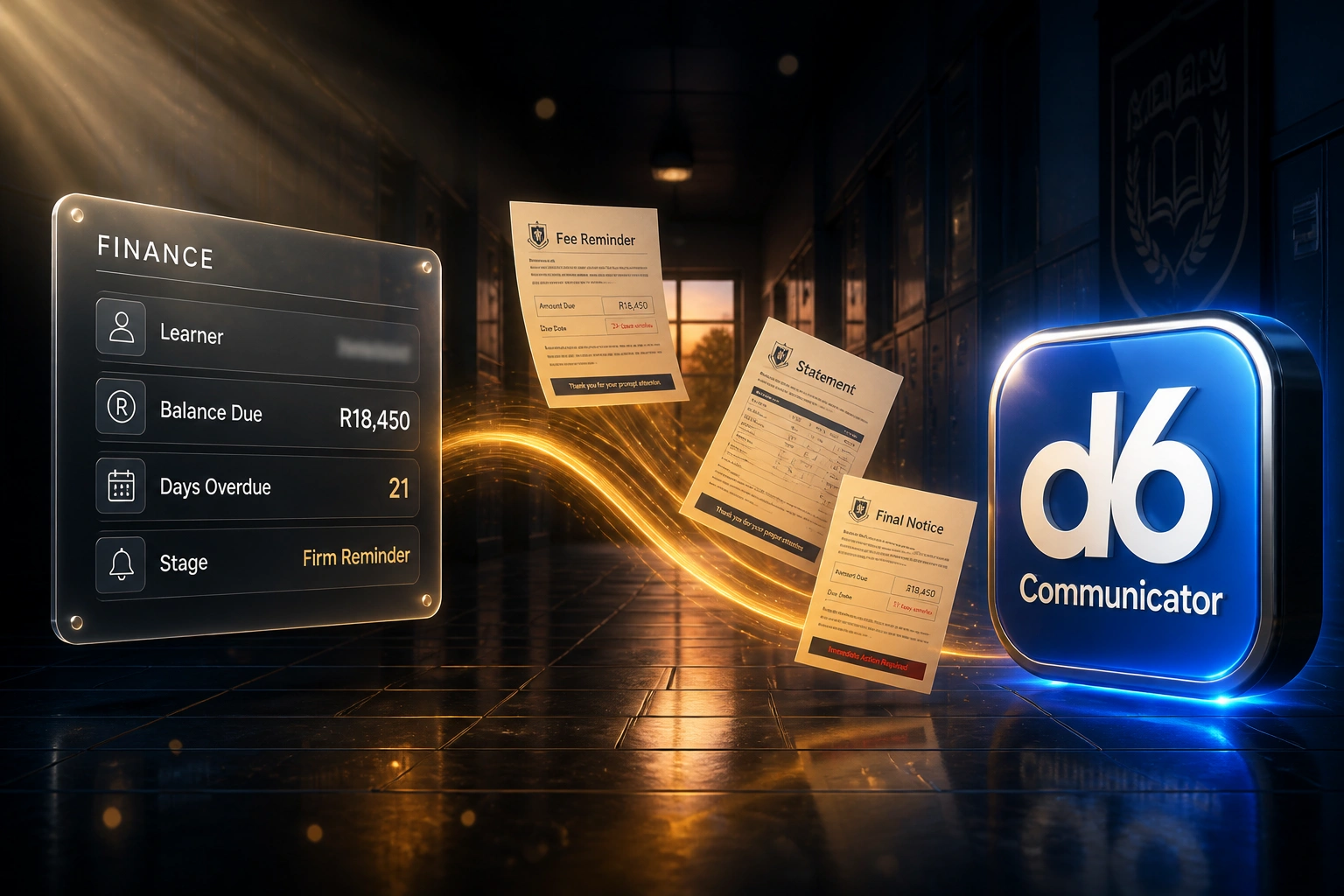
Balance ages → staged notice prepared → parent notified on d6. No human rebuilding the chase list every week.
Balance Ages in Finance
Outstanding fees update in Edupac, SA-SAMS, or d6 Finance with a clear ageing stage
Reminder Mapped for d6
Friendly, firm, or final wording maps to the right guardian with the live balance
Parent Notified
d6 Communicator delivers via app, SMS, email, or WhatsApp per your stage rules
Cash Comes In Sooner
Paid accounts leave the queue; finance only handles plans, exemptions, and exceptions
School Fee Automation Principals Can Defend to the SGB
Live Balance Sync into d6
Outstanding fees from Edupac, SA-SAMS, d6 Finance, or your MIS push into d6 Communicator as accurate balance notices, so parents always see the figure finance is working from.
Staged Reminder Sequences
Friendly, firm, and final parent payment notifications fire on ageing rules you approve. Escalation is consistent, documented, and free of Friday-afternoon guesswork.
Multi-Channel Fee Nudges
Use the d6 app, SMS, email, or WhatsApp in the order that fits each stage. SMS open rates near 98% carry the urgent steps; app push covers routine statement drops.
Ageing-Bucket Triggers
Day-7, day-21, and day-45 (or your own buckets) automatically select the next message. Paid accounts drop off the queue the moment the balance clears.
POPIA-Aware Consent Handling
Only consented guardian contacts receive fee reminders. Opt-outs and suppressed numbers stay respected, with an audit trail your principal can show the SGB.
Exception-Only Admin Work
Your business manager reviews failed sends, payment plans, and hardship cases. The routine chase list runs without hiring another clerk.
Finance Systems We've Linked for d6 Fee Reminders
From 14 Hours/Month of Fee Chasing to Two
How a Gauteng independent school synced Edupac balances into d6 Communicator, ran staged parent payment notifications, and pulled cash back from ageing arrears.
The Manual Process
- Finance exported the debtor list from Edupac into a spreadsheet every fortnight
- Business manager spent about 14 hours a month calling and pasting one-off d6 messages
- First reminder often left around day 18, after recovery odds had already slipped
- Firm and final wording depended on who was in the office that week
- SGB packs showed a growing 90-day bucket with no clear early-action protocol
The Automated Process
- Live balances sync into d6; friendly reminders leave by day three of overdue
- Firm SMS and final notice stages follow approved ageing rules without retyping
- Paid accounts drop off automatically the moment Edupac clears the balance
- Finance spends about two hours a month on exceptions, plans, and hardship pauses
- SGB sees the 90-day bucket shrink as action moves into the high-recovery window
Before vs After Fee Reminder Automation
How It Works
From first conversation to live fee reminder sequences in 2–4 weeks.
Tell Us Your Setup
Which finance system holds balances, how reminders leave today, and which ageing buckets hurt cashflow most.
Free Scoping Call
30-minute call with your principal, SGB finance chair, or business manager to design the friendly → firm → final sequence.
Build & Test
We sync balances into d6, map guardian groups, and run parallel reminders until wording, timing, and consent rules are right.
Go Live & Monitor
Switch off the manual chase list. Monitoring catches failed or empty sends before arrears slip another week.
Frequently Asked Questions
How is this different from a general d6 Communicator school integration?
A general school integration covers notices, events, and statement drops. This build focuses on fee reminder automation: syncing outstanding balances from your finance system into d6 Communicator, then triggering staged parent payment notifications (friendly, firm, final) against ageing rules so your debtor book shrinks without more admin headcount.
Which finance systems can feed outstanding balances into d6?
We commonly sync from Edupac, SA-SAMS, d6 Finance, and custom school MIS platforms. If your balances live in a spreadsheet today, we can start there as an interim source while you move to a proper ledger. The goal is one source of truth for what parents owe.
Will automated reminders damage parent relationships?
Done well, they protect relationships. Early friendly notices give parents time to arrange payment or apply for exemption before letters of demand. Escalation is consistent and factual, not personal. Schools still pause sequences for approved payment plans or hardship cases.
How do SMS and app push compare for fee reminders?
Industry benchmarks put SMS open rates around 90–98%, versus roughly 20% for typical push notifications. We usually reserve SMS for firm and final stages, and use d6 app push plus email for routine statements, so you spend SMS credits where urgency matters.
Is this POPIA-compliant for guardian contact details?
Yes. We only sync the fields needed for fee reminders (guardian contact, learner reference, balance summary, ageing stage), limit access to agreed school staff, and honour messaging consent. Your approved wording stays in d6; we do not invent legal demand letters without your instruction.
How much does d6 fee reminder automation cost?
Balance sync with a basic overdue trigger starts from around R15,000. Full staged sequences with multi-channel rules and consent handling typically range from R25,000 to R60,000. Most schools recover the build cost inside one or two fee cycles through earlier collections and fewer chase hours.
Stop Letting Outstanding Balances Age in Silence
If your debtor book grows because reminders are late and inconsistent, you are spending cashflow on a problem schools have already solved with d6 Communicator automation.
Tell us which finance system holds your balances, how fee reminders leave today, and where arrears hurt most. We will show you exactly how staged parent payment notifications would run for your school.