Data Cleaning During Migration: Don't Lift and Shift the Mess
You are tempted to move every CRM, ERP, or database record as-is and clean later. Dirty data migration multiplies duplicates, broken formats, and bad reports in the new system. Fixing that after go-live is the expensive path.
We clean in-flight so cutover arrives with measurable duplicate reduction.
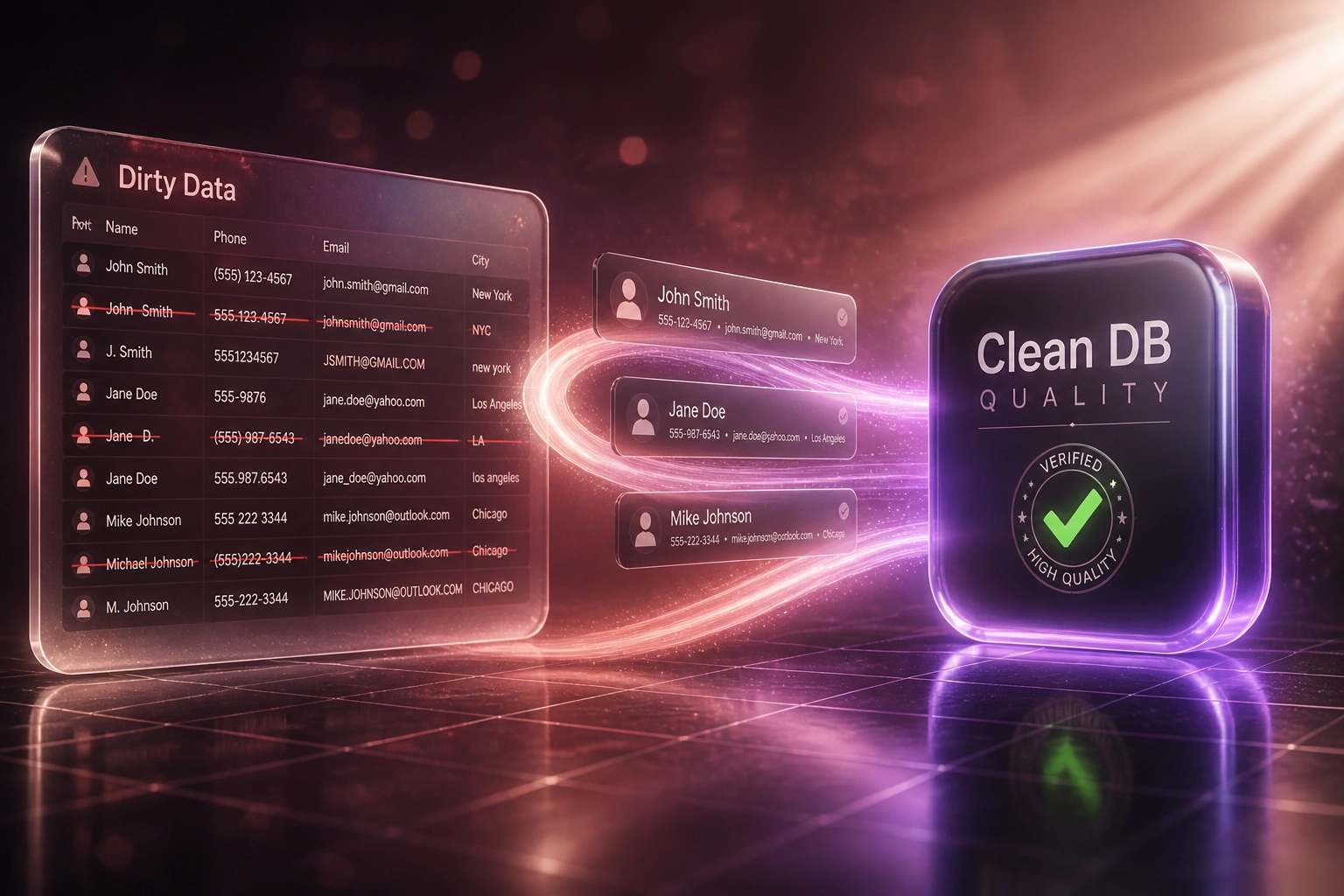
Sound Familiar?
These are the exact patterns we see when CFOs and ops leads plan a lift-and-shift migration:
- Leadership wants the migration done fast, so the plan is "move everything and clean later"
- Duplicate customers, inconsistent phone formats, and blank VAT numbers sit unnoticed in the old system
- Finance and ops know the reports are wrong but nobody owns a cleanup project between BAU work
- Past imports left three spellings of the same company and two account codes for one product
- Go-live is booked, yet nobody has profiled how dirty the source data actually is
Around two thirds of organisations discover major data quality issues mid-migration, when remediation is already on the critical path. Migration overruns average about 30% on cost and 41% on schedule. Cleaning later is not cheaper. It is the expensive version of the same work.
What Data Cleaning During Migration Actually Does
Profile → dedupe and standardise → quarantine exceptions → cut over clean. Dirty data never gets a free ride into the new system.
Profile the Source
Measure duplicates, blank fields, format drift, and orphaned links before cutover is locked
Clean In Transit
Deduplicate, standardise formats, and map fields to the new schema rules
Quarantine Exceptions
Bad rows held with reason codes; clean rows load into the target system
Prove Cutover Quality
Duplicate scorecard and sample reconciliations before users go live
Everything You Need for Cleaner Data Quality at Cutover
Source Data Profiling
Before a single record moves, we measure duplicate rates, blank required fields, format drift, and orphaned relationships so the cutover plan is based on evidence.
In-Flight Deduplication
Match on email, company name, VAT number, and your composite keys so duplicate accounts and contacts never land in the new CRM or ERP.
Format Standardisation
Phone numbers, dates, currencies, address fields, and picklist values are normalised to the target system rules before load, not after go-live.
Field Mapping Hygiene
Source fields map cleanly to destination schema: required fields enforced, deprecated columns dropped, and conflicting values resolved with clear rules.
Quarantine of Bad Rows
Records that fail validation are held aside with reason codes. Clean rows load. Your team reviews exceptions instead of importing corruption.
Cutover Validation Pack
Row counts, sample reconciliations, and duplicate scorecards prove the new system is cleaner than the old one before you switch users over.
Systems We've Cleaned Across During Migration
From 19% Duplicates to 2.4% at Cutover
How a regional distributor avoided months of post-go-live cleanup by cleaning customer data during their CRM migration.
The Lift-and-Shift Plan
- 62,000 customer records headed for a new CRM with "clean later" as the default
- Profiling found 19% duplicates and three competing phone formats
- VAT blank on roughly 28% of B2B accounts that finance needed for invoicing
- Ops had informally budgeted eight weeks of post-go-live firefighting
- Board pack KPIs already disagreed between sales and finance extracts
Cleaned In Flight
- Match keys on email, company name, and VAT collapsed duplicate households before load
- Phones, addresses, and picklists standardised to the new CRM rules
- 890 exception rows quarantined with reason codes for ops review
- Cutover landed at 2.4% residual duplicates with a signed validation pack
- No eight-week cleanup backlog after users went live
Before vs After In-Flight Data Cleaning
How It Works
From first conversation to a clean cutover, typically alongside your existing migration timeline.
Tell Us Your Migration
Which systems you are leaving and joining, record volumes, and where dirty data already hurts finance and ops.
Free Scoping Call
30-minute call to profile risk, set match keys, agree quarantine rules, and size the cleaning workstream.
Clean & Parallel Test
We run mock loads with real data: dedupe, standardise, quarantine, and prove quality before cutover weekend.
Cut Over Clean
Go live with measurable duplicate reduction and a residual exception list, not a year of firefighting.
Frequently Asked Questions
Why clean during migration instead of after go-live?
Migration is the rare moment when every record already has to move. Cleaning in-flight costs less than remediating duplicates and format errors under live pressure. Industry research shows a large share of migration budget and timeline overruns traces back to data quality discovered too late.
What does data cleaning during migration actually include?
Profiling the source, deduplicating contacts and accounts, standardising phones, dates, and addresses, mapping fields to the new schema, quarantining rows that fail validation, and producing a cutover pack that proves the new system is cleaner than the old one.
Will this slow down our CRM or ERP go-live?
Done properly, it protects the go-live. We run mock loads in parallel with your migration plan so cleaning sits on the critical path as a controlled workstream, not as emergency rework after users are live.
How is this different from a generic ETL or duplicate-merge project?
Generic ETL moves data. Ongoing duplicate detection keeps a live system tidy. This engagement is timed to a system migration: clean once, at scale, so dirty data is not lift-and-shifted into the new platform.
Which source and target systems do you support?
We routinely clean and migrate between HubSpot, Salesforce, Pipedrive, Zoho CRM, Dynamics 365, Sage/Pastel, Xero, SQL Server, Postgres, MySQL, and older on-prem databases. If we can read the source and write to the target, we can clean in transit.
How much does data cleaning during migration cost?
Focused profiling and dedupe for a mid-sized CRM cutover typically starts around R40,000. Larger ERP or multi-system migrations with quarantine, field mapping hygiene, and validation packs usually range from R60,000 to R150,000. Most clients recover that cost by avoiding a fraction of the typical 30% migration overrun tied to dirty data.
Stop Planning to Clean Data After Go-Live
If your migration plan still says "move everything now, fix quality later," you are budgeting for the expensive version of the same work.
Tell us which systems you are leaving and joining, roughly how many records move, and where duplicates or formatting already hurt finance and ops. We will show you what in-flight cleaning would look like for your cutover.