Debtor Management for SMEs: Get Paid on Time Without a Collections Team
You do not need a collections department. You need a simple system that shows who owes what, who was chased, and what is overdue, then acts on it automatically so payment tracking stops living in your head and your spreadsheet.
We build the lightweight debtor management system that does exactly that.
Sound Familiar?
These are the exact issues our SME clients faced before they had a proper debtor management system:
- Outstanding balances live in a spreadsheet the MD updates on Sunday nights
- Nobody can say, without digging, who was chased last week and who is still overdue
- Payment reminders go out late, inconsistently, or not at all when the owner is on the road
- Aging buckets are rebuilt in Excel before every bank meeting, then go stale again
- Cash surprises hit payroll week because overdue invoices were never escalated on time
Interest rates remain elevated and cash-flow discipline is non-negotiable for SA SMEs in 2026. When government alone still carries R12.4 billion in invoices older than 30 days, waiting for clients to "pay when they can" is a business risk, not a courtesy.
What SME Collections Looks Like With a System
Invoice ages → chase runs → status updates → cash lands. No Sunday-night spreadsheet rebuild.
Outstanding Balance Appears
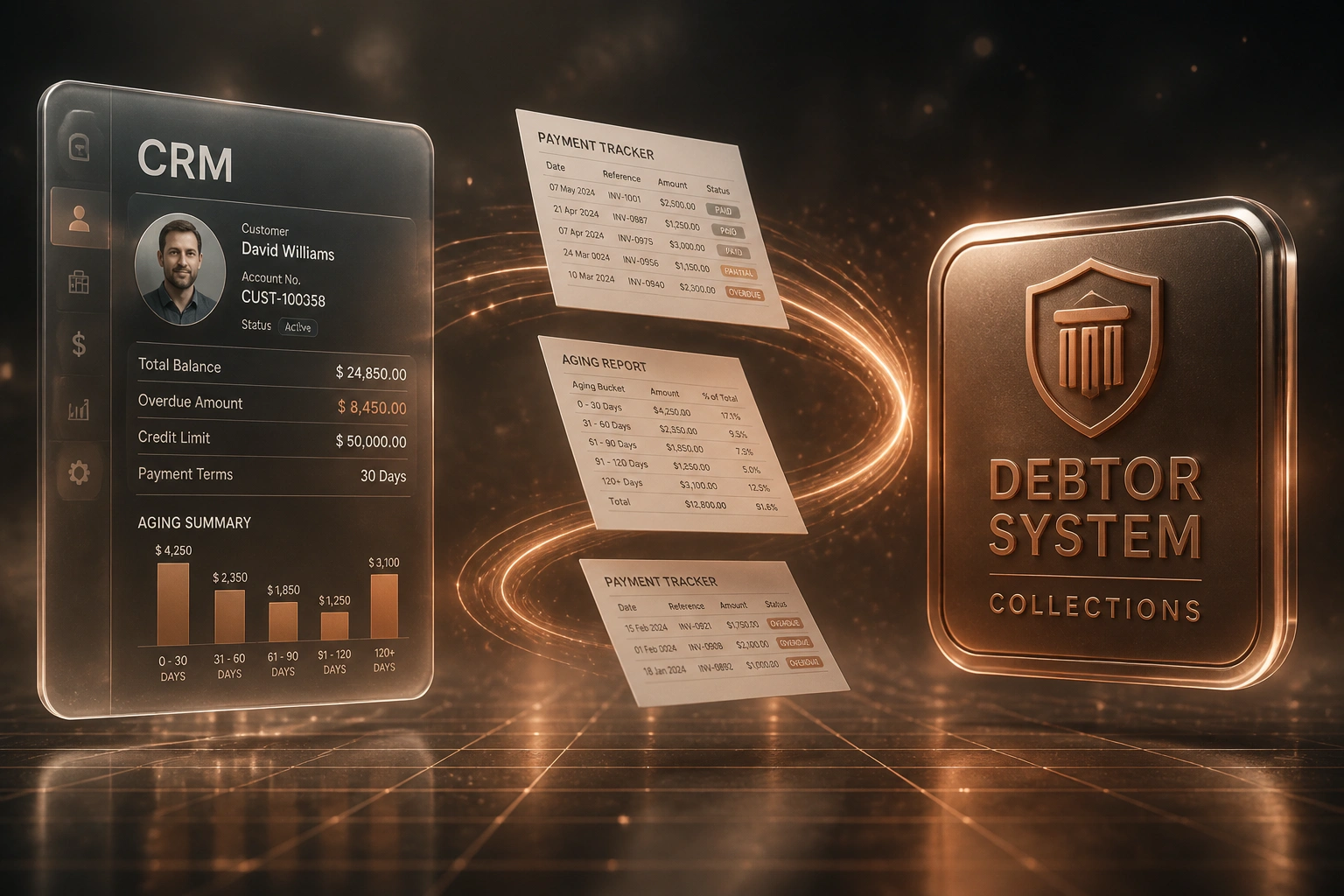
Invoices sync from your accounting system into a live debtor book with aging buckets
Chase Runs Automatically
Pre-due and overdue sequences fire by email, WhatsApp, or SMS with the right tone and timing
Status Stays Current
Promises to pay, disputes, and part-payments log against each account so nothing gets lost
You Only Handle Exceptions
The dashboard escalates true problem accounts. Routine chasing no longer needs the MD
A Lightweight Debtor Management System, Not Another Spreadsheet
Live Debtor Dashboard
One screen shows who owes what, how old each balance is, and which accounts need action today. No more Sunday-night spreadsheet rebuilds.
Automated Chase Sequences
Friendly pre-due reminders, overdue emails, WhatsApp, and SMS with pay links fire on schedule so chasing happens even when you are with clients.
Status & Activity Log
Every chase, promise-to-pay, dispute, and payment is logged against the account. Your team always knows what happened last and what is next.
Aging & Escalation Rules
Accounts move through 30 / 60 / 90-day buckets with automatic escalation to you, your bookkeeper, or a collections partner when thresholds hit.
Accounting Sync
Balances pull from Xero, Sage, or QuickBooks so the dashboard matches the ledger. Payments write status back without re-keying.
Cash-Flow Visibility
See expected receipts, overdue exposure, and concentration risk by customer before payroll week, not after the bank balance drops.
Systems We've Connected for SME Payment Tracking
From 6 Hours/Week Chasing to 45 Minutes Reviewing
How a 14-person Gauteng services firm cut debtor days by 27 and freed the MD from being the collections department.
The Spreadsheet Process
- MD updated an Excel debtor book every Sunday evening
- Chase emails went out only when someone remembered
- Nobody could see who was chased last without opening email threads
- Average debtor days sat at 68 on 30-day terms
- Roughly R1.9 million sat outstanding at any given time
The Debtor System
- Live dashboard shows aging, last chase, and next action per account
- Automated sequences handle routine reminders with pay links
- Promises to pay and disputes log against each debtor
- Debtor days fell to 41 within two quarters
- MD reviews exceptions for 45 minutes on Monday mornings
Before vs After Debtor Management
How It Works
From first conversation to a live debtor management system in 3–6 weeks.
Tell Us Your Debtor Book
How many active debtors, which accounting system you use, and where chasing falls apart today.
Free Scoping Call
30-minute call to map your chase process, aging rules, and the minimum system that removes owner-hours from collections.
Build & Test
We build the dashboard, chase sequences, and status workflow, then run parallel with your spreadsheet for a week to validate accuracy.
Go Live & Monitor
Switch off the Sunday-night spreadsheet. Monitoring and alerts keep overdue accounts visible without a collections team.
Frequently Asked Questions
Do we need a dedicated collections team for this to work?
No. The system is built for owner-operators and small finance functions who cannot justify a collections hire. It surfaces who owes what, runs the chase on schedule, and only escalates accounts that need a human conversation.
How long does a debtor management system take to build?
A focused SME build typically takes 3–6 weeks from scoping to go-live. Simple dashboard-plus-reminder setups can be live in about three weeks. Broader builds with accounting sync, escalation rules, and WhatsApp or SMS chasing take closer to 5–6 weeks.
Will this replace our accounting software?
No. Xero, Sage, or QuickBooks remains the ledger of record. The debtor system sits on top for tracking, chase, and status so you stop managing collections in spreadsheets and email threads.
What if clients prefer WhatsApp or SMS over email?
We wire chase sequences across email, WhatsApp, and SMS with payment links where useful. Tone and timing stay professional so relationships stay intact while overdue balances get attention.
How do you handle disputes and promises to pay?
Disputed invoices and promise-to-pay dates are logged on the account with follow-up tasks. The dashboard keeps those accounts visible instead of letting them disappear into an inbox.
How much does a debtor management system cost?
Lightweight SME builds typically start from around R45,000. Broader systems with accounting sync, multi-channel chase, and escalation rules usually range from R60,000 to R120,000. Most clients with a meaningful overdue book see payback within 3–5 months through faster collections and recovered owner time.
Stop Being Your Own Collections Team
If your overdue book still lives in a spreadsheet and your evenings disappear into chase emails, you are paying for a problem a lightweight system already solves.
Tell us how many active debtors you have, which accounting system you use, and where payment tracking breaks down. We will show you what a practical debtor management build looks like for your SME.