Event-Based Marketing Triggers: Automate Timely Customer Touchpoints
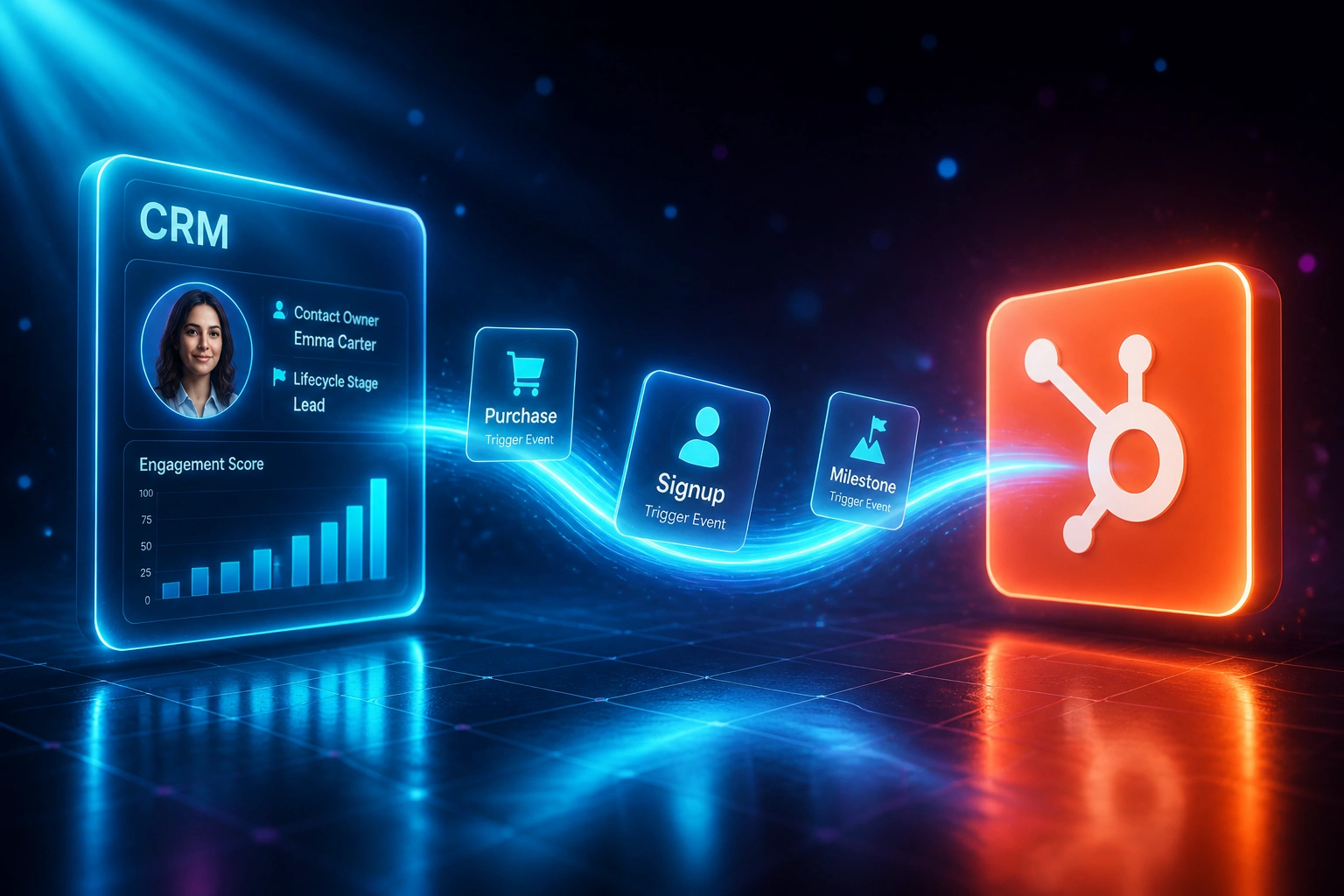
Your campaigns still go out on a schedule while customers purchase, sign up, and hit milestones in real time. Event-based marketing triggers and behavioural triggers convert and retain better than blast calendars because they fire on real intent, not the next send slot.
We wire CRM, commerce, and product events into timed email and WhatsApp messages without a developer on every campaign.
Sound Familiar?
These are the exact issues growth and marketing leads faced before event automation:
- Campaigns go out on a fixed calendar while purchase, signup, and product-usage moments sit unanswered for hours or days
- Welcome and post-purchase messages wait for the next batch send, so intent cools before the email lands
- Marketing rebuilds one-off segments and Zapier-style patches every time a new behavioural trigger is needed
- CRM, commerce, and product events never reach the ESP or WhatsApp in real time, so automated touchpoints stay incomplete
- Sales and CX cannot see which triggers fired, so follow-ups collide or silence customers who already acted
WhatsApp moved to per-message pricing on 1 July 2025, and marketing templates are billed on every delivery. Blind blast volume on WhatsApp now burns budget; event-based marketing triggers that fire only on real intent protect both conversion and spend.
What Event Automation Actually Does
Customer acts → trigger fires → timed message sends → CRM updates. No waiting for the next campaign calendar.
Event Fires
Purchase, signup, milestone, or behavioural signal lands in CRM, commerce, or product analytics
Trigger Routes
Rules pick channel, delay, and template; suppression stops overlapping blasts
Message Sends
Email, WhatsApp, or SMS lands while intent is still hot
CRM Writes Back
Engagement and conversion sync so sales and CX see what fired
Everything You Need for Reliable Automated Touchpoints
Purchase & Order Triggers
Order placed, shipped, or delivered fires a timed confirmation, education, or cross-sell message within minutes, not on next week's blast.
Signup & Activation Triggers
Form fills, trial starts, and first-login events enrol prospects into welcome and activation sequences while intent is still hot.
Milestone & Behaviour Signals
Usage thresholds, plan upgrades, anniversary dates, and inactivity windows fire the right message without a marketer watching a dashboard.
CRM + ESP Orchestration
Product, commerce, and CRM events write into HubSpot, Klaviyo, Customer.io, or WhatsApp so every channel shares the same trigger state.
Timing & Suppression Rules
Quiet hours, frequency caps, and pause-on-purchase logic stop blast calendars from overlapping behavioural triggers.
Trigger Performance Reporting
Open, click, conversion, and revenue per event type so marketing can prove behavioural triggers beat batch sends.
Platforms We've Wired for Event Triggers
From 72-Hour Delays to Under 5 Minutes
How a South African ecommerce brand replaced batch follow-ups with event-based marketing triggers and lifted triggered revenue 4.2×.
The Calendar Process
- Welcome emails waited for the next weekly batch, often 2–3 days after signup
- Post-purchase education and review asks went out on a fixed schedule, not delivery
- Marketing spent 9 hours a week hand-building segments for one-off behavioural sends
- Abandoned carts got a single reminder the next morning, if anyone remembered
- CRM and Shopify events never reached Klaviyo in real time
The Trigger Process
- Signup, purchase, shipment, and milestone events fire timed messages in under 5 minutes
- Cart recovery sends at 1 hour and 24 hours with suppression if the order completes
- Marketing reviews performance for about 1.5 hours a week instead of rebuilding segments
- WhatsApp utility templates cover order status; marketing templates only fire on intent
- Engagement writes back to HubSpot so CX and sales see what each customer received
Before vs After Event-Based Marketing Triggers
How It Works
From first conversation to live behavioural triggers in 2–4 weeks.
Map Your Events
Which purchase, signup, milestone, and behavioural signals already exist in CRM, commerce, and product analytics.
Design the Trigger Map
We prioritise high-intent events, set delays and channels, and define suppression so blasts never collide with triggers.
Wire CRM to ESP
We connect event sources to HubSpot, Klaviyo, Customer.io, or WhatsApp, then test against a holdout before go-live.
Launch & Optimise
Go live with monitoring on time-to-send, conversion by trigger, and revenue recovered from timed automated touchpoints.
Frequently Asked Questions
What are event-based marketing triggers?
Event-based marketing triggers (also called behavioural triggers) are automated messages that fire when a customer does something: purchase, signup, product usage, a milestone, or another behavioural signal. Unlike a blast calendar, the send is timed to real intent, which is why triggered emails convert far higher than batch campaigns.
How is this different from drip or retention email sequences?
Drip and retention sequences usually run on calendar delays after enrolment (day 1, day 3, day 7). Event-based triggers fire from a live action: cart abandoned, order placed, trial started, feature used, or inactivity crossed a threshold. We build both, but this engagement is specifically about wiring product, commerce, and CRM events into immediate timed messages.
Which platforms can you connect for behavioural triggers?
We have built event-based marketing triggers across HubSpot, Klaviyo, Customer.io, ActiveCampaign, Braze, WhatsApp Business API, and custom CRMs. The pattern is the same: capture the event once, then orchestrate email, WhatsApp, or SMS without a developer on every campaign.
How fast should a trigger fire after the event?
It depends on the event. Order and shipping confirmations should go instantly. Welcome messages work best within minutes of signup. Abandoned-cart recovery often peaks around the first hour. Industry benchmarks show the same cart message sent after 1 hour versus 24 hours can produce roughly a 3× difference in recovered revenue, so delay is not a minor setting.
Do we still need our weekly campaign calendar?
Yes, for promotions and brand storytelling. The point is not to kill blasts; it is to stop relying on them for moments that already have clear intent. Automated emails are a small share of send volume yet drive a large share of email revenue because they arrive when the customer is ready.
How much does an event-trigger integration cost?
Scoped event-trigger builds typically range from R25,000 to R60,000 depending on the number of events, channels (email, WhatsApp, SMS), and CRM complexity. Simpler one-way purchase and signup triggers can start nearer R15,000–R25,000. Most teams recover the build cost within a few months once high-intent triggers stop waiting for the next batch send.
Stop Missing the Moment Customers Act
If your best messages still wait for a blast calendar while purchase, signup, and milestone moments go cold, you are leaving conversion on the table.
Tell us which CRM and ESP you use, which events already exist in commerce or product, and which follow-ups hurt most when they are late. We will show you how event-based marketing triggers would fire for your stack.