Event-Driven Architecture for Integrations: React in Seconds, Not Batch Hours
If CRM, accounting, warehouse, and ecommerce still wait on overnight syncs, every won deal and paid invoice sits idle until the next batch. Event-driven architecture and pub-sub fan-out let those systems react the moment something changes, without point-to-point spaghetti.
We design and build the event fabric that makes the cascade automatic.
Sound Familiar?
These are the exact issues our clients faced before event-driven integration:
- A deal closes Friday afternoon, but accounting only sees it after the overnight batch, so the invoice goes out Monday
- Warehouse stock levels lag ecommerce by hours, so popular SKUs oversell while other channels still show available
- CRM, Xero, WMS, and Shopify each wait on the next scheduled sync instead of reacting when something actually changes
- Ops spends mornings reconciling yesterday's cascade of stale records before anyone can trust the numbers
- Sales, finance, and fulfilment chase each other for status because no system publishes events the others can subscribe to
Batch windows grow as volume grows. Order sync that takes 4 to 24 hours on overnight jobs can drop under 30 seconds with real-time event paths (easy.bi). Every extra hour of lag is another hour of stalled invoices, wrong stock, and teams chasing each other.
What Event-Driven Architecture Actually Does
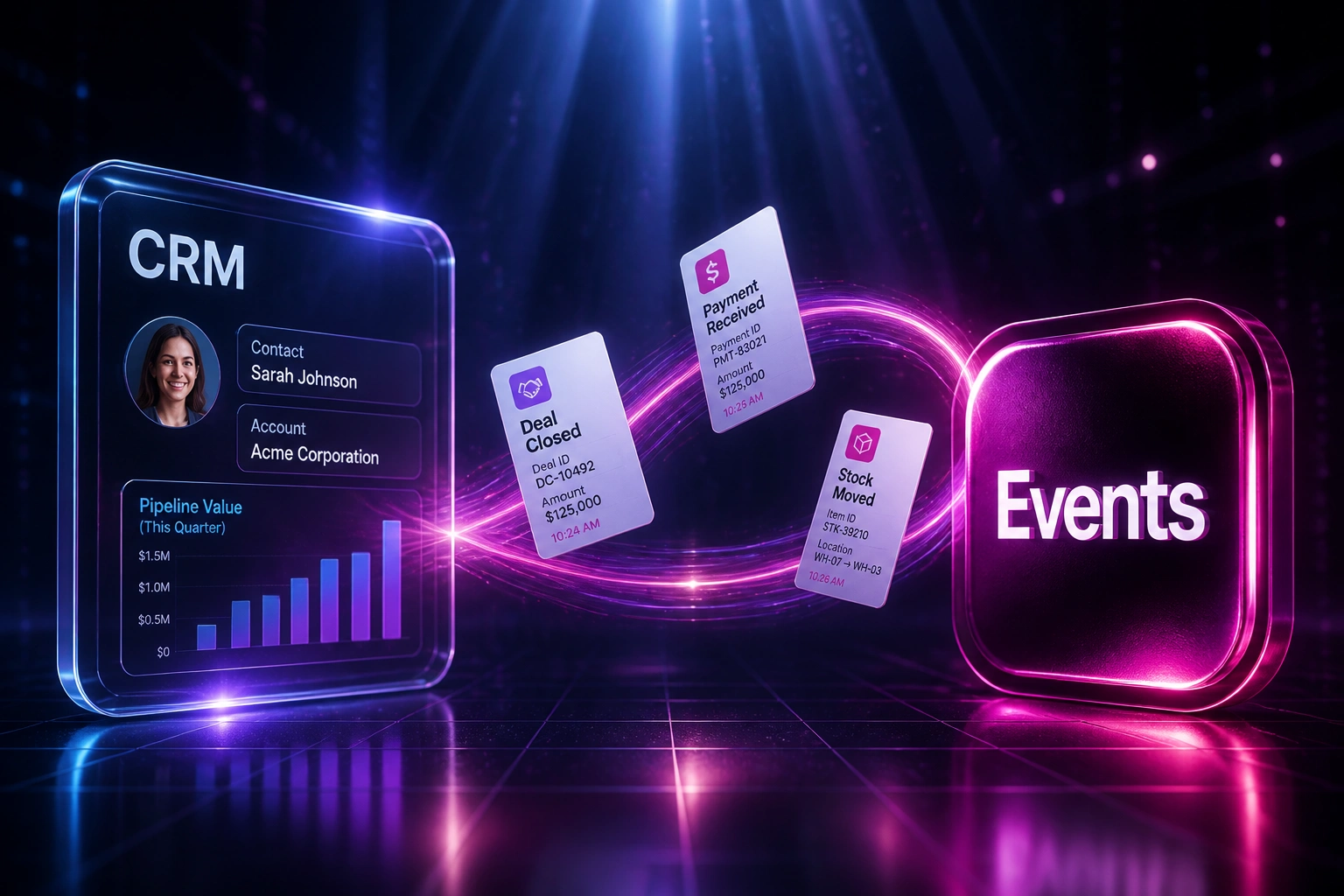
Business event fires → pub-sub fan-out → every subscriber reacts → cash and stock stay current. No overnight wait.
Event Published
Deal won, invoice paid, or stock moved publishes a named domain event instantly
Pub-Sub Fan-Out
Accounting, warehouse, ecommerce, and CRM subscribe and receive the same event in parallel
Systems React
Invoice drafts, pick lists, and channel stock update within seconds of the trigger
Handoffs Unblocked
Order-to-cash and fulfilment move without waiting on the next overnight sync
Everything You Need for Event-Driven Reactivity
Domain Event Publishing
A won deal, paid invoice, or stock move becomes a named business event the moment it happens. Downstream systems subscribe instead of polling on a schedule.
Pub-Sub Fan-Out
One event reaches accounting, warehouse, ecommerce, and CRM in parallel. No brittle point-to-point spaghetti, and no waiting for the next nightly job.
Near Real-Time Cascades
Order-to-invoice, payment-to-fulfil, and stock-to-channel updates land in seconds, not batch hours. Cash and fulfilment move with the business.
Loose Coupling by Design
Publishers do not need to know every consumer. Add a new subscriber without rewriting the CRM, ERP, or ecommerce core.
Cross-System Coverage
One event fabric covers HubSpot, Pipedrive, Salesforce, Xero, Sage, Shopify, Takealot, and warehouse systems with consistent routing and delivery.
Observability and Replay
Ops sees which events fired, which consumers processed them, and can replay a failed handoff without re-entering data by hand.
Event Platforms We Design Around
From 14-Hour Overnight Lag to Under 45 Seconds
How a Johannesburg distributor replaced nightly CRM, accounting, and warehouse syncs with event-driven fan-out and accelerated order-to-invoice.
The Batch Estate
- CRM deals, Xero invoices, WMS stock, and Shopify levels all waited on overnight jobs
- Friday wins sat until Monday invoicing; warehouse picks lagged another cycle
- Ops spent ~14 hours a week chasing stale stock and reconciling delayed handoffs
- Popular SKUs oversold on one channel while another still showed available
- Finance and sales argued from different truths until the morning sync finished
The Event Fabric
- Deal won, payment received, and stock moved publish as domain events instantly
- Accounting, warehouse, and ecommerce subscribe and react in parallel
- Invoice drafts and pick lists appear within seconds of the business event
- Channel stock stays aligned; overselling incidents dropped sharply
- Ops reviews exceptions on a dashboard instead of rebuilding yesterday's truth
Before vs After Event-Driven Architecture
How It Works
From first conversation to a live event fabric in 3 to 10 weeks, depending on scope.
Map Your Batch Gaps
Which handoffs still wait on overnight syncs, where stale stock or late invoices hurt cash and customers most.
Free Scoping Call
30-minute call to name the domain events, choose publishers and subscribers, and design the first fan-out path.
Build and Parallel-Run
We publish events alongside your existing batches, prove latency and accuracy, then switch consumers over path by path.
Go Live and Monitor
Nightly jobs retire for those flows. Event dashboards and alerts keep every cascade visible.
Frequently Asked Questions
How long does an event-driven integration architecture take to set up?
A focused first path, such as deal-won to invoice and warehouse, typically takes 3 to 5 weeks from scoping to go-live. An estate-wide event fabric covering CRM, accounting, ecommerce, and warehouse usually takes 6 to 10 weeks depending on how many overnight syncs you replace.
How is event-driven architecture different from our nightly batch syncs?
Batch syncs gather changes on a schedule and push them hours later. Event-driven architecture publishes a business event the moment something happens, and every subscribed system reacts in near real time. The result is faster order-to-invoice, fresher stock, and fewer stalled handoffs between teams.
How is this different from a message queue?
Queues excel at buffering load and protecting slow destinations when traffic spikes. Event-driven pub-sub specialises in reactivity: one domain event fans out to many systems that need to act now. Many estates use both: events for fan-out, queues where a destination needs paced delivery.
Will this disrupt our CRM, accounting, or warehouse workflows?
No. Staff keep using the same tools. We introduce event publishing and subscribers behind the scenes, run parallel with your batches, and only retire overnight jobs once latency and accuracy are proven.
Which platforms can publish or subscribe to these events?
We design around Google Pub/Sub, AWS EventBridge, Azure Event Grid, Kafka, RabbitMQ, or webhook-based meshes that fit your cloud. On the business side we connect HubSpot, Pipedrive, Salesforce, Xero, Sage, Shopify, Takealot, and warehouse systems. The commercial outcome is the same: systems that react in seconds, not batch hours.
How much does event-driven integration architecture cost?
Focused single-path event fabrics start from around R40,000. Estate-wide designs covering CRM, accounting, ecommerce, and warehouse typically range from R75,000 to R160,000. Teams losing even one overnight cycle of cash or stock accuracy per week usually see ROI within two to three months.
Stop Waiting on Batch Hours for Cash and Stock
If a won deal still waits until tomorrow's job to become an invoice, or stock still lies across channels overnight, you are paying for delayed reactivity every week.
Tell us which handoffs still run on nightly syncs, where stale stock or late invoices hurt most, and which systems must react together. We will show you how event-driven architecture and pub-sub would cascade those changes in seconds for your estate.