First Response Time Optimisation: Reply Faster, Keep Customers
When the first reply takes hours, customers assume they have been ignored. Slow first response time drives follow-ups, second-channel pileups, CSAT drops, and quiet churn long before the issue is even solved.
We build the auto-replies, routing, and agent alerts that cut wait time dramatically.
Sound Familiar?
These are the exact issues support and CS leaders described before we optimised response speed:
- Customers wait hours for a first reply while the ticket sits unsorted in a shared inbox
- No auto-acknowledgement means silence feels like neglect, even when an agent will reply later
- VIP and churn-risk accounts land in the same pile as low-priority questions
- Agents only notice ageing tickets when a customer follows up on a second channel
- Support leads discover slow first response times in a weekly report, long after CSAT has already dropped
90% of customers rate an immediate response as essential, and 60% define immediate as 10 minutes or less (HubSpot). With an industry average nearer 12 hours, every silent hour is a retention risk your competitors are closing.
What First Response Time Optimisation Actually Does
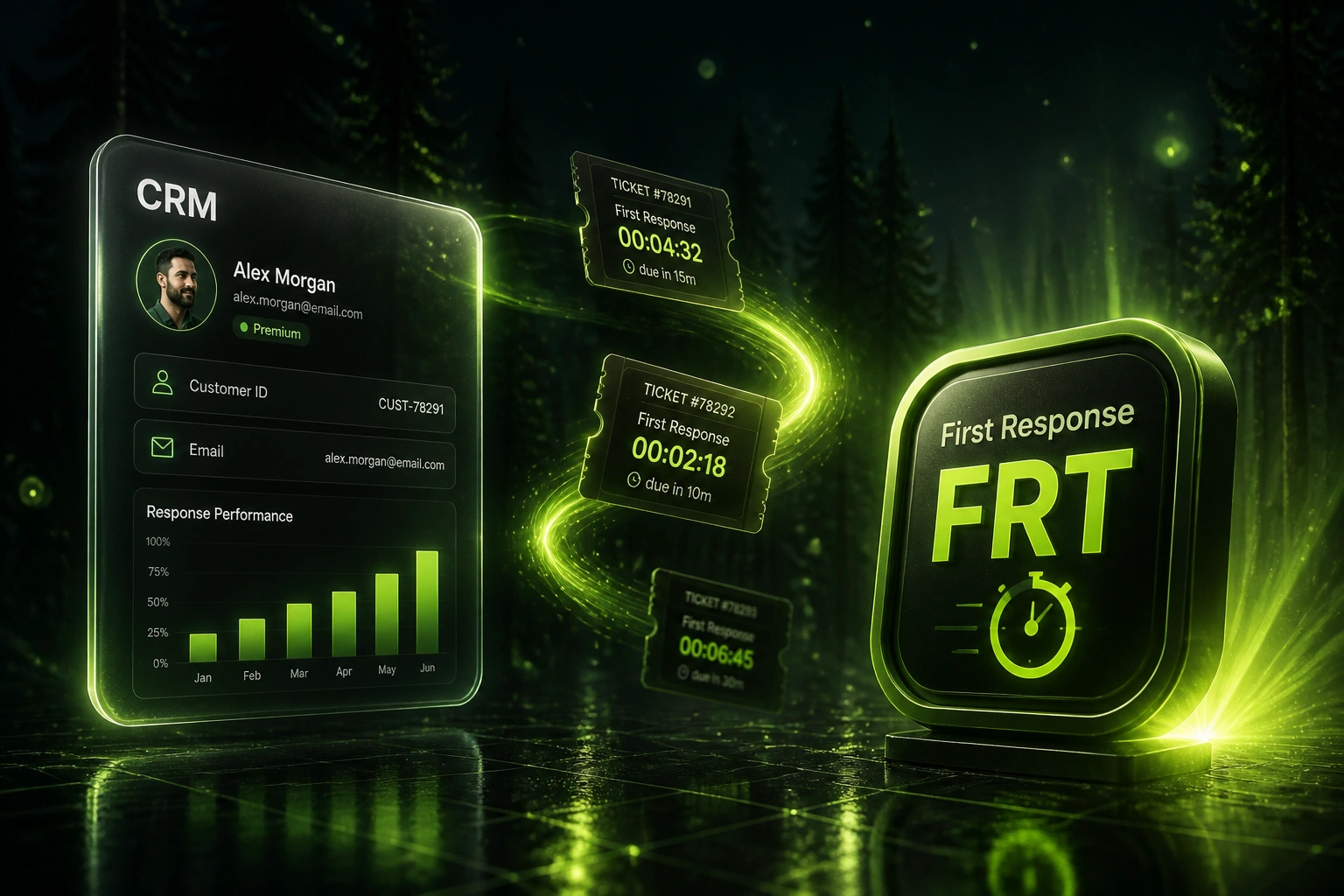
Ticket lands → customer is acknowledged → right agent is alerted → median FRT collapses. No more hoping someone notices the queue.
Ticket Arrives
Customer emails, chats, or messages. The clock starts the moment the request hits your helpdesk.
Auto-Ack + Route
Branded acknowledgement goes out in seconds. Priority and VIP rules send the ticket to the right queue.
Agent Alerted
Assignee and queue owner get a real-time nudge before the first-response target is at risk.
Fast First Reply
Human response lands in minutes, not hours. CSAT holds, and duplicate chase tickets stop stacking up.
Everything You Need to Optimise Response Speed
Instant Auto-Acknowledgements
Every new ticket gets a branded confirmation within seconds: received, expected window, and ticket reference. Silence never becomes the first impression.
Priority Routing for Speed
Severity, account tier, and channel push urgent tickets to the right queue first so high-value customers are not waiting behind password resets.
Real-Time Agent Alerts
Assignees and queue owners get pinged when a ticket approaches your first-response target. Action happens before the customer feels ignored.
FRT Clocks by Channel
Email, chat, and messaging each get the right first-response target. Business-hours rules stop overnight tickets from inventing false breaches.
CRM Context on Every Ticket
ARR tier, renewal date, and open opportunities pull in from HubSpot or Salesforce so routing and alerts reflect revenue risk, not just queue order.
Live Response Speed Dashboards
Heads of support see median first response time, acknowledgement coverage, and ageing tickets in real time. No end-of-week spreadsheet rebuild.
Helpdesks We've Optimised for First Response Time
From 9 Hours to 42 Minutes Median FRT
How a 14-person SaaS support team cut first response time, lifted CSAT 18 points, and stopped the Monday pile of "just checking in" tickets.
The Slow First Reply
- Median email first response sat at 9 hours; VIP tickets often waited overnight
- No auto-acknowledgement, so 90% of customers heard nothing until a human typed
- Agents spotted ageing tickets only when customers chased on WhatsApp or phone
- Roughly 40% of frustrated contacts opened a second channel within an hour
- CSAT hovered at 71%, and renewals cited "we never hear back" as a risk theme
The Optimised Workflow
- Every ticket gets a branded auto-ack within 30 seconds of arrival
- Priority and VIP routing put high-risk accounts at the front of the queue
- Agent alerts fire at 50% and 80% of the first-response target
- Median human first response dropped to 42 minutes during business hours
- Duplicate chase tickets fell sharply; CSAT rose to 89%
Before vs After First Response Time Optimisation
How It Works
From first conversation to live FRT workflow in 2–4 weeks.
Map Your FRT Gaps
Which channels, current median first response time, VIP rules, and where tickets go quiet before anyone replies.
Free Scoping Call
30-minute call with your support or CS lead to design auto-replies, priority routing, and alert thresholds against real volume.
Build & Pilot
We wire the workflow into your helpdesk, pilot on one queue, and tune acknowledgement copy and alert timing with your team.
Go Live & Monitor
Roll out across channels. Dashboards track median FRT, acknowledgement rate, and hours recovered from chase-ups.
Frequently Asked Questions
How is first response time optimisation different from full SLA management?
SLA management covers the whole clock: first response, resolution, breach ladders, and contract credits. This engagement focuses on response speed at the front door: auto-acknowledgements, priority routing for urgency, and agent alerts that cut median first response time. If you later need full resolution SLAs and escalation ladders, we can extend from the same foundation.
Do auto-replies count toward Zendesk or Freshdesk first response time?
Most helpdesks, including Zendesk, exclude automated acknowledgements from official first reply time. Auto-replies still matter because customers judge the wait from the moment they hit send. We set acknowledgements to calm the customer immediately, then use routing and agent alerts to shrink the human first-response clock that your reports actually measure.
Which helpdesks can you optimise first response time on?
We have built FRT workflows across Zendesk, Freshdesk, Intercom, HubSpot Service Hub, Salesforce Service Cloud, Jira Service Management, and custom ticketing stacks. If your team already logs customer requests somewhere, we can usually add acknowledgements, priority routing, and ageing alerts on that queue.
Will this disrupt how agents already work?
No. Agents keep the same helpdesk. We add instant acknowledgements, smarter first-touch assignment, and alerts when tickets age toward your target. Most rollouts start on one channel or VIP queue so leaders can prove the FRT lift before expanding.
How long does first response time optimisation take?
Most builds take 2–4 weeks from scoping to go-live: channel mapping, acknowledgement templates, priority rules, alert thresholds, parallel testing, and cutover. A focused email-plus-VIP setup on a clean Zendesk or Freshdesk instance can be live in about two weeks.
How much does first response time optimisation cost?
Focused auto-reply and alert setups on one helpdesk start from around R15,000. Multi-channel FRT workflows with priority routing, CRM context, and live dashboards typically range from R25,000 to R55,000. Most mid-size support teams recover that cost within one to two quarters through fewer duplicate contacts, higher CSAT, and lower churn pressure on renewals.
Stop Losing Customers to Slow First Replies
If your median first response time is measured in hours, you are training customers to chase you, rate you lower, and look at alternatives at renewal.
Tell us which helpdesk you run, what your current FRT looks like, and which accounts cannot wait. We will show you how auto-acknowledgements, priority routing, and agent alerts would work in your stack.