Fleet Management: Track Vehicles, Drivers and Costs in One System
Your bakkies ping a tracker portal. Drivers get assigned on WhatsApp. Service due dates live in a spreadsheet. Fuel spend only makes sense when the card statement arrives. Nobody sees location, driver, service due, and cost together, so fuel waste and overdue services stay invisible until they hurt.
We build the fleet management system that puts the whole picture in one place.
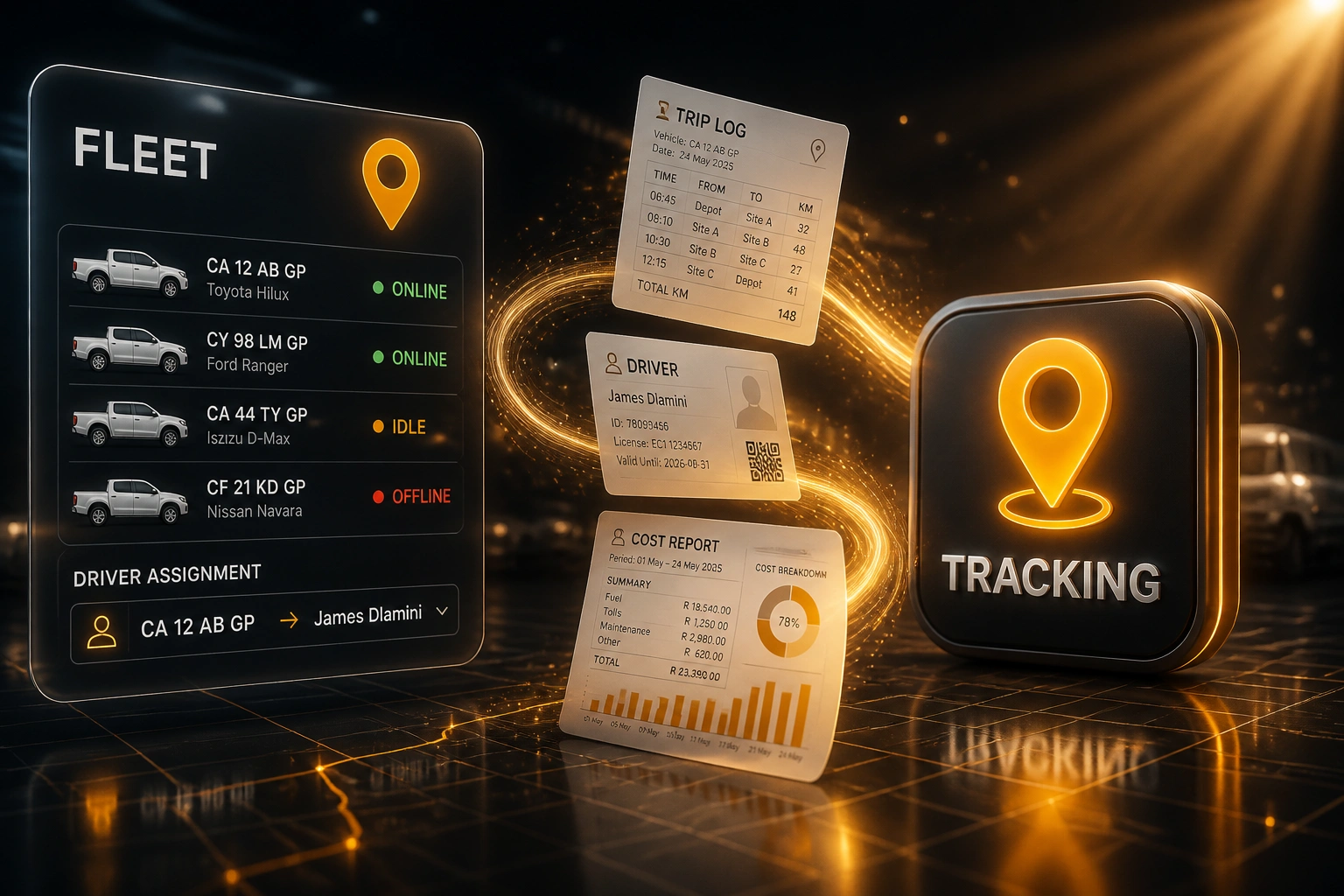
Sound Familiar?
These are the exact issues our clients faced before a unified fleet system:
- Vehicle locations live in a tracker portal, while drivers are assigned on WhatsApp and services sit in a spreadsheet nobody trusts
- Fuel card statements arrive weeks later, so waste, idle burn, and unexplained top-ups are invisible until the bill hits
- Service intervals slip because kilometre readings and due dates never meet in one place, risking warranty and roadside failures
- When an AARTO notice arrives, finding who drove that bakkie on that day takes hours of chat archaeology
- Ops cannot answer "where is it, who is driving, when is it due, and what does it cost?" without opening four tools
AARTO Phase 2 went live on 1 July 2026 in 62 municipalities. Company vehicles get the notice first. You have 32 days to nominate the actual driver. Miss it and the business stays liable, often at three times the ordinary fine, with demerit points still queued for a later phase. Driver accountability is no longer optional paperwork.
What the Fleet System Actually Does
Vehicle moves → driver logged → service watched → cost visible. One system, not four tools.
Vehicle Is Assigned
Ops assigns a bakkie or van to a named driver with licence details on record
Trips and Fuel Log
GPS feed and fuel card data land against that vehicle and driver automatically
Services Stay On Time
Kilometres and due dates trigger workshop alerts before intervals slip
Costs Are Measurable
Fuel, maintenance, and rand-per-km sit on one dashboard your ops team trusts
Everything You Need for Driver Management and Fleet Costs
Live Vehicle Tracking
Every bakkie, LDV, and van shows on one map with status, last ping, and trip history. No separate tracker login for each question.
Driver Assignment Ledger
Who had which vehicle, when, with licence and PrDP checks on file. Nominations for AARTO notices take minutes, not a WhatsApp dig.
Service Interval Control
Kilometres, due dates, and workshop bookings in one queue. Alerts fire before intervals slip, so warranties and uptime stay intact.
Fuel and Cost Tracking
Fuel cards, litres, rand per kilometre, and cost-per-vehicle roll up automatically. Idle burn and outliers surface before month-end.
Exception Alerts
Speeding, after-hours use, geofence exits, overdue services, and fuel variance push to the fleet manager the same day they happen.
Ops Cost Dashboard
One view of fleet costs: fuel, maintenance, tolls, and downtime. Built for South African ops directors, not telematics technicians.
Data Sources We Commonly Connect
From Fragmented Tracking to One Fleet View
How a Gauteng distribution company with 35 bakkies and LDVs cut fuel waste, cleared overdue services, and made driver accountability measurable.
The Fragmented Process
- Locations checked in a separate tracker portal; drivers assigned on WhatsApp groups
- Service due dates lived in an Excel sheet that was two weeks behind odometer reality
- Fuel card PDFs reconciled monthly, long after idle burn and detours had already spent the money
- Twelve vehicles past service interval; two lost a plan-covered visit at roughly R2,000 each
- AARTO notices meant digging through chats to guess who held the keys that day
The Unified Fleet System
- One ops dashboard: map, current driver, service due, and rand-per-km per vehicle
- Existing GPS feed and fuel card export connected; no new tracker hardware required
- Service alerts fire 1,000 km before due; workshop queue cleared the backlog in six weeks
- Driver assignment ledger answers AARTO nominations in minutes with dated records
- Idle and after-hours exceptions go to the fleet manager the same day
Before vs After Vehicle Tracking Unification
How It Works
From first conversation to a live fleet platform in 4–8 weeks.
Map Your Fleet Today
How many vehicles, which trackers and fuel cards you already pay for, and where location, drivers, services, and costs currently live.
Free Scoping Call
30-minute call to design the single system: modules you need first, data sources to connect, and the reporting your ops director actually wants.
Build & Parallel Run
We build the fleet platform, connect your trackers and fuel data, and run alongside spreadsheets for a fortnight so numbers prove out.
Go Live & Coach
Switch off the WhatsApp-and-Excel loop. We train dispatch and workshop, then monitor alerts until the new rhythm sticks.
Frequently Asked Questions
Is this the same as a GPS tracker or field-service dispatch tool?
No. Trackers and live GPS dispatch solve location or job assignment. A fleet management system also covers driver assignment, service intervals, fuel usage, and cost per vehicle in one place. We often connect the tracker you already pay for, rather than replacing it.
How long does a custom fleet management platform take to build?
Most engagements take 4–8 weeks from scoping to go-live. A focused first release (location plus driver assignment plus service alerts) can be live in about four weeks. Full cost dashboards and fuel-card reconciliation usually land in the second phase.
Can you work with the tracker and fuel cards we already have?
Yes. We specialise in unifying what you already own: Cartrack, Tracker, MiX, Ctrack, Netstar, or a generic GPS feed, plus common South African fuel card exports. The goal is one ops view, not another portal to log into.
Will this help with AARTO driver nominations?
Yes. Phase 2 of AARTO (live from 1 July 2026 in 62 municipalities) gives operators 32 days to nominate the actual driver. Miss that window and the company stays liable, often at three times the ordinary fine. A dated driver assignment ledger turns that scramble into a look-up.
Will this disrupt drivers and workshop staff?
No. Drivers keep using vehicles the same way. Dispatch and workshop get clearer queues and alerts. We run parallel with your current process before switching anything off, and we train the people who own the fleet day to day.
How much does a fleet management system cost?
Scoped fleet platforms typically start around R60,000 for a focused first release and land between R90,000 and R180,000 for full tracking, driver, service, and cost modules. Against fuel waste of 10–20% and avoided overdue services, most mid-size fleets see payback inside 2–4 months.
Stop Running Fleet Ops Across Four Tools
If location, drivers, service due, and costs still live in separate places, you are paying for fuel waste and overdue services you cannot see in time to stop them.
Tell us how many bakkies, LDVs, or vans you run, which tracker and fuel cards you already use, and what hurts most on a Friday afternoon. We will show you what a single fleet management system would look like for your operation.