Build an HR Self-Service Portal: Cut the Ticket Flood
Your People Ops team is drowning in Slack and email requests for payslips, leave balances, and policy PDFs. Hybrid staff cannot walk over to HR, so every routine question becomes another thread that steals the day.
We build the branded employee portal that lets staff find answers themselves.
Sound Familiar?
These are the exact issues HR directors and People Ops leads bring us before we build HR automation:
- Slack and email flood HR every payday with "Where is my payslip?" requests
- Leave balance questions interrupt strategic work several times a day
- Policy PDFs live in shared drives nobody can find, so HR re-sends them weekly
- Personal detail updates (banking, address, emergency contact) stall until someone in HR opens a ticket
- Hybrid and remote staff cannot walk over to HR, so every routine query becomes a message thread
Hybrid work and POPIA access rights raise the stakes. Remote staff expect 24/7 access to their own records, and section 23 of POPIA gives employees a formal right to access personal information held by the employer. Emailing payslips and policy PDFs across chat is no longer a defensible default.
What the Employee Portal Actually Does
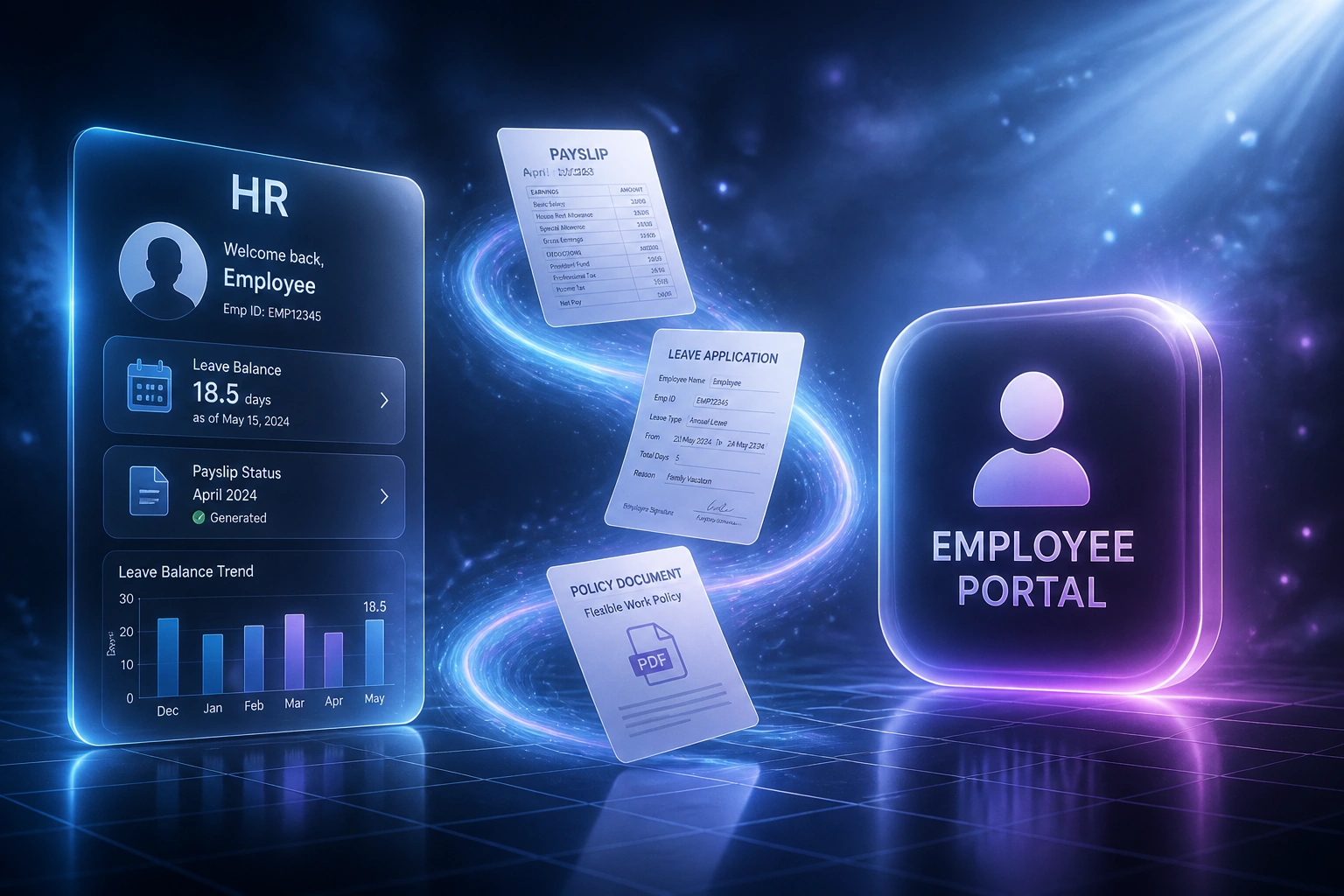
Staff log in → find the answer → HR never opens a ticket. The portal stays synced to payroll and HRIS.
Employee Needs an Answer
Payslip, leave balance, policy clause, or a personal detail update
Portal Serves It Instantly
SSO login opens the branded employee portal on mobile or desktop
Data Syncs from Payroll
Balances and payslips pull from PaySpace, Sage, SimplePay, or your HRIS
HR Keeps Strategic Work
Routine volume drops. Complex cases get the attention they deserve
Everything You Need for Reliable HR Self-Service
Payslip & Tax Document Access
Employees download current and historic payslips and IRP5 packs themselves. Pay stub requests stop landing in the HR inbox.
Live Leave Balances & Requests
Balances sync from payroll or HRIS. Staff check remaining days, submit leave, and track approval without chasing HR.
Policy & Handbook Library
Versioned policy documents sit in a searchable library. Hybrid teams find answers at any hour without pinging People Ops.
Personal Details Updates
Address, banking, and emergency contacts update through the portal and write back to payroll or HRIS with validation.
Branded Employee Portal
A custom-built employee portal on your domain, with SSO and role-based access, not a generic vendor skin.
Payroll & HRIS Sync
Payslips, leave, and profile fields stay aligned with PaySpace, Sage People, SimplePay, BambooHR, or your HRIS.
Systems We've Connected to Employee Portals
From 16 Hours/Week to 3 Hours/Week
How a 180-person professional services firm cut routine HR tickets by 72% with a branded employee portal tied to PaySpace.
The Manual Process
- HR answered payslip and leave questions across Slack, email, and WhatsApp all week
- Policy PDFs were re-sent whenever someone could not find the shared drive folder
- Banking and address changes sat in a spreadsheet until payroll cut-off
- Payday weeks spiked to 25+ routine messages a day
- Hybrid staff waited hours for answers they should have seen instantly
The Self-Service Process
- Payslips and IRP5 packs download from the portal the moment payroll publishes
- Leave balances and requests sync from PaySpace without HR intermediating
- Policy library answers handbook questions without a ticket
- Personal detail updates validate and write back to payroll before cut-off
- HR only handles exceptions: disputes, edge cases, and sensitive matters
Before vs After the Employee Portal
How It Works
From first conversation to a live employee portal in 3–5 weeks for a focused build.
Tell Us Your Setup
Which payroll and HRIS you run, what tickets dominate the inbox, and how hybrid staff reach HR today.
Free Scoping Call
30-minute call to map payslip, leave, policy, and profile flows, plus POPIA access controls.
Build & Test
We build the portal, connect payroll and identity, and pilot with a department before company-wide rollout.
Go Live & Monitor
Launch with adoption nudges. HR redirects routine questions to the portal while we watch ticket deflection.
Frequently Asked Questions
How long does an HR self-service portal take to build?
A focused employee portal for payslips, leave balances, and policy documents typically takes 3–5 weeks from scoping to go-live. Broader builds with personal-detail write-back, SSO, and multi-system payroll sync usually land in 5–8 weeks.
Is this different from onboarding document collection?
Yes. Onboarding portals collect ID packs and contracts before day one. An HR self-service portal is the ongoing employee portal for payslips, leave balances, policy lookups, and personal updates after someone is already on the books. Many clients run both.
Which payroll and HRIS systems can you connect?
We commonly connect PaySpace, Sage People, SimplePay, BambooHR, and Sage 300 People, with SSO through Microsoft Entra ID or Google Workspace. If your payroll or HRIS has an API or secure export, we can integrate it.
Will employees actually use it, or will they keep messaging HR?
Adoption follows rollout discipline. Teams that make payslips portal-only, train managers to redirect routine questions, and support mobile access routinely reach 70–85% adoption within 90 days. We build those habits into the launch plan.
How does this help with POPIA?
POPIA gives employees a right to access their own personal information. A controlled employee portal with audit logs, role-based access, and secure document delivery is a cleaner answer than emailing payslips and policy PDFs across Slack and personal inboxes.
How much does an HR self-service portal cost?
Focused portals for payslips, leave, and policies start from around R25,000. Full HR automation builds with SSO, personal-detail write-back, and multi-system sync typically range from R40,000 to R80,000. Most mid-size teams drowning in routine tickets recover that within a quarter against redirected HR hours.
Give Employees Answers Without Opening HR
If your HR team is still hunting payslips and leave balances for people who could help themselves, you are spending strategic capacity on a solved problem.
Tell us which payroll and HRIS you run, which questions dominate the inbox, and how hybrid staff reach People Ops today. We will show you exactly how a branded HR self-service portal would work for your organisation.