KYC Document Verification: Automate ID and Proof of Address Checks
Manual ID and proof-of-address checks are slow, inconsistent, and leak bad documents into the file. Your compliance queue spends minutes reading packs that clear clients should never have waited for.
We automate extraction and validation so clear documents pass in seconds, and weak ones never reach the examiner.
Sound Familiar?
These are the exact issues operations and compliance leads brought us before document verification automation:
- Compliance officers spend 2–5 minutes per ID, then another pass on proof of address, while applications pile up
- Blurry phone photos, glare on Smart IDs, and cropped utility bills still reach the queue and waste examiner time
- Manual ID number checks miss 3–8% of structural errors, and forged utility bills slip through visual review
- Extracted names, ID numbers, and addresses are re-typed into the CRM by hand, creating mismatches at audit time
- Clear clients wait days for a file that automation could pass in seconds, while weak documents clog the same inbox
From July 2025, Home Affairs real-time ID verification costs R10 per check (batch off-peak at R1), after years of R0.15 pricing and failure rates above 50%. Every wasted lookup on a blurry upload now has a hard rand cost, not just a queue delay.
What Document Verification Automation Actually Does
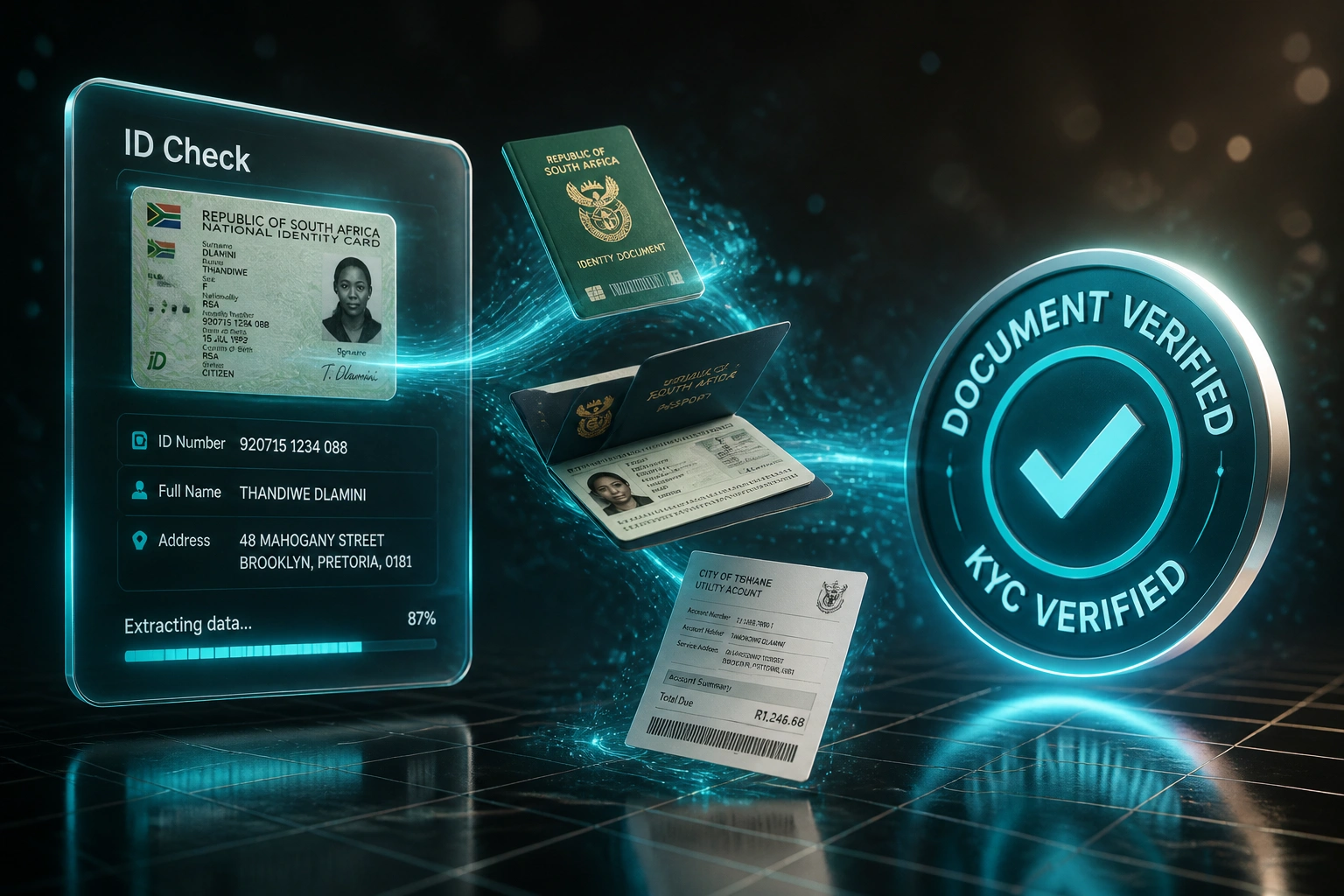
Upload arrives → quality and OCR run → authenticity and DHA checks → clear pass or exception queue. No human reading every pack.
Document Uploaded
Client submits SA ID, passport, or proof of address via portal, WhatsApp, or your existing intake
Quality & OCR
Blur, glare, and crop gates run first; then fields are extracted from readable documents
Authenticity & DHA
Tamper and PoA checks run, then ID particulars are corroborated against Home Affairs or licensed sources
Pass or Exception
Clear packs write verified fields to your CRM; weak or suspect packs land in the compliance queue with evidence
Everything You Need for Reliable KYC Document Verification
OCR Extraction for SA IDs & Passports
Smart ID, green barcoded ID, and passport fields are read automatically: ID number, names, date of birth, and document numbers mapped straight into your case system.
Blur, Glare & Crop Rejection
Image quality checks stop unreadable submissions before they hit compliance. Clients get a clear retake prompt instead of a silent rejection days later.
Proof of Address Authenticity
Utility bills, bank statements, and municipal accounts are checked for template reuse, tampering signals, and address consistency, not just readable text.
DHA & Database Lookups
Extracted ID particulars are corroborated against Home Affairs and licensed data sources so a well-formed number is not mistaken for a verified person.
Tamper & Template Detection
Pixel-level and layout checks flag edited PDFs, reused PoA templates, and manipulated identity documents that pass a quick human glance.
Exception Queue Write-Back
Clear packs pass automatically. Failed or low-confidence documents land in a compliance queue with evidence attached, ready for human decision.
Systems We've Connected for Document Verification
From 5 Minutes a Pack to Under 12 Seconds
How a Johannesburg FSP stopped reading every ID and proof of address by hand, and cleared a three-day compliance backlog overnight.
The Manual Process
- Two compliance officers inspected every Smart ID, passport, and utility bill on screen
- Average five minutes per pack: read fields, spot-check glare, type ID number and address into the CRM
- Blurry uploads and forged-looking PoAs still entered the same queue as clear packs
- Backlog hit three business days during month-end volume spikes
- Re-key errors created mismatches when auditors sampled FICA files
The Automated Process
- OCR extracts ID and PoA fields; quality gates reject blur and glare at capture
- Clear packs pass authenticity and DHA checks in under 12 seconds
- Only low-confidence or flagged documents reach the examiner queue
- Verified fields write back to HubSpot with evidence links attached
- Month-end spikes no longer create multi-day document backlogs
Before vs After KYC Document Verification Automation
How It Works
From first conversation to live document verification in 3–6 weeks.
Tell Us Your Setup
Which documents you accept, where packs land today, and how DHA or bureau lookups currently run.
Free Scoping Call
30-minute call to map OCR fields, quality gates, PoA rules, and where results should write back.
Build & Test
We wire extraction, authenticity checks, and database lookups, then test with your real document samples.
Go Live & Monitor
Clear documents stop hitting the queue. Monitoring keeps OCR accuracy and exception rates visible as volume grows.
Frequently Asked Questions
How is this different from full KYC onboarding automation?
This build focuses on document verification only: OCR of SA IDs and passports, proof of address authenticity, blur and glare rejection, tamper detection, and DHA or database lookups. Risk rating, sanctions screening, and the full onboarding journey are separate scopes we can add later if you need them.
How long does document verification automation take to implement?
A focused ID and proof-of-address verification flow typically takes 3–6 weeks from scoping to go-live. Simpler OCR-plus-write-back builds can be live in about 2–3 weeks. Multi-system packs with custom exception queues and licensed data lookups take closer to 6–8 weeks.
Can you verify against Department of Home Affairs?
Yes. Extracted ID particulars can be corroborated against Home Affairs Online Verification and other licensed sources, subject to your access agreements and POPIA consent. Real-time DHA checks currently cost R10 per transaction, with off-peak batch options at R1, so we design volume routing to keep unit costs sensible.
What happens when a document is blurry or looks tampered?
Quality gates reject blur, glare, and incomplete crops at capture so the client can retake immediately. Suspected tampering or low-confidence OCR pauses the pack, notifies your compliance queue, and attaches the evidence so an examiner decides without rebuilding the file from email.
Will this disrupt our current compliance team?
No. Your team keeps the same CRM or case system. Automation removes the reading, re-keying, and obvious rejects from the queue so examiners spend time on genuine exceptions. We run parallel testing before switching off the manual path.
How much does KYC document verification automation cost?
Focused document verification builds typically start from around R25,000. Packs with PoA authenticity, DHA routing, and CRM write-back usually sit in the R35,000–R65,000 range. Firms processing 200+ ID and proof-of-address packs a month often recover the build cost within 2–3 months from staff time alone.
Stop Reading Every ID and Proof of Address by Hand
If clear documents still sit in the same queue as blurry uploads and suspect utility bills, you are spending compliance capacity on a problem that OCR and authenticity checks already solve.
Tell us which documents you accept, how packs move today, and where verified fields should land. We will show you exactly how document verification automation would work for your FSP, insurer, or fintech.