LLM Integration: Embed GPT into the Software You Already Run
Another chatbot SaaS is another silo. Your people already live in CRM, ERP, helpdesk, and the intranet. Embedding large language models into those systems multiplies productivity without asking anyone to change how they work.
We build the enterprise AI embedding programme that puts summarisation, generation, classification, and chat inside your apps.
Sound Familiar?
These are the exact issues CTOs and operations directors faced before embedding language models into their apps:
- Staff jump out of CRM, ERP, or helpdesk into a separate chatbot, then paste answers back by hand
- Each AI pilot lives in its own tool, so context never reaches the system of record
- Summarisation and drafting happen in personal ChatGPT tabs, with no audit trail or policy controls
- Support, sales, and ops each buy their own AI add-on, creating three more silos and three more invoices
- Leadership sees demos and pilots, but nothing ships into the apps people already open every morning
Gartner finds at least half of GenAI projects abandoned after proof of concept, usually from unclear business value, escalating cost, or weak data controls. Pilots that never touch CRM, ERP, or helpdesk rarely survive the budget review.
What LLM Integration Actually Does
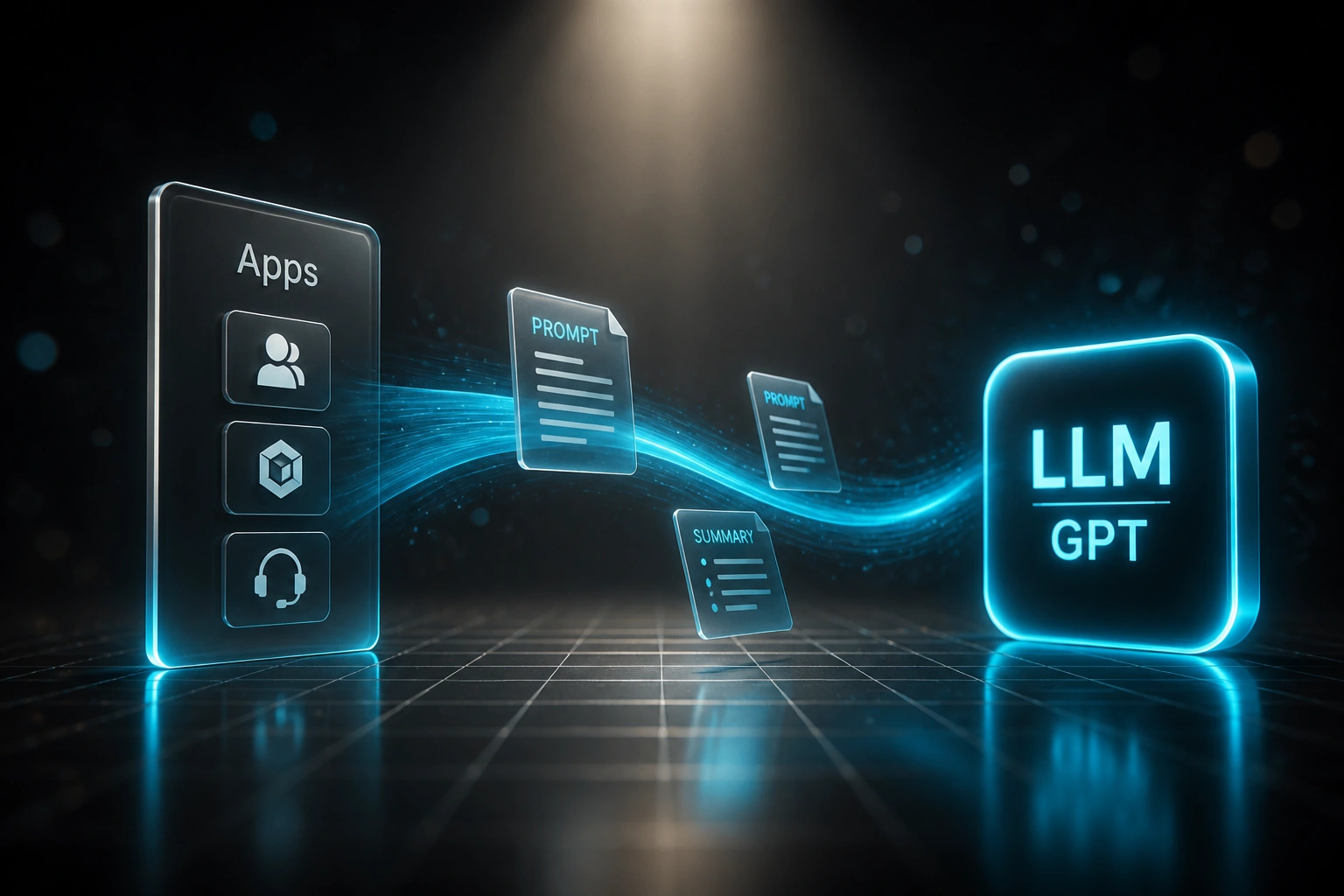
Work happens in your apps → the language model assists in place → results write back → staff keep their workflow.
Trigger in the App
A ticket opens, a deal updates, or a document lands in the system of record
LLM Assists In Place
GPT summarises, drafts, classifies, or answers using that record's live context
Result Writes Back
Brief, draft, or tag lands in the same CRM, ERP, or helpdesk field your team trusts
Human Approves
Staff review and send. No copy-paste between a chatbot silo and the system of record
A Coherent LLM Integration Programme
In-App Summarisation
Long tickets, deal notes, and ERP comments compress into short briefs inside the record your team already has open.
Draft Generation Where Work Happens
Replies, proposals, and status updates draft inside CRM and helpdesk, using the live customer and order context.
Classification & Routing
Incoming notes, tickets, and documents get tagged and routed with LLM classification, then written back to the right fields.
Conversational Assist in Existing UIs
Staff ask questions against company data from inside CRM, ERP, helpdesk, or intranet, without leaving the workflow.
Shared Model Programme
One governed LLM layer serves multiple apps, with shared prompts, logging, and review rules instead of per-department chatbots.
Human Review & Audit Trail
Drafts and classifications wait for approval where it matters. Every suggestion links back to the source record for accountability.
Apps We've Embedded Language Models Into
From Chatbot Silo to In-App GPT Across CRM, ERP, and Helpdesk
How a 180-person Johannesburg professional services firm stopped buying AI seats that nobody used in the flow of work, and recovered nearly a day a week per knowledge worker.
The Siloed Process
- Three departments each ran a separate chatbot SaaS, plus personal ChatGPT tabs
- Staff copied ticket and deal text out, waited for an answer, then pasted drafts back
- No shared prompts, no audit trail, and no link to the system of record
- Two AI pilots never left the lab after six months of demos
- Annual chatbot and seat spend hit roughly R380,000 with thin adoption
The Embedded Process
- One governed LLM layer serves HubSpot, the ERP notes surface, and Zendesk
- Summaries and reply drafts appear on the record; staff edit and send in place
- Classification tags tickets and deal notes automatically with human override
- Department chatbot subscriptions cancelled within the first quarter
- Usage sits where work already happens, so adoption stuck without training theatre
Before vs After LLM Integration
How It Works
From first conversation to live in-app features in 4–8 weeks for the first wave.
Tell Us Your Setup
Which apps staff live in, which AI pilots stalled, and where summarisation, drafting, or classification would remove the most friction.
Free Scoping Call
30-minute call to pick the first two workflows, map data access, and design a governed LLM layer across your systems.
Build & Test
We embed GPT and language models into the chosen apps, then parallel-test with real tickets, deals, and documents.
Go Live & Monitor
Features ship inside the tools people already use. Monitoring covers quality, cost, and adoption so the programme scales.
Frequently Asked Questions
How is embedding LLMs different from buying another chatbot?
A standalone chatbot is another destination. Staff leave the CRM or helpdesk, lose context, and paste answers back. LLM integration puts summarisation, generation, classification, and chat inside the systems they already use, so productivity multiplies without a new workflow.
Which business applications can we embed GPT into?
We have embedded language models into HubSpot, Salesforce, Pipedrive, common ERPs, Zendesk, Freshdesk, SharePoint and intranet portals, and custom business apps. If your system exposes records and actions, we can wire LLM features into that surface.
Will this disrupt how our teams work today?
No. The point of enterprise AI embedding is to keep existing workflows. Staff stay in CRM, ERP, and helpdesk. Summaries, drafts, and classifications appear as assistive steps they already recognise, with human review where decisions matter.
What about data privacy, POPIA, and model choice?
We design the integration programme around your data rules: which fields leave your environment, which stay local, logging, and retention. Model choice follows the use case and your compliance posture, not a one-size chatbot vendor.
How long does an LLM integration programme take?
A focused first wave (one or two apps, two or three features such as summarisation and drafting) usually takes 4–8 weeks from scoping to go-live. Broader programmes across CRM, ERP, and helpdesk typically phase over a quarter so each wave ships measurable value.
How much does embedding GPT into business software cost?
Focused embeddings into a single app start from around R45,000. Multi-app programmes with summarisation, generation, classification, and conversational assist typically range from R80,000 to R180,000. Teams recovering several hours per knowledge worker per week usually see payback within a few months against chatbot seats and manual drafting time.
Stop Buying Chatbot Silos. Put Language Models in Your Apps.
If your AI strategy is another subscription sitting outside CRM, ERP, and helpdesk, you are funding a silo, not a productivity programme.
Tell us which systems staff open every day, which pilots stalled, and which summarisation, drafting, or classification jobs burn the most hours. We will show you how LLM integration would look inside those tools.