Multi-Channel Campaign Orchestration: One Journey, Not Three Blasts
Your email, SMS, and WhatsApp teams each own a calendar and blast the same customer independently. Omnichannel messaging without orchestration looks like noise: colliding offers, rising unsubscribes, and brand damage from over-communication.
We build the campaign orchestration layer that shares journey state and enforces frequency caps across every channel.
Sound Familiar?
These are the exact issues marketing leads face when channel teams operate in silos:
- Email, SMS, and WhatsApp teams each blast the same customer with no shared send calendar
- A Friday promo email lands hours after an SMS flash sale and a WhatsApp broadcast
- Frequency caps exist per channel, so total message load still feels like harassment
- Creative and offers diverge across channels, so the brand voice feels fragmented
- Unsubscribes and STOP replies climb after every uncoordinated campaign week
GetApp's 2024 survey found 40% of U.S. consumers unsubscribe from brand emails and texts at least once a week, with over-messaging as the breaking point. Channel-level caps will not save list health if three teams each think they are within their own limit.
What Multi-Channel Campaign Orchestration Actually Does
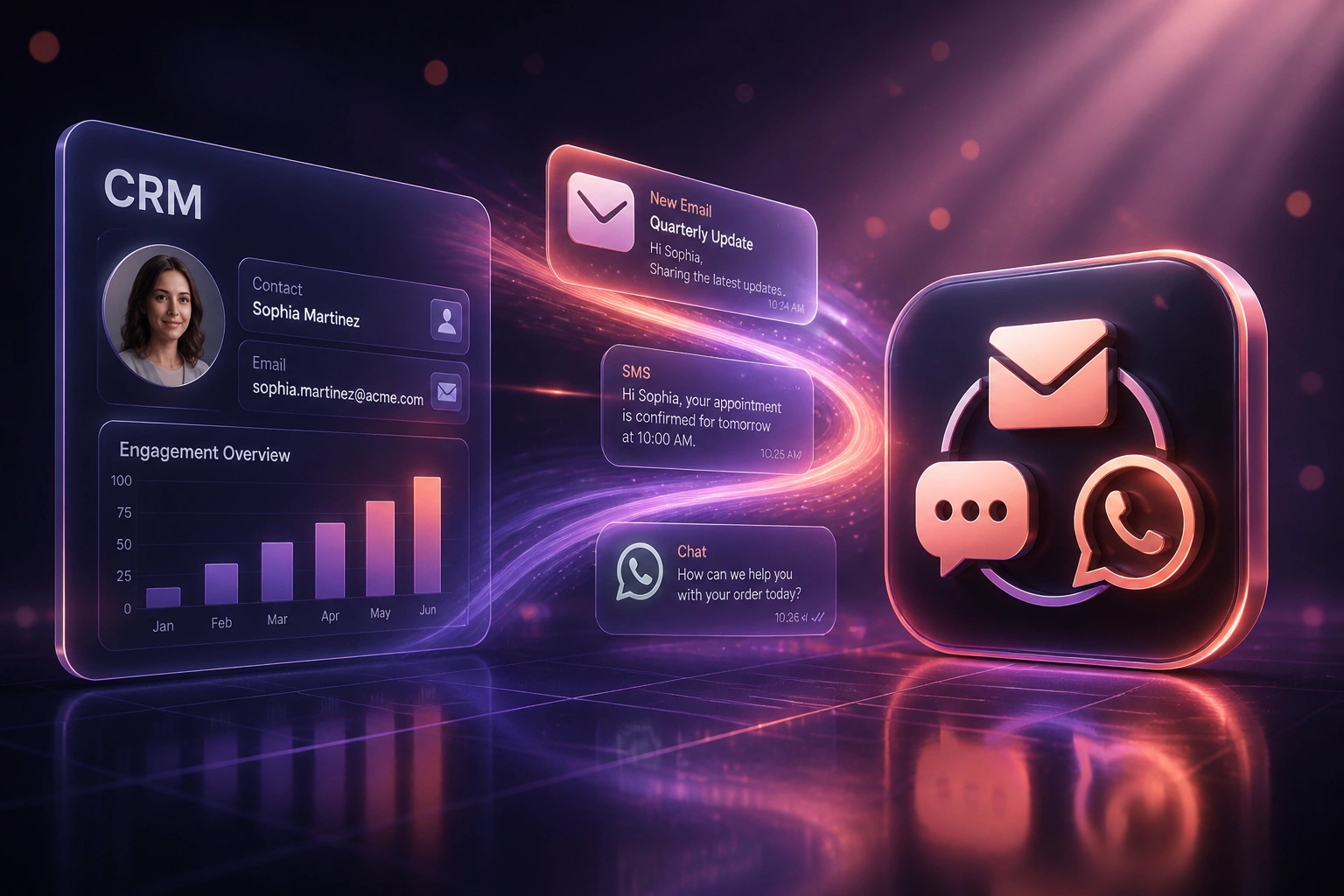
Shared journey state → frequency check → right channel → consistent creative. No colliding blasts.
Journey State Updates
CRM records the last touch, offer, and stage for every contact across all channels
Frequency Cap Check
Person-level caps suppress or defer sends that would pile on this week
Best Channel Wins
Email, SMS, or WhatsApp is chosen from consent, engagement, and journey stage
One Brand Story
Creative stays consistent, engagement rises, and unsubscribes stop climbing
Everything You Need for Reliable Omnichannel Messaging
Shared Journey State
One CRM-backed journey record tracks where each contact sits across email, SMS, WhatsApp, and social, so no team restarts a flow another already started.
Cross-Channel Frequency Caps
Caps apply to the person, not the channel. A contact who received two emails this week will not also get an SMS and WhatsApp blast on the same offer.
Collision Prevention
Campaign calendars check each other before send. Conflicting promos queue, suppress, or wait so messages never pile up on the same afternoon.
Consistent Creative Routing
Approved offers, headlines, and brand assets fan out to each channel in the right format, so omnichannel messaging stays on-brand without copy paste.
Channel Preference Logic
Orchestration picks email for depth, SMS for urgency, and WhatsApp for conversation based on consent, engagement, and journey stage.
Unified Suppression & Opt-Out
STOP, unsubscribe, and preference centre choices sync across every channel immediately so over-communication cannot continue after someone opts out.
Platforms We've Orchestrated Across
From Channel Collisions to Coordinated Journeys
How a marketing lead at a mid-market retailer stopped email, SMS, and WhatsApp teams from blasting the same customers and lifted engagement while cutting unsubscribes.
Three Calendars, One Customer
- Email, SMS, and WhatsApp each ran weekly promo calendars with no shared view
- VIP customers often received three near-identical offers within 48 hours
- Channel-level caps looked fine while person-level volume felt like spam
- Creative tone and discount depth diverged by team, confusing the brand
- Marketing spent Fridays reconciling who already messaged whom by spreadsheet
One Orchestrated Journey
- Shared CRM journey state became the source of truth for every channel team
- Person-level frequency caps of four promotional touches per 30 days across all channels
- Collision rules deferred competing blasts instead of stacking them
- Approved offer packs routed to email, SMS, and WhatsApp in consistent creative
- Marketing lead reviewed one orchestration dashboard, not three blast calendars
Before vs After Campaign Orchestration
How It Works
From first conversation to live orchestration in 3 to 5 weeks.
Tell Us Your Setup
Which channels you run, who owns each blast calendar, and where message collisions hurt engagement most.
Free Scoping Call
30-minute call to map journey state, frequency rules, and the orchestration layer that unifies your teams.
Build & Test
We wire shared journey state, cross-channel caps, and collision rules, then dry-run against a test cohort before any live send.
Go Live & Monitor
Switch off independent blast calendars. We watch unsubscribe rates, capped counts, and journey conversion through the first campaign cycle.
Frequently Asked Questions
How is multi-channel campaign orchestration different from running email, SMS, and WhatsApp separately?
Separate tools can send on each channel. Orchestration adds a shared journey state and person-level frequency caps so those sends never collide. Your email, SMS, and WhatsApp teams still own creative, but the orchestration layer decides sequence, timing, and suppression so customers hear one brand story, not three competing blasts.
Which platforms can sit under one orchestration layer?
We have connected HubSpot, Klaviyo, Braze, Mailchimp, Brevo, Twilio SMS, WhatsApp Business API, and Meta social/ad audiences to a shared CRM journey state. If each channel exposes send APIs and consent flags, we can apply cross-channel caps and collision rules.
Will this slow down our campaign velocity?
No. Orchestration removes the Friday afternoon scramble of checking who already messaged whom. Teams publish to a shared calendar with automatic suppressions, so launches stay fast while over-communication drops.
How do cross-channel frequency caps work in practice?
You set a person-level budget, for example four promotional touches in 30 days across email, SMS, and WhatsApp combined. When a channel would exceed the cap, the send is deferred, rerouted, or skipped. Transactional messages stay outside the promotional budget so order updates still go out.
How long does multi-channel campaign orchestration take to set up?
A standard orchestration layer with shared journey state and frequency caps takes 3 to 5 weeks from scoping to go-live. Broader builds with creative routing, preference centres, and social suppression sit closer to 5 to 8 weeks.
How much does multi-channel campaign orchestration cost?
A focused orchestration layer across two channels starts from around R30,000. Full email, SMS, WhatsApp, and social orchestration with shared journey state, collision prevention, and unified opt-outs typically ranges from R45,000 to R85,000. Marketing teams burning list health on uncoordinated blasts usually recover that cost within 2 to 4 months through lower unsubscribes and higher journey conversion.
Stop Letting Channel Teams Blast the Same Customer
If email, SMS, and WhatsApp still run on separate calendars, you are paying for multi-channel reach and getting over-communication instead of engagement.
Tell us which channels you run, how often each team sends, and where collisions hurt list health. We will show you how shared journey state and frequency caps would work for your marketing team.