Natural Language Data Querying: Ask the Warehouse in Plain English
Your COO needs a margin cut by region before tomorrow's meeting. The ticket sits behind forty others. By the time SQL lands, the decision has already been made without the data.
We build the governed natural language query layer that turns plain-English questions into trusted answers.
Sound Familiar?
These are the exact issues our clients faced before conversational analytics:
- Leaders wait days for a simple warehouse number while the decision window closes
- Analysts spend most of their week on ad-hoc SQL instead of strategic analysis
- Self-serve BI dashboards answer last month's questions, not today's follow-up
- Shadow spreadsheets multiply because waiting for the data team feels slower
- Metric definitions drift: revenue means one thing in finance and another in sales
BI vendors are shipping native NLQ features, but ungoverned chat against raw schemas still fails in production. Enterprise text-to-SQL without a semantic layer often sits at 10–40% accuracy. Shadow spreadsheets fill the gap, and your data team backlog keeps growing.
What Natural Language Querying Actually Does
Question asked → governed SQL runs → answer with sources. No ticket, no weekend Excel rebuild.
Leader Asks in English
COO or analytics lead types a plain-English question in Slack, Teams, or the BI panel
Text-to-SQL with Semantics
The system maps the question to certified metrics and approved tables, not free-form schema guessing
Governed Query Runs
Permissions, row limits, and cost guards apply. Results come from the warehouse of record
Answer with Audit Trail
Numbers, sources, and the query used are visible so leadership can trust and act
Everything You Need for Trusted Conversational Analytics
Plain-English Warehouse Questions
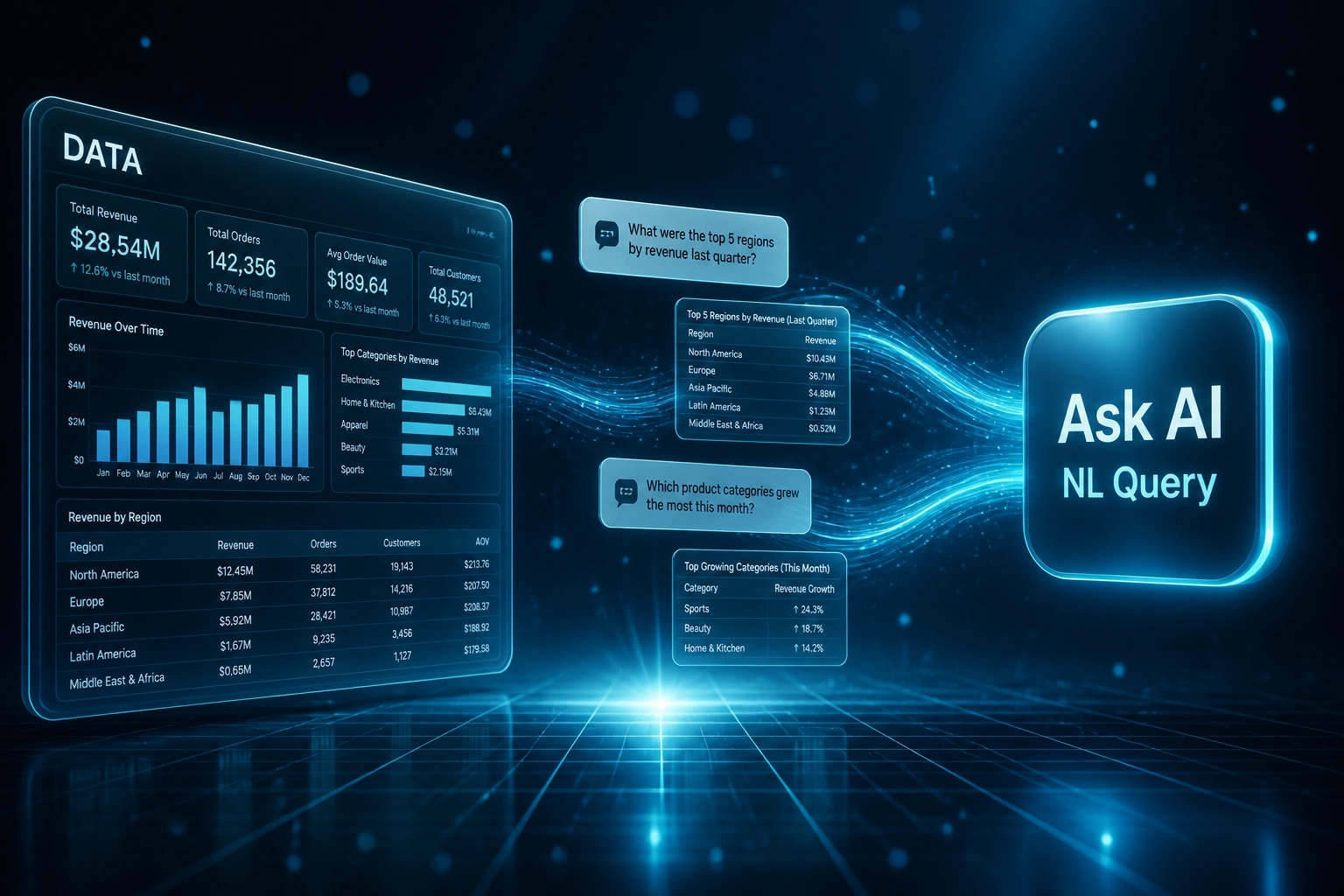
Ask "what were our top regions by margin last quarter?" and get a governed answer from the warehouse, without writing SQL or opening a ticket.
Text-to-SQL with Guardrails
Natural language becomes governed queries against approved tables and metrics. Row limits, cost controls, and dry-run checks stop runaway scans.
Semantic Layer & Metric Definitions
Revenue, churn, and margin mean one thing company-wide. The conversational analytics layer uses your certified definitions, not improvised joins.
Role-Aware Access
Answers respect warehouse and BI permissions. Finance sees the P&L cut; regional managers see their patch. Sensitive tables stay locked.
Audit Trail on Every Answer
Each reply shows the question, the generated query, and the metric sources used, so analytics leads can review trust before board packs go out.
Slack, Teams, or BI Chat
Put natural language query where leaders already work: Slack, Microsoft Teams, or a panel beside Power BI, Looker, Metabase, or Tableau.
Warehouses & BI Tools We've Connected
From 4-Day Waits to Under a Minute
How a 180-person retail group cut ad-hoc analyst tickets by 65% with governed natural language data querying.
The Analyst Queue
- Three analysts handling 15–25 ad-hoc requests each per week
- Median 4 business days for a "quick" warehouse number
- Leadership rebuilt weekend Excel packs when tickets stalled
- Same margin question answered three different ways across teams
- Nearly half of tickets arrived too late to change the decision
Conversational Analytics Live
- Leaders ask certified margin, stock, and region questions in Slack
- Text-to-SQL runs against a semantic layer on BigQuery
- Answers arrive in seconds with query and metric sources attached
- Analysts shifted to modelling and data quality, not ticket triage
- Shadow spreadsheet packs for weekly ops reviews largely retired
Before vs After Natural Language Querying
How It Works
From first conversation to live conversational analytics in 4–8 weeks.
Tell Us Your Setup
Which warehouse and BI tools you use, which questions burn the most analyst time, and where governance already exists.
Free Scoping Call
30-minute call with your COO or analytics lead to map metric definitions, access rules, and a narrow pilot question set.
Build & Test
We wire text-to-SQL with a semantic layer, tune accuracy on real questions, and run a parallel week against the analyst queue.
Go Live & Monitor
Roll out to leadership and ops. We monitor answer quality, ticket deflection, and time-to-insight.
Frequently Asked Questions
What is natural language data querying, in plain language?
It is conversational analytics over your warehouse and BI data. A non-technical leader types a question in English; the system turns it into a governed query (text-to-SQL), runs it against approved tables and metrics, and returns the answer with sources. No SQL skill required.
How is this different from RAG CRM search or dashboard AI chat?
RAG over CRM finds notes, deals, and emails ("what did we promise Acme?"). Dashboard chat often still needs you to know which chart to open. Natural language data querying answers analytical questions against the warehouse: margin by region, cohort retention, aged debtors by segment, with certified metric definitions.
Will the answers be accurate enough for board decisions?
Production accuracy depends on a semantic layer, curated schemas, and validation, not raw model demos. Enterprise text-to-SQL without that context often lands in the 10–40% range; with governed metrics and table subsets, teams routinely reach 90%+ on their question set. We design for audit trails and human review on high-stakes numbers.
Which warehouses and BI tools can you connect?
We have built natural language query layers on BigQuery, Snowflake, Redshift, Azure Synapse, and Postgres warehouses, surfaced beside Power BI, Looker, Metabase, and Tableau, or in Slack and Teams. If your certified metrics live in a queryable store, we can put conversational analytics on top.
How long does a natural language querying project take?
Most builds take 4–8 weeks from scoping to go-live: metric inventory, semantic layer, text-to-SQL guardrails, permission mapping, and a parallel test against the analyst queue. Narrow pilots on a single subject area can be live in about three weeks.
How much does natural language data querying cost?
Pilots start from around R45,000. Production conversational analytics with a semantic layer, role-aware access, Slack or Teams access, and monitoring typically ranges from R60,000 to R120,000. Teams drowning in ad-hoc tickets usually recover the project cost within 2–4 months from analyst time alone.
Stop Waiting Days for Warehouse Answers
If your leadership still queues behind analyst SQL for questions the warehouse already holds, you are paying for delay every week.
Tell us which warehouse and BI tools you run, which questions burn the most time, and where metric definitions already exist. We will show you how governed natural language querying would work for your business.