OCR and Handwriting Recognition: Digitise Paper Forms with AI
Your ops and compliance teams are sitting on boxes of handwritten forms that staff retype into systems. Every day of paper backlog means delayed updates, rekeying errors, and records you cannot search or audit.
We build the OCR and handwriting recognition pipeline that clears the backlog and gets data into systems the same day.
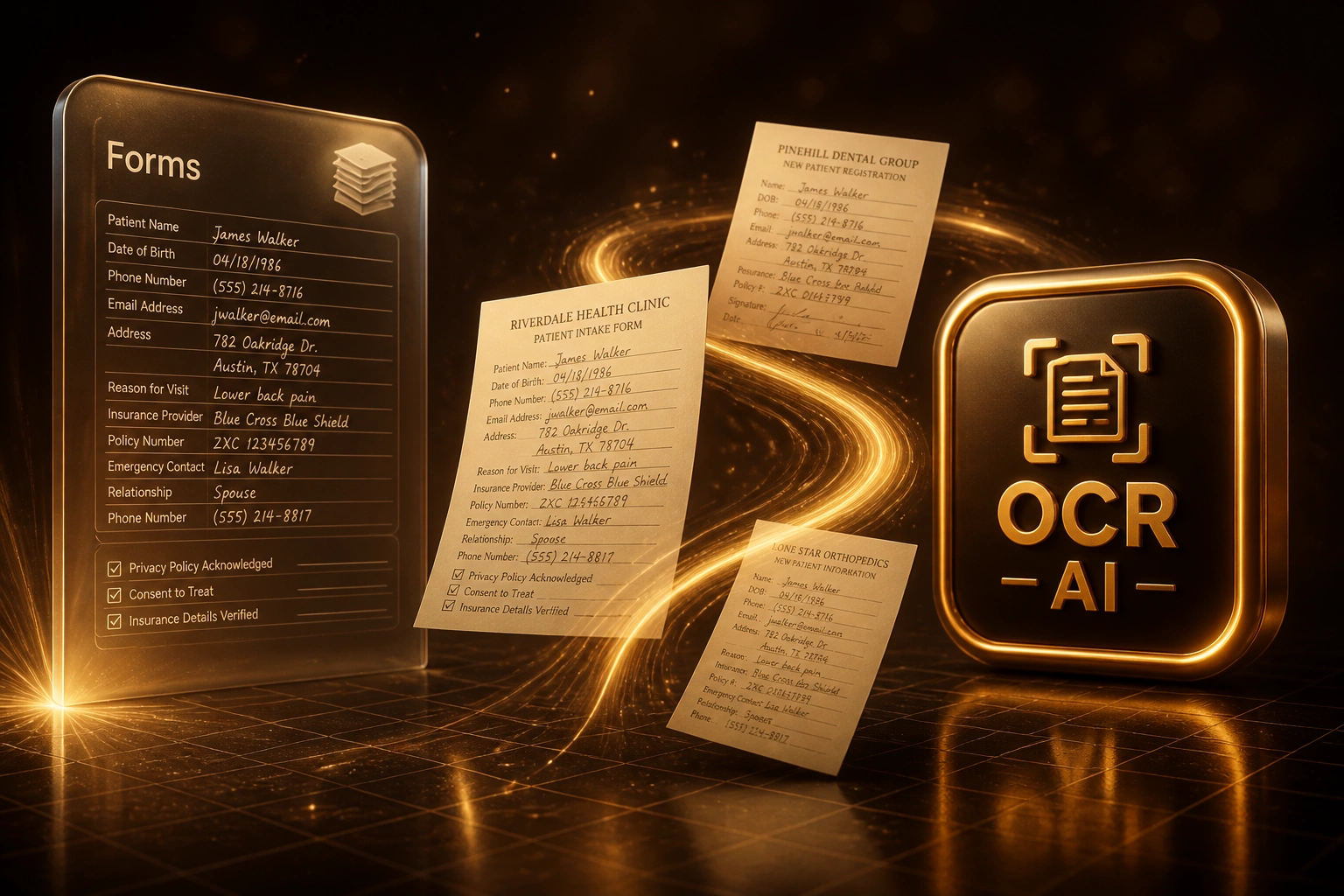
Sound Familiar?
These are the exact issues operations and compliance leads brought us before paper-to-digital automation:
- Boxes of handwritten clinic, claim, and field intake forms sit for weeks while clerks retype them
- Decoding messy ink pushes field-level error rates to 3–4%, so every other form carries a mistake
- Staff spend four minutes per form on average, and backlog still grows when volume spikes
- Legacy paper records cannot be searched, audited, or reported on until someone keys them in
- Compliance asks for digital evidence while physical files remain the only source of truth
POPIA health-information regulations took effect in March 2026 for insurers, medical schemes, employers, and related parties. Physical and electronic health records both need confidentiality, integrity, and availability controls. Paper piles without an audit trail are now a compliance risk, not just an ops headache.
From Paper Intake to Structured Digital Data
Scan arrives → handwriting recognised → exceptions reviewed → record written. No all-day rekeying queue.
Paper Form Scanned
Clinic, field, claim, or archive sheets arrive as scans or phone photos
Handwriting Extracted
OCR and handwriting recognition pull names, dates, amounts, and notes into fields
Exceptions Reviewed
Low-confidence ink pauses for a quick confirm; clear pages skip the queue
Same-Day Write-Back
Structured data lands in EMR, CRM, or claims systems with an audit link to the scan
Everything You Need for Paper-to-Digital Capture
Handwriting Recognition
AI OCR reads cursive and print on paper forms: names, dates, amounts, tick-boxes, and free-text notes that template OCR usually misses.
Paper Form Digitisation
Scans and phone photos of intake packs, claim sheets, and legacy records become structured fields ready for your systems of record.
Confidence Review Queue
Clear handwriting posts straight through. Low-confidence ink lands in a short queue with the source highlight so reviewers confirm a few fields, not the whole page.
System Write-Back
Validated data writes into EMR, CRM, claims, or ops systems the same day, so rekeying queues stop dictating turnaround.
Backlog Clearance Batches
Archive boxes and multi-year paper piles run as overnight batches with progress reporting, not as a months-long typing project.
Audit Trail & Retention
Every extraction links back to the source scan, with edit history for POPIA, claims audits, and municipal or clinical evidence packs.
Systems We Digitise Paper Forms Into
From 18 Months of Paper to Same-Day Capture
How a Gauteng multi-site clinic cleared a handwritten intake backlog and cut rekeying from four minutes per form to under 30 seconds of review.
The Manual Process
- Admin clerks retyped clinic intake and consent forms from messy ink into the patient system
- About four minutes per form, with a growing stack whenever sites ran busy clinics
- Handwritten interpretation drove 3–4% field errors; roughly one in three forms needed a fix
- Eighteen months of archive boxes sat unsearchable while new forms still arrived daily
- Compliance could not produce digital evidence packs without days of pulling physical files
The Digitised Process
- Scans and phone photos feed handwriting recognition; structured fields appear for review
- Clear forms write into the patient system the same day; only low-confidence ink pauses
- Reviewers confirm a handful of fields with the source highlight, not the whole sheet
- Archive boxes cleared in overnight batches over six weeks instead of hiring temp typists
- Every record links back to the scan for POPIA and clinical audit requests
Before vs After Handwriting Digitisation
How It Works
From first conversation to live digitisation in 3–6 weeks.
Tell Us Your Paper Mix
Which handwritten forms pile up, how they are scanned today, and which systems the data must reach.
Free Scoping Call
30-minute call to size the backlog, set accuracy targets, and design the review queue your ops team will use.
Build & Test
We tune handwriting models on your real ink samples, wire write-back, and run parallel against manual rekeying.
Go Live & Clear Backlog
Same-day capture for new forms. Overnight batches chew through the archive boxes while monitoring tracks accuracy.
Frequently Asked Questions
How is handwriting recognition different from ordinary OCR or ID document capture?
Ordinary OCR is built for printed type and often fails on messy ink. ID document OCR targets Smart IDs and passports. This build specialises in handwriting recognition on paper forms and legacy records: clinic intake, field sheets, claim packs, and archive boxes where staff currently retype every line.
How accurate is AI handwriting recognition on real South African forms?
Modern models reach character error rates below 5% on modern English handwriting in published benchmarks, and neat print in form boxes commonly lands in the 90–95% range. Messy cursive still needs human review. We set confidence thresholds so only uncertain fields reach a person, while clear forms write through the same day.
Will this disrupt our clinic, logistics, or claims operations?
No. Your team keeps the same EMR, CRM, or claims system. Capture removes the retyping step. We run parallel testing so ops can compare AI fields against the current process before switching off blanket rekeying.
Can you clear a multi-year paper backlog, not just new intake?
Yes. New forms digitise on arrival. Archive boxes and legacy records run as scheduled batches with volume reporting, so compliance and reporting catch up without hiring a temporary typing team for six months.
How do you handle POPIA and health-information obligations?
Source scans stay linked to every write-back, edits are logged, and access can match the roles that already handle sensitive paper. Physical and electronic records both need safeguards under POPIA, including the 2026 health-information regulations for insurers, medical schemes, and employers. Digitising paper into a controlled system is often safer than unmanaged archive rooms.
How much does OCR handwriting digitisation cost?
A focused handwriting capture pipeline into one system starts from around R35,000. Multi-form packs with confidence queues, backlog batches, and write-back typically range from R55,000 to R110,000. Teams processing a few hundred handwritten forms a month usually see payback within 2–4 months against all-in manual costs of roughly R75–R100 per form plus error remediation.
Stop Retyping Handwritten Forms
If your team is still decoding messy ink into systems by hand, you are paying R75–R100 per form for a problem AI handwriting recognition already solves.
Tell us which paper forms pile up, how large the archive is, and which systems need the data. We will show you how OCR digitisation would work for your operation.