Project Status Reporting Automation: Kill the Friday Pack Scramble
Project directors and account leads still copy Asana and Jira into PowerPoint or email every Friday, then polish RAG slides on Sunday night. The project status report stakeholders read on Monday is already stale, and the weekend is gone.
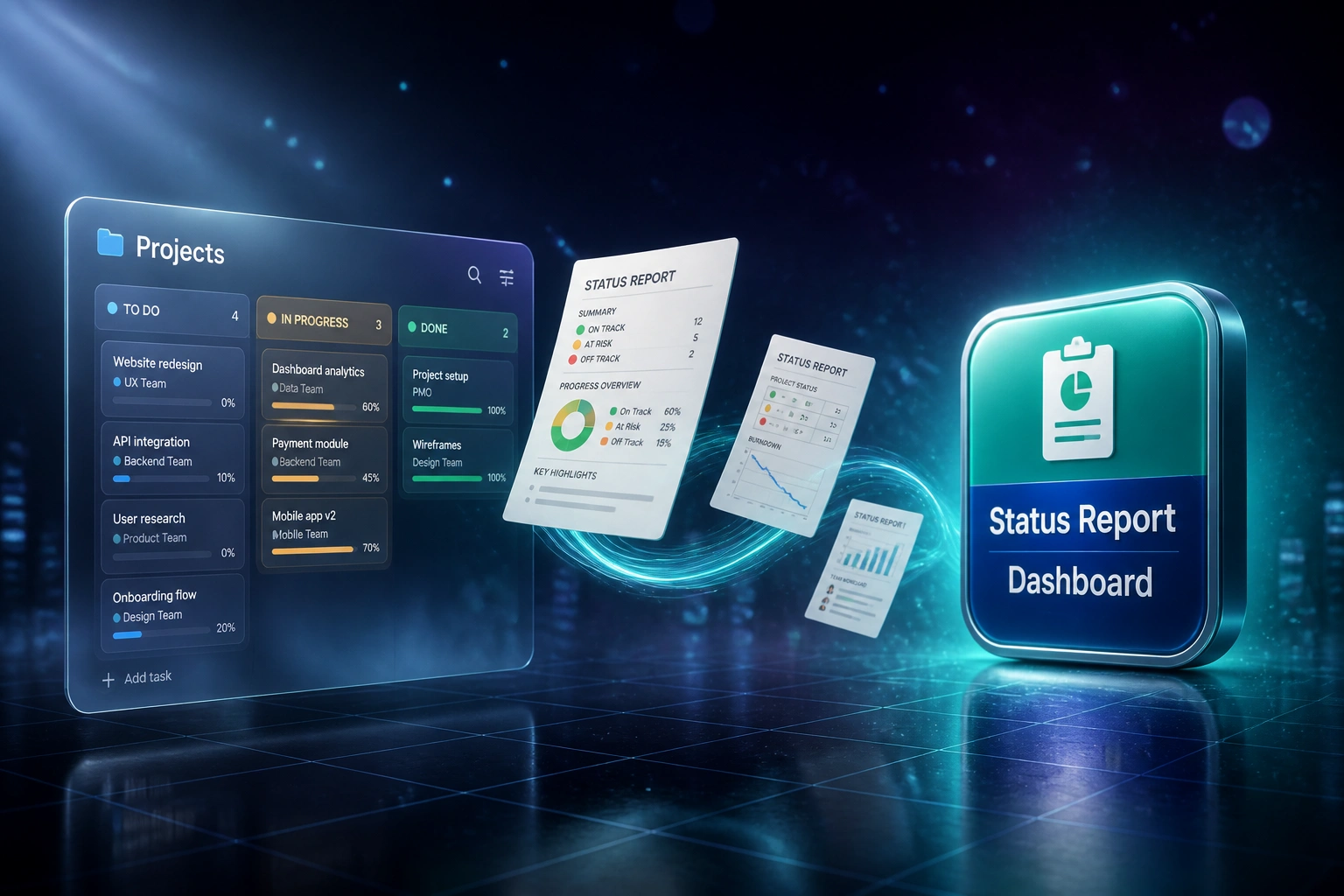
We build automated reporting that pulls live progress, risks, and blockers into scheduled packs.
Sound Familiar?
These are the exact issues our clients faced before automated reporting:
- Account leads copy Asana, Jira, or Monday boards into PowerPoint or email every Friday afternoon
- Sunday-night polish sessions rewrite the same progress, risks, and blockers for Monday client packs
- By the time the project status report lands, blockers are already two days old
- Native project dashboards cannot export a client-ready PDF, so someone rebuilds the pack by hand
- Executives and clients get a different RAG story depending on who compiled the deck
Wellingtone's 2026 State of Project Management Report found 44% of respondents dissatisfied with PMO reporting, while only 36% of organisations mostly or always finish projects on time. Native Asana dashboards still cannot export as PDFs, and Power BI connectors often lag by hours on large boards. The Friday rebuild is not a process; it is a symptom.
What Automated Status Reporting Actually Does
Live boards → RAG pack → scheduled delivery. No human rebuilding the deck every Friday.
Boards Stay Current
Teams update Asana, Jira, or Monday as they already do during the week
Status Pack Assembles
Progress, risks, blockers, and RAG ratings pull into your client or exec template
Director Reviews
Account lead scans exceptions and adds a short narrative where judgement is needed
Pack Delivers on Schedule
Clients and execs receive the project status report before the weekend scramble ever starts
Everything You Need for Reliable Automated Reporting
Scheduled Status Packs
Progress, risks, and blockers pull from live project data into a formatted report delivered on a fixed schedule to clients or the exec team.
RAG Status and Risk Flags
Red, amber, and green ratings, overdue tasks, and open blockers surface automatically so nobody invents the traffic lights in a spreadsheet.
Multi-Tool Project Dashboard
Asana, Jira, Monday.com, ClickUp, and related tools feed one project dashboard view. Stakeholders stop chasing updates across boards.
Email Digest Delivery
Formatted packs land in stakeholder inboxes or shared drives on schedule. No more "can you send status?" threads on Monday morning.
Client and Exec Templates
Agency client packs and internal exec summaries use the fields your directors already expect: milestones, RAG, risks, next actions.
Stale-Data Alerts
When a board has not been updated before the reporting cut-off, the system flags it. You fix the source, not a silent blank in the pack.
Tools We've Connected for Status Packs
From 15 Hours/Week to 90 Minutes
How a 14-person digital agency ended Sunday-night status packs and put live RAG reports in front of clients every Friday morning.
The Manual Process
- Three account leads managed 12 active retainers across Asana and Jira
- Each lead spent 4–5 hours on Friday copying boards into PowerPoint and email
- Sunday-night rewrites fixed RAG ratings that no longer matched Monday reality
- Clients asked "what changed?" because packs arrived after the risk had already bitten
- Executives got three different versions of "amber" depending on who wrote the deck
The Automated Process
- Scheduled packs pull progress, risks, and blockers from live Asana and Jira boards
- RAG flags and overdue tasks populate the client template before anyone opens PowerPoint
- Account leads spend about 30 minutes each reviewing exceptions and adding narrative
- Clients receive Friday-morning packs while boards still match the story
- One shared RAG definition across every retainer, no more invented traffic lights
Before vs After Automated Project Status Reports
How It Works
From first conversation to live scheduled packs in 2–5 weeks.
Tell Us Your Setup
Which project tools you run, who receives packs, and which Friday or Monday scramble hurts most.
Free Scoping Call
30-minute call to map boards → RAG rules → scheduled delivery, and agree the pack template.
Build & Test
We wire the automated reporting flow, run parallel packs against your current decks for two cycles, and tune the risk flags.
Go Live & Monitor
Switch off the copy-paste Friday ritual. Monitoring catches stale boards and delivery failures before stakeholders notice.
Frequently Asked Questions
How long does project status reporting automation take to set up?
A standard scheduled status pack from one project tool takes 2–3 weeks from scoping to go-live. Multi-tool setups with RAG rules, client templates, and exec digests typically take 3–5 weeks, including two parallel reporting cycles so directors can compare the automated pack to the old deck.
Which project tools and dashboards can you pull from?
We have built automated reporting from Asana, Jira, Monday.com, ClickUp, Linear, Trello, and Notion. Packs can land as email digests, shared Drive or SharePoint files, or feed Power BI and Looker Studio when you already run a project dashboard there. If your tool has an API, we can connect it.
How is this different from Asana, Jira, or Monday native reports?
Native boards are built for the delivery team, not for a client or exec pack. Asana dashboards cannot export as PDFs, Jira and Monday charts still need someone to assemble the narrative, and Power BI connectors often refresh on a lag (Asana caches exports over 1,000 tasks every four hours). We build the formatted pack, the RAG logic, and the schedule so stakeholders receive a finished status report without a Friday rebuild.
Will this disrupt how our project directors already work?
No. Teams keep updating Asana, Jira, or Monday as they do today. The automation reads that live data and produces the pack. Directors review and annotate exceptions rather than rebuilding slides from scratch. We run parallel packs before switching off the manual process.
Can we keep different templates for clients and internal execs?
Yes. Most agencies want a client-facing pack with milestones and RAG, plus a denser internal digest with blockers, capacity notes, and risk owners. We map both templates from the same project data so nobody maintains two manual versions.
How much does project status reporting automation cost?
Simple one-way scheduled digests from a single tool start from around R15,000. Multi-tool packs with RAG flags, client and exec templates, and delivery monitoring typically range from R25,000 to R60,000. Teams recovering a full Friday of account-lead time across a portfolio often see payback within two to three months.
Stop Burning Fridays on Status Packs
If your project directors and account leads are still rebuilding project status reports from Asana and Jira every week, you are paying senior people to do work a schedule already can.
Tell us which project tools you run, who receives the packs, and where the Friday or Sunday scramble hurts most. We will show you how automated reporting would look for your portfolio.